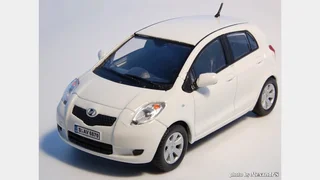
Toyota Belcy meaning
When a Toyota owner or shopper encounters the phrase "Belcy" in a listing, badge inquiry, or search result, the first question is straightforward: does this word point to a recognized vehicle model, a trim package, or a transcription error? In US automotive use, the term "Belcy" does not match a known Toyota model generation, body style, or market specification. The lookup usually means a misspelled name, a phonetic rendering of another model badge, or a dealer label that needs model-year context before it can be interpreted safely. Understanding the likely source helps you avoid chasing a nonexistent model or misreading a real classified ad.
Meaning
In a practical automotive context, "Belcy" has no confirmed Toyota designation in the US market. It is not a recognized hyphenated model name, and it does not appear in the ordinary relationship between model year, generation, trim level, body style, and powertrain configuration that defines Toyota’s lineup. When a shopper searches for "belcy meaning car toyota," the relevant interpretation is usually a mistaken spelling of a similarly shaped name, a voice-to-text error, or a garbled rendering of a badge seen at a distance. The word should be treated as an ambiguous inquiry, not as a discrete vehicle.
A more useful reading is that "Belcy" functions like a phonetic placeholder. Depending on handwriting, pronunciation, or an unfamiliar font, it could evoke Toyota syllable patterns that appear in real recalled names, but no supplied evidence supports assigning it an official meaning. In owner-facing discussions, the safest conclusion is that the term identifies a spelling problem rather than a hidden model, special edition, or market specification. This distinction matters because it changes what you look for next: confirming the actual badge or listing wording, rather than looking up a nonexistent reference in a spec sheet.
How it works
Model identification normally follows a predictable chain. A vehicle is defined by its model year, model generation, body style, trim level, powertrain configuration, and the market specification for a particular region. When one element is garbled, the whole lookup breaks down because badge language is not interchangeable. A name like "Belcy" works as a corrupted input in that chain: it does not attach to a known generation or trim, so it cannot reliably point to an engine option, drive layout, or equipment group. That is why inventory searches built on an accurate model string usually fail when one syllable is wrong.
Spelling errors also interact with the way vehicle listings are indexed. A seller may type a name from memory, a dealer may misread handwritten notes, or a user may speak a term into a search box and receive a voice-to-text guess. Small shifts in vowel sounds or letter order can create a term that resembles Toyota’s naming style without belonging to any production vehicle. In that sense, the mechanism is one of recognition failure rather than a hidden technical specification. Resolving it means restoring the correct model string, not interpreting "Belcy" as a feature or a system.
Key differences
The meaningful difference is between a confirmed Toyota model designator and a nonstandard label such as "Belcy." A real model name operates within a clear identity: it has a body style, a model generation, available trim levels, and a market specification that tells you where it was sold. A misspelled term has none of that structure. Comparing the two is not a question of two vehicles with different dimensions or outputs, but a question of whether the term can be anchored to any vehicle at all. Without a matching official name, the term cannot supply a meaningful point of comparison.
A related distinction involves shorthand and phonetic similarity. Some owners shorten model names, merge a brand and series into one syllable, or borrow a name from an unrelated vehicle or product. Those informal terms may circulate among a small group but fail in dealership records and owner documentation. "Belcy" fits that category better than it fits a trim-level comparison. The practical takeaway is that an unverified name should not be overlaid onto a real car: confirming the vehicle’s actual badge and model-year identity is the only way to make accurate comparisons about equipment, condition, or value.
Understanding a problem
If "Belcy" appears in a listing, a title question, or a parts lookup, the problem is not a malfunction in the vehicle. It is an identification mismatch between the written term and the real model name. Because the word has no supplied support as an official Toyota name, the first useful check is to gather the rest of the listing text, the badge spelling if visible, the year, body style, and any trim information. Those surrounding details often reveal the intended model without requiring a guess about the odd word itself.
This is not a case where a warning light or mechanical symptom points to immediate danger, so the urgency is informational rather than safety-related. The next step is to verify the actual name through trustworthy vehicle documentation or a clear dealer photograph rather than treating "Belcy" as proof of a particular part, package, or service need. Without that confirmation, any conclusion about the vehicle would rest on an unsupported label, and even manufacturer-dependent naming requires vehicle-specific confirmation before it can be used accurately.