Toyota 4Runner Battery: How to Identify the Right Replacement
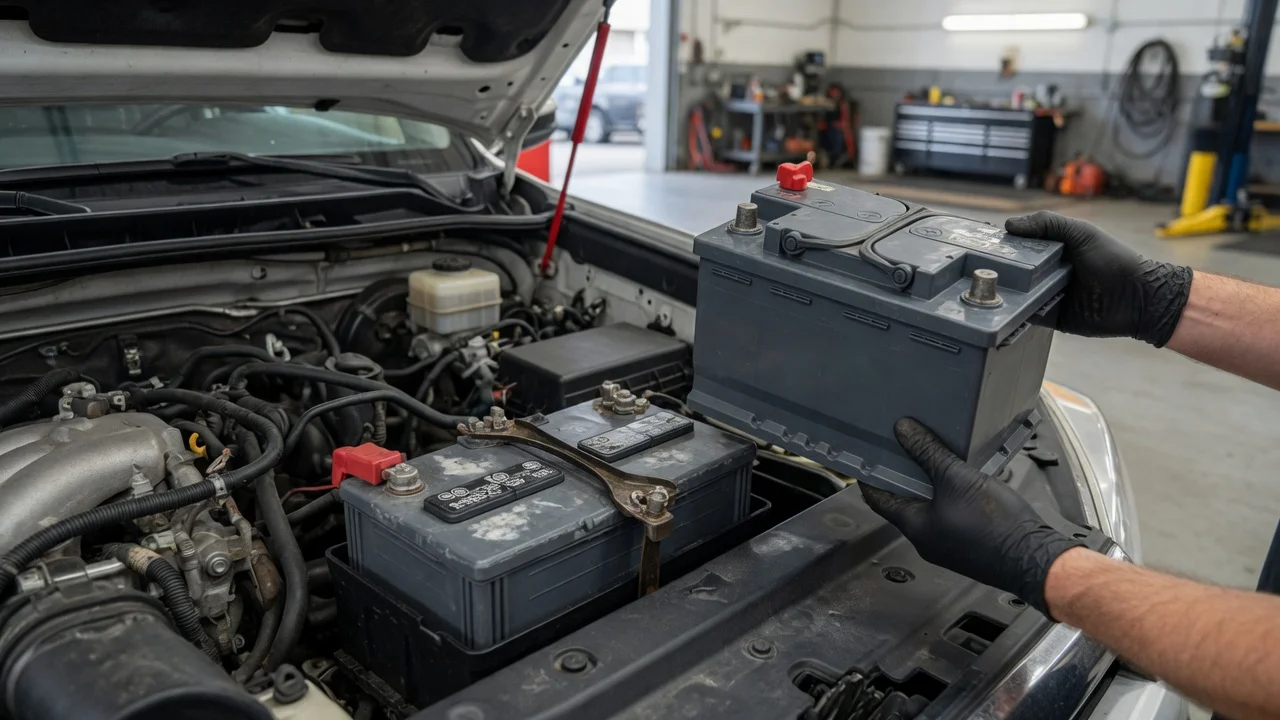
The Short Answer
No single battery fits every Toyota 4Runner. The correct 12-volt replacement depends on the model year, generation and powertrain. The most reliable approach is to match the specifications of the correct battery for your vehicle, then confirm them against the owner's manual or a fitment lookup that uses your exact vehicle details.
This guide does not list group sizes or ratings for individual model years because verified specification data was not available. Treat any year-specific figure you find elsewhere as something to confirm against your own vehicle before buying.
What Changes the Answer
Model year and generation: battery tray dimensions, hold-down design, terminal layout and cable reach can differ between generations, so a battery that fits one 4Runner may not fit another. Powertrain: the sixth-generation 4Runner, introduced for the 2025 model year, is offered with the i-FORCE MAX hybrid powertrain. Hybrid versions have a separate high-voltage traction battery in addition to a 12-volt battery, so "the battery" can mean two different components. Market: vehicles built for different regions may not share the same battery specification, so any lookup should use your vehicle's actual details rather than a general model name.
Specifications to Match
Group size: a standardized code (set by the Battery Council International in North America) that defines the battery's case dimensions and terminal positions. The wrong group size may not fit the tray or hold-down, or the cables may not reach the correct posts. Cold cranking amps (CCA): the current a 12-volt battery can deliver at 0°F for 30 seconds while staying at or above 7.2 volts. This measures starting ability in cold weather. A replacement should meet or exceed the rating specified for your vehicle. Reserve capacity: the number of minutes a battery can supply 25 amps before its voltage falls to 10.5 volts. It indicates how long the battery can run essential electrical loads if the charging system stops working. Battery construction: conventional flooded (wet-cell) batteries and absorbent glass mat (AGM) batteries differ in design and charging behavior. If your 4Runner specifies an AGM battery, replace it with another AGM unit. Terminal orientation: positive and negative posts must sit on the correct sides so the cables connect without strain or crossing.
Hybrid 4Runner Models: Two Different Batteries
On i-FORCE MAX hybrid 4Runners, replacing the 12-volt battery is a different job from servicing the high-voltage hybrid battery. The 12-volt battery can usually be chosen using the same specifications listed above. The high-voltage battery is part of the hybrid system and should be diagnosed and serviced by a dealer or a technician qualified to work on high-voltage systems. Check your vehicle's warranty documentation for hybrid battery coverage terms, which this guide could not verify.
How to Confirm the Right Battery for Your 4Runner
1) Read the label on the installed battery and note the group size, CCA, reserve capacity and battery type. 2) Check the owner's manual for the battery specification for your model year and powertrain. 3) Use a fitment lookup that takes your VIN, or ask a Toyota dealer parts department to confirm the specified battery. 4) Compare the results. If the installed battery does not match the manual or the lookup, a previous owner may have fitted the wrong battery, so rely on the documented specification instead of the label. 5) Before installing, check that the replacement fits the tray and hold-down securely and that both cables reach their terminals without strain.