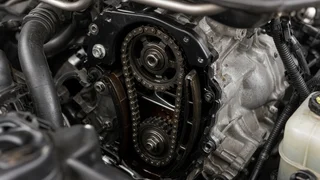
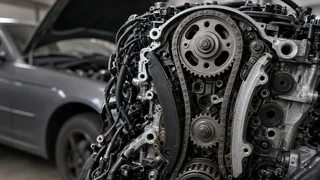
Toyota 2TR (2.7) Timing Chain
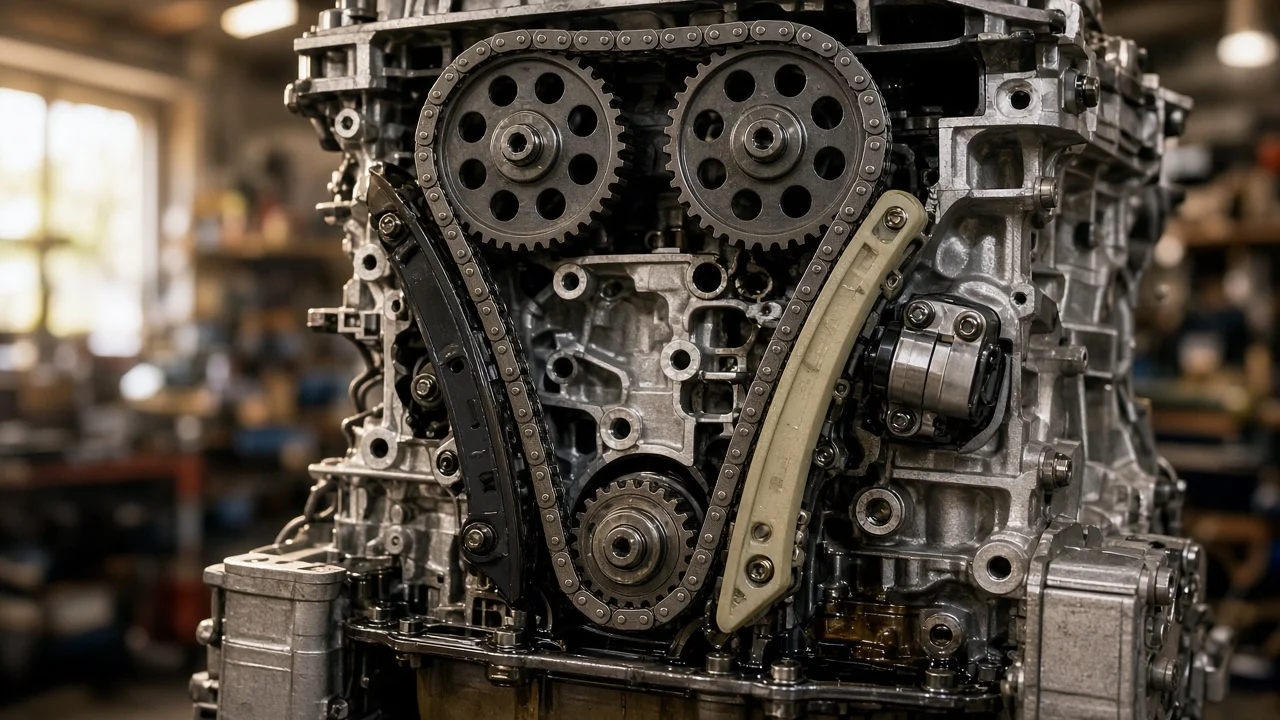
The Toyota 2TR engine uses a timing chain rather than a rubber timing belt, which changes how owners should think about long-term wear. This 2.7-liter four-cylinder appears in several trucks and SUVs where durability matters more than packaging compactness. Researching the 2.7 Toyota engine timing chain usually means clarifying whether the design is interference-type, what symptoms suggest chain stretch, and how service history affects inspection decisions. The engine configuration places the chain inside the front cover, lubricated by engine oil. Diagnostic codes and symptom conditions therefore require a different approach than belt-driven engines with fixed replacement intervals.
Essential answer
The 2TR timing chain is a metal link drive connecting the crankshaft to the camshaft, designed to last the normal service life of the engine under proper oil maintenance. Unlike a rubber belt, it is not automatically replaced on a fixed mileage schedule in most owner guidance. Manufacturer specifications generally describe inspection for noise, chain stretch, guide wear, or tensioner problems rather than routine replacement. This distinction matters because the chain itself can remain serviceable long after a belt would require scheduled renewal.
A timing chain does not guarantee zero maintenance. Worn guides, a weak tensioner, or oil pressure problems can produce rattling on cold starts, rough running, or diagnostic codes related to camshaft and crankshaft correlation. Service history is important because neglected oil changes accelerate chain and guide wear. Inspection should confirm whether noise comes from the chain area or another accessory. A fault code is evidence to interpret, not proof that a part has failed, and manufacturer-dependent codes require vehicle-specific confirmation.