Toyota 22RE EGR Valve: Function, Symptoms, Testing and Service
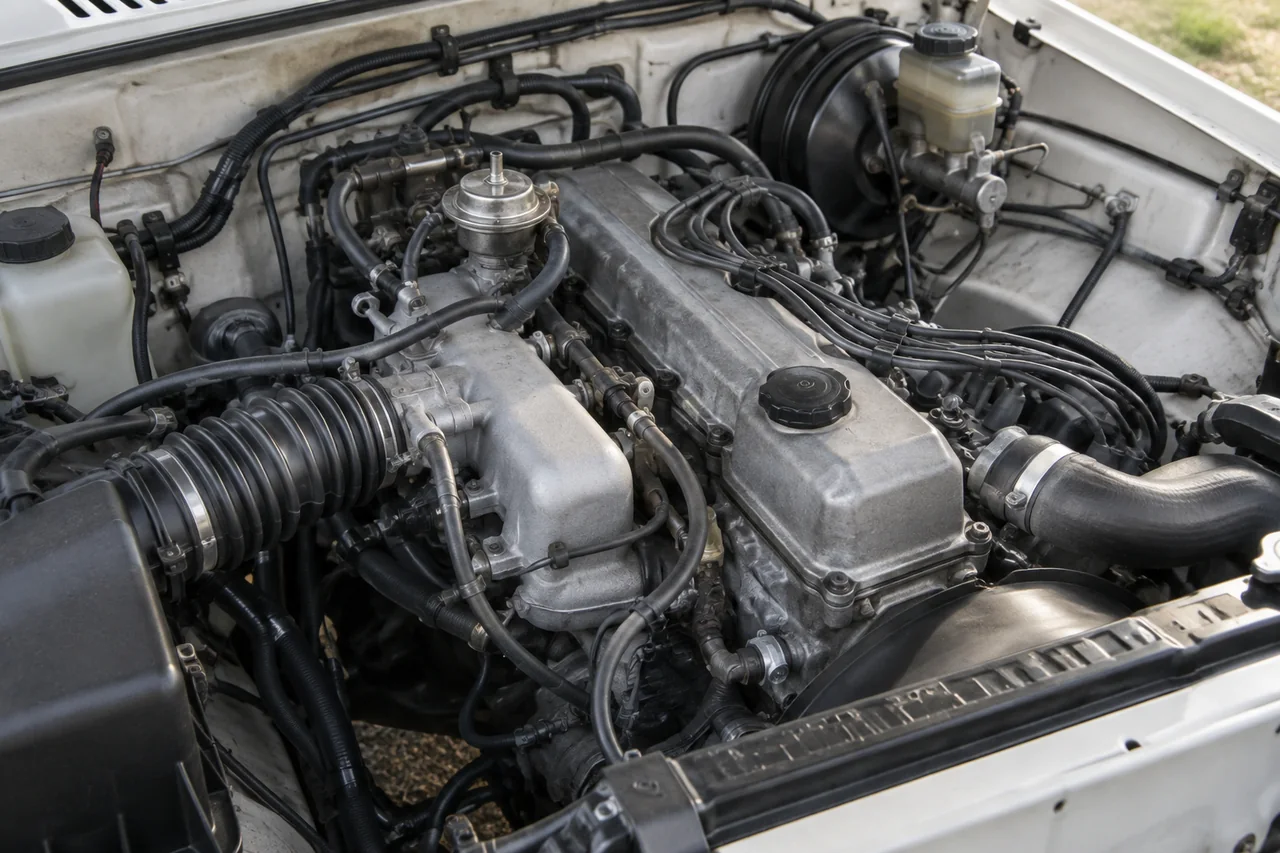
When a 22RE EGR valve acts up, the engine may idle roughly, ping under load, or fail an emissions inspection. This exhaust gas recirculation component is part of a vacuum-controlled system that lowers combustion temperatures, and problems often come from carbon buildup or failing control parts rather than the valve itself. Knowing how the system works on your Toyota pickup or 4Runner helps narrow the diagnosis before replacing parts blindly.
What the EGR Valve Does on a Toyota 22RE Engine
The EGR valve meters a small amount of exhaust gas back into the intake manifold. Because exhaust is mostly inert, it dilutes the air-fuel mixture entering the cylinders. This dilution lowers peak combustion temperatures, which reduces the formation of nitrogen oxides, or NOx, a major contributor to smog. On a 2.4L Toyota 22RE, the valve opens only under specific running conditions, so normal performance and fuel economy are not sacrificed during most driving.
EGR flow is generally expected when the engine is fully warmed up and under light cruise or part-throttle load. It should stay closed during a cold start, at idle, and at wide-open throttle, when the engine needs maximum power and stable combustion. The valve is not an independent solenoid but part of a vacuum-controlled system. It depends on correct signals from a vacuum modulator, switching valve, and routed hoses. Since layout varied by year and emissions package, confirm your truck's exact setup using the under-hood label or service manual.
Parts of the 22RE EGR System to Identify Before Diagnosing
A typical 22RE EGR system includes the EGR valve itself, several vacuum hoses, a vacuum modulator, and often a vacuum switching valve. Some versions add temperature sensors or thermal vacuum valves that block EGR until the engine warms up. The exact list depends on model year, market, and whether the truck has federal or California emissions equipment. Before reaching for tools, identify every component and its location to avoid misdiagnosis from a disconnected or misrouted hose.
The factory service manual and the vacuum hose routing label under the hood are the most reliable references. These show which ports connect where and under what conditions each vacuum signal should appear. Cracked, split, or disconnected vacuum lines can mimic a bad EGR valve by preventing the valve from opening or closing properly. Because hoses often look similar and are easy to mix up, photograph and label the routing before disturbing anything. Preserving the original layout saves time if the system must be reassembled.
Symptoms That Can Point to an EGR Valve Problem
A valve stuck open allows exhaust gas into the intake during idle or cold starts, which can cause a rough idle, stalling, or hesitation when pulling away from a stop. The engine may feel like it has a vacuum leak, and idle speed may hunt or drop. However, many other faults create the same symptoms, including vacuum leaks elsewhere, a dirty throttle body, or ignition problems. Do not assume the EGR valve is the culprit based only on an unstable idle.
A valve stuck closed, or blocked EGR passages, prevents exhaust recirculation and can lead to spark knock or pinging under load, especially on hot days or when climbing hills. Because combustion temperatures rise, the engine may also fail an emissions inspection due to excessive NOx. Carbon buildup is a common reason for a valve to stick open or closed, but it does not affect every truck equally. If a check engine light is present, the stored code must be interpreted for that exact model year and system, never treated as a universal EGR failure code.
Safe Visual Checks and Observations Owners Can Make
The EGR valve and nearby exhaust components reach very high temperatures during operation. Always inspect them with the engine off and fully cooled, and keep hands and clothing clear of moving belts and fans. Even after a short drive, the valve body can cause serious burns. Park on level ground, set the parking brake, and allow sufficient cooling time before looking for loose hoses or external damage.
Safe observations include checking every vacuum hose for cracks, brittleness, or disconnection, and looking for heavy carbon or exhaust soot around the valve flange that might indicate a leaking gasket. Damaged electrical connectors on control solenoids should also be noted. Some service manuals describe a diaphragm movement check using a hand vacuum pump, but this must be done exactly as specified, with the engine at the right temperature. Keep a written log of symptoms—when they happen, engine temperature, and load—because it helps a technician reproduce the fault and speeds up diagnosis.
When Professional EGR System Testing Is Needed
Confirming actual EGR flow and proper control-part operation often requires a vacuum gauge, a hand vacuum pump, service manual specifications, and sometimes an emissions analyzer. A technician can test whether the valve opens at the correct vacuum signal and whether the control solenoids switch as expected. If your own checks show good hoses but symptoms persist, or if the truck fails an emissions test, professional testing is the next logical step.
Do not attempt to remove, block, or disable EGR components. Tampering with emissions equipment can be illegal in many areas, and a blocked or disconnected valve can cause drivability problems or even engine damage from excessive combustion temperatures. When taking the vehicle to a shop, bring your notes, photos of hose routing, and any stored diagnostic codes. This information helps the technician avoid spending time on basic checks and focus on the likely control or flow fault.
Cleaning, Replacement and Choosing the Right EGR Valve
Some EGR valves can be cleaned of carbon deposits, but a valve with a failed internal diaphragm must be replaced. A technician or the service manual can guide that decision after testing. If cleaning is appropriate, the valve is removed, carbon is carefully scraped from the pintle and seat, and the diaphragm is checked for leaks. Cleaning the valve alone may not be enough if the intake passages are also clogged.
Any replacement valve must match the vehicle's year, engine, transmission, and emissions package. Federal and California versions can differ, and nothing should be assumed interchangeable based on appearance. Always verify fitment using the VIN or a manufacturer catalog. Use a new gasket, clean both mating surfaces, and recheck hose routing after installation. Also consider the condition of the vacuum modulator and switching valve, since a new EGR valve cannot correct a blocked passage or failed control component. Confirm parts availability with a reputable supplier, not by guessing part numbers.