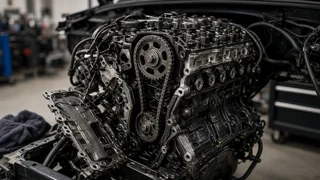
Toyota 22R Timing Chain Replacement
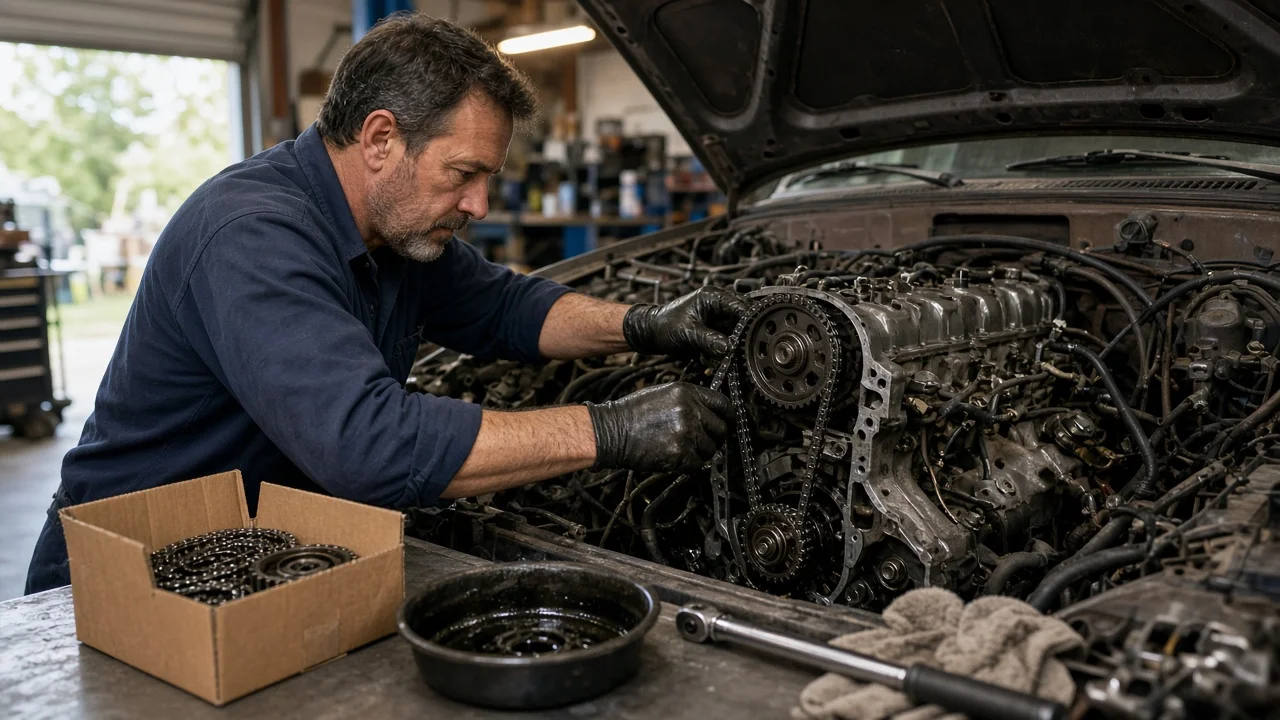
A worn timing chain in a Toyota 22R engine often announces itself through rattling at cold start, unstable idle, or metal debris in the oil before it fails outright. The 22R engine timing chain replacement question concerns more than swapping a part; it involves inspecting guides, tensioners, sprockets, and sealing surfaces while the front of the engine is open. Interpreting symptom conditions alongside service history helps distinguish normal wear from a failing tensioner or guide. Accurate diagnosis matters because a chain that has stretched or a broken guide can alter valve timing and cause rough running, hard starting, or more serious interference-related damage in some conditions.
Essential answer
The essential answer is that replacing the timing chain in a 22R engine is an involved repair that generally requires draining coolant, removing the accessory drive components, and accessing the timing cover at the front of the block. The job centers on replacing the chain, tensioner, and guide components as a set because wear is rarely isolated to the chain alone. Evaluation should include checking the camshaft and crankshaft sprocket teeth, the chain tensioner, and any remaining plastic guide material. This engine’s design places the chain inside a cover that also seals coolant passages, so cleaning and resealing surfaces correctly is part of the repair rather than an afterthought.
A practical next step is to confirm the engine configuration and service history before ordering parts or beginning disassembly. Engine configuration matters because variations within the 22R family and associated vehicles can change sprocket details, accessory layout, or cover fastener patterns. A fault code is one piece of evidence, but it cannot prove a specific mechanical part has failed. Codes related to ignition timing, camshaft position, or misfire may support a timing-chain inspection when accompanied by mechanical noise or visible timing misalignment. Manufacturer specifications for torque, sealant, and timing mark alignment should be confirmed for the specific engine version before reassembly.