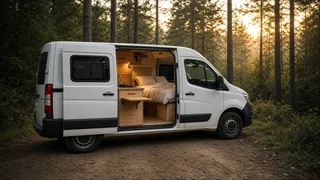
Town and country van camper conversion

Minivan and MPV camper conversions are a practical way to gain a compact, fuel-efficient living space without moving to a full-size van. Unlike larger builds, these projects depend on compact layouts, careful weight distribution, and multifunctional furniture. A Town and Country, Vauxhall Zafira, or VW Touran can provide a low-profile base for weekend trips and longer travel when the interior is thoughtfully configured around factory seating, cargo volume, and gross vehicle weight rating.
Essential answer
A town and country van camper conversion is best understood as a micro-camper or sleeper conversion rather than a full RV installation. The essential answer is that you can create a practical overnight vehicle by removing or folding the rear seats, adding an insulated sleeping platform, and organizing storage in the remaining floor area. The scope changes with the vehicle: a Chrysler Town and Country offers a wider body and deep floor wells, while a compact MPV such as a Vauxhall Zafira or VW Touran trades some interior length for easier daily parking and better maneuverability.
The conversion concept centers on preserving everyday usability where possible. Since these vehicles are often dual-purpose, owners may build modular units that can be removed or reconfigured after a trip. Payload is the controlling limitation because every sheet of plywood, battery, water container, and cooler reduces the margin between curb weight and gross vehicle weight rating. A realistic plan should first allocate weight for occupants and gear, then decide how much permanent furniture the axle rating and combined weight rating can support without overloading the rear suspension.
Weight planning is not just about total mass; it is about where that mass sits relative to each axle. In a Minivan and MPV Camper Conversion, heavy items placed behind the rear axle can amplify sway and reduce steering response, even when the overall payload is below the manufacturer maximum. Keeping dense objects like batteries, water, and tools low and between the axles helps preserve the vehicle's original handling character. The rear axle rating often becomes the first limit reached in a conversion because that is where most sleeping platforms and kitchen modules are installed.
Tongue weight matters when a hitch-mounted cargo carrier or small trailer supplements interior storage. Adding a rear carrier shifts load beyond the bumper, acting as a lever that unloads the front tires and increases rear squat. For vehicles like the Vauxhall Zafira camper van conversion or VW Touran camper van conversion, the available hitch capacity and the combined weight rating should be checked before relying on external boxes. A balanced interior layout reduces the temptation to hang heavy items off the back, keeping the vehicle stable in crosswinds and emergency braking.
A successful Town and Country van camper conversion depends on an honest assessment of the original interior configuration. The Stow 'n Go seating in many Chrysler minivans creates recessed floor compartments that are useful for storing soft bags or wiring runs but can complicate a flat platform. Builders often bridge these cavities with a raised frame, using the space underneath for low-profile drawers or insulation. In European MPVs like the Vauxhall Zafira and VW Touran, the rear seats generally fold or remove differently, which changes the anchor points and bed height available for a conversion.
Configuration choices follow from how the vehicle will be used between trips. A removable single-person sleeper can leave room for a bicycle or work equipment, while a two-person layout may require a folding bench that doubles as seating and bed. Because these are smaller vehicles, vertical space is precious; a platform built too high reduces headroom and makes changing clothes difficult. Before cutting materials, owners should test the seat positions, measure the usable length with front seats adjusted for driving, and confirm the sleeping surface clears the closed rear hatch and interior trim.
Interpreting a Vauxhall Zafira camper van conversion begins with recognizing that this MPV is narrower and shorter than a North American minivan, so the conversion must be more disciplined. The payload capacity is often modest, which means lightweight materials such as aluminum extrusion framing and thin plywood are preferable to heavy lumber. A compact design using a folding platform and stackable storage boxes can keep the build under the vehicle's weight limits while still providing a flat bed and basic cooking surface.
The key advantage of the Zafira platform is its urban footprint. A conversion based on this vehicle can serve as a daily commuter during the week and a camper on weekends without the parking difficulties of a high-roof van. However, the smaller cabin makes ventilation and moisture control more important, since cooking inside a confined space quickly fogs windows and encourages condensation. A small roof vent or cracked window combined with a low-power fan improves comfort without adding significant weight or electrical demand.
A VW Touran camper van conversion shares many constraints with the Zafira but typically offers a more car-like driving feel and refined interior. The Touran's rear seats may fold flat in a way that creates an uneven load floor, so a leveling platform or self-inflating mattress can help bridge the gaps. Because the floor is relatively high, under-bed storage is limited, pushing builders toward vertical storage behind the front seats or soft bags hung from the headrests instead of heavy cabinetry.
For this platform, the best approach is often a no-build or low-build conversion that leaves the rear seats in place for daily use. A folding bed board, modular foam cushions, and removable kitchen pod can be loaded for trips and taken out afterward. This keeps the gross vehicle weight rating favorable and preserves the flexibility that makes the Touran attractive as a family vehicle. Attention to axle rating remains essential, especially when adding a roof box, auxiliary battery, or water container to an already moderately loaded car.
The Town and Country van camper conversion differs from MPV projects because the larger body provides more width for a side-by-side sleeping platform and deeper footwells for storage. That extra room allows a more comfortable bed without compromising front seat adjustment, but it also encourages heavier builds that can approach the payload limit quickly. The sliding side doors and available power features make access convenient, and the tall roof line gives seated headroom that smaller MPVs cannot match.
Despite the added space, the same load-management principles apply. A minivan conversion should use the central floor area for the heaviest components and reserve the rear corners for light, bulky items such as bedding and clothing. Checking the vehicle's tire pressure and suspension behavior after loading helps identify a rear-heavy setup before a long trip. Balanced weight, a modest sleeping platform, and careful storage choices deliver a dependable camper that remains close to the original manufacturer driving dynamics.