Tire Valve Stem Sizes and Thread Sizes
Direct Answer: What Size Is a Car Tire Valve Stem?
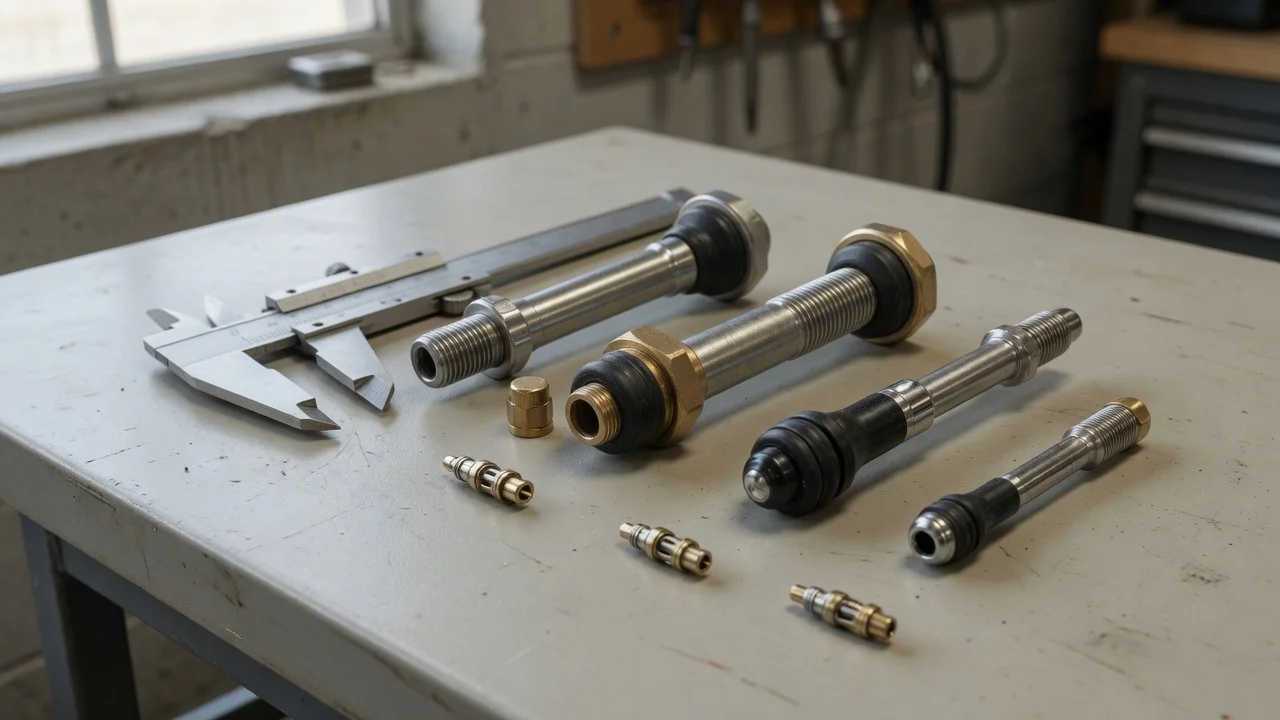
For most passenger cars and light trucks, the dominant valve stem standard is the 0.453-inch rim hole diameter. This is often called the standard or three-quarter-inch valve stem size, referring to the nominal hole it fits. A second, smaller standard uses a 0.625-inch rim hole, and it is common on many commercial trucks, trailers, and some heavy-duty applications. The valve stem itself is not one universal part; its mounting diameter, thread pitch, length, and sealing method vary by wheel design and whether the vehicle uses a direct tire pressure monitoring sensor.
Why the Question Has Two Valid Answers
The term car tire valve stem can mean three different components, and each has a different relevant size. The most common meaning is the complete stem assembly that passes through the wheel. Its size is defined by the rim hole. The second meaning is the removable valve core threaded into the stem. The third is the external thread on the stem body, which is relevant when a metal clamp-in stem is secured with a nut. A correct replacement depends on matching the rim hole first, then the length, bend, and sensor requirement.
Common Rim Hole Standards
Nominal Size | Rim Hole Diameter | Typical Application; Standard passenger | 0.453 in | Most passenger cars, light trucks, SUVs, many TPMS sensors; High-pressure / heavy-duty | 0.625 in | Commercial trucks, trailers, some high-load or high-pressure wheels; Small specialty | 0.281 in | Rare on road cars; found on some specialty or small-wheel equipment
For a normal car tire, the practical answer is the 0.453-inch rim hole standard. If the vehicle is a passenger car, crossover, or half-ton pickup, a replacement snap-in rubber stem or clamp-in metal stem will almost always be specified for this hole size unless the wheel has been modified.
Snap-In Rubber Stems
Snap-in stems are the most common original equipment style. They are pulled into the wheel from the inside and seal with a molded rubber body. Their size is described by the rim hole, usually 0.453 inch, and by length. Common lengths include short, standard, and high-temperature or long-reach variants. The rubber body diameter at the sealing groove is slightly larger than the rim hole, so a 0.453-inch hole receives a stem whose groove area is built to compress into that opening.
Snap-in stems are typically used in wheels without a flat machined sealing surface around the valve hole. They are inexpensive and common on steel and many cast aluminum passenger wheels. They are not universally suitable for high-speed or high-load use, and some manufacturers specify metal clamp-in stems for sustained high-speed driving.
Clamp-In Metal Stems and Their Thread Sizes
Clamp-in stems use a metal body, a nut, and usually a grommet or washer to seal against the wheel. The relevant thread size is the external thread on the stem body that receives the retaining nut. For the common 0.453-inch rim hole standard, a widely used clamp-in stem thread is 10-32 UNF, but this is a thread on the retaining hardware, not a guarantee for every brand. Some aftermarket and performance stems use metric threads or a different thread pitch depending on the valve design.
A material qualification is necessary here: there is no single universal external thread size for all car valve stems. The 10-32 thread is common on many Schrader-style clamp-in passenger stems, but replacement parts should be matched to the specific stem body. Thread size is not usually the first specification given by parts catalogs; the rim hole size, stem length, bend angle, and TPMS compatibility are the primary identifiers.
Valve Core Thread Size
The removable valve core inside the stem is highly standardized. The standard Schrader valve core thread is 5V1, with an external thread commonly given as 0.209 inch by 36 threads per inch. The same core fits nearly all passenger car stems, motorcycle stems, and many other pneumatic tires. Replacement cores are widely interchangeable, but stems themselves are not.
If a reader is asking about thread size because a core is leaking, the relevant dimension is the standardized 5V1 core. If the stem body or retaining nut is being replaced, the rim hole spec is the first critical measurement.
TPMS Sensor Stems
Many modern vehicles have a direct TPMS sensor mounted inside the wheel, attached to the base of the valve stem. For these vehicles, the stem is not a generic service part in the same way as an older rubber snap-in. The sensor assembly is often specified by the vehicle manufacturer for a particular model year and wheel design.
The rim hole for most sensor-equipped passenger vehicles remains 0.453 inch, but the stem length, angle, and sealing design can vary between sensor generations. A replacement stem must match both the wheel and the sensor. Some sensors use a separate service kit containing a new stem, nut, grommet, and core, while others require replacing the entire sensor and stem assembly.
Length, Bend, and Wheel Fitment
Beyond hole size and thread, the stem must clear the brake caliper, wheel spoke, and rim contour. Stems are available in straight and multiple bend angles, with lengths measured from the sealing area to the tip. A stem that is too short may be inaccessible for inflation; one that is too long may contact suspension or brake components. Replacement should follow the original stem shape unless the wheel has been changed.
How to Identify the Correct Size Without Removing the Tire
Read the service information for the specific make, model, year, and wheel option. The valve stem is often listed as part of the TPMS or wheel service kit. Measure the rim hole with a caliper if the stem is out. The two primary passenger and light-truck holes are 0.453 inch and 0.625 inch. Check the existing stem body. Snap-in rubber stems are pulled through the hole, while clamp-in stems show a metal nut and washer on the outside. Look for a metal sensor body visible only after tire dismount. If present, the stem must match the sensor, not just the wheel hole. Do not assume that two vehicles with the same rim diameter share the same stem. The hole size and stem length can differ across wheel options.
Material and Service Considerations
Rubber snap-in stems age, crack, and can leak at the rim hole. Replacement is standard practice whenever a tire is removed, especially on wheels older than five to seven years. Clamp-in metal stems use a rubber grommet or O-ring seal that should also be renewed. Reusing an old stem to save cost can create a slow leak that is difficult to trace.
For TPMS-equipped vehicles, the service kit usually includes a new stem, nut, seal, and valve core. The stem is torque-sensitive when installed. Over-tightening a clamp-in nut can damage the wheel or seal, while under-tightening can allow a leak. Manufacturer torque values are low, often in the range of 4 to 8 newton-meters depending on the design, but a specific value should be sourced from the vehicle or sensor manufacturer rather than assumed.
What the Evidence Does Not Support
The available coverage does not provide a full table of OEM thread pitches across all car brands. A claim that every car stem uses a 10-32 thread would be inaccurate. The 10-32 UNF thread is documented as common on many standard clamp-in passenger stems, but it is not a universal replacement guarantee. Similarly, the 5V1 valve core thread is standardized, but the stem body dimensions are not. Any replacement should be verified against the wheel hole, original stem shape, and TPMS application.
Practical Recommendation
For a standard passenger car or light truck, start with a 0.453-inch rim hole stem. If the wheel has a flat machined sealing surface and a metal nut, use a clamp-in stem matched to that wheel. If it uses a rubber pull-through design, a snap-in stem of the same length and angle is appropriate. For TPMS vehicles, replace the stem only with the service kit specified for that sensor and wheel. When a commercial truck or trailer is involved, verify whether the wheel uses the larger 0.625-inch hole before ordering parts. The safest next step is to remove the wheel and tire, inspect the existing stem, and match the replacement by rim hole, stem type, length, bend, and sensor requirement rather than by thread size alone.