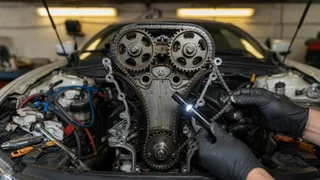
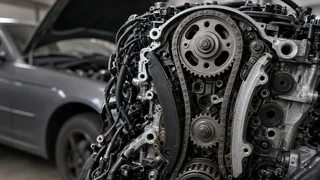
Timing Chain Failure and Engine Damage in Interference Engines
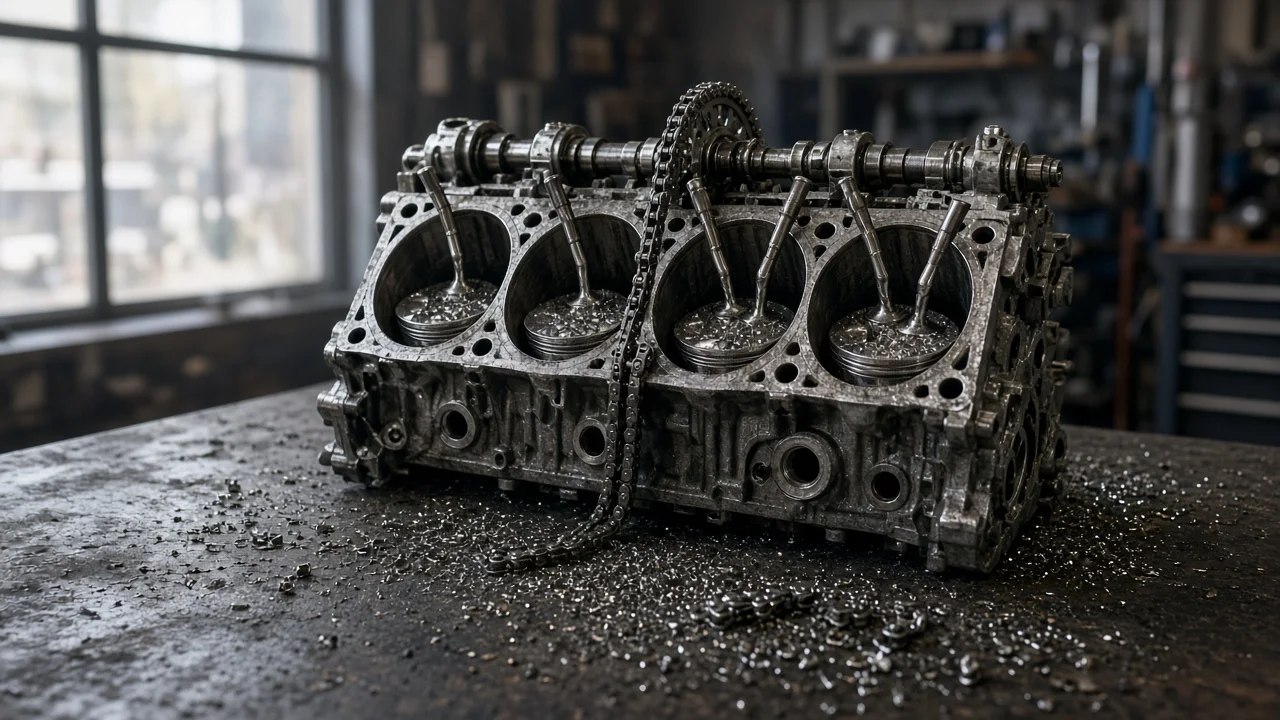
A timing chain normally controls the camshafts with durable steel links, but wear, oil-pressure loss, or a failed tensioner can suddenly alter that. In an interference engine, the valves and pistons occupy the same space at different times, so loss of synchronization can force them together. That is why a broken timing chain is often more serious than a simple roadside breakdown. Recognizing early symptoms and understanding the mechanical relationship between chain condition and valve timing helps owners react before the rotating assembly and cylinder head meet in a destructive way.
Essential answer
A timing chain failure in an interference engine creates a high risk of major engine damage because the piston can strike an open valve after synchronization is lost. When the chain breaks or jumps teeth, the camshaft stops following the crankshaft position. The piston continues moving while certain valves remain extended into the combustion chamber, so contact can bend valve stems, crack guides, or damage piston crowns. Even a brief crank or attempted restart after a failure may deepen the harm.
The basic difference is not chain quality alone. In a non-interference layout, a broken timing chain may simply stop the engine without hard contact between the valves and pistons. In an interference design, clearance is intentionally tight to improve combustion efficiency and compression. That narrow clearance means wear-related timing drift, a loose tensioner, or a stretched chain can become destructive before the driver notices any obvious noise. The result is often not a repairable timing set but a substantially damaged engine.
Diagnosing a problem
A timing chain problem in an interference engine can first appear as a metallic rattle near the front cover, especially during cold starts or at varying rpm. Rough running, misfire faults, or camshaft and crankshaft correlation diagnostic codes may indicate that the chain has stretched or skipped a tooth. These codes are not proof that a chain has failed; they show that the expected timing relationship is outside the manufacturer specification. Oil pressure concerns or a worn tensioner should also be investigated because hydraulic tensioners often depend on clean, pressurized oil.
If a driver suspects timing chain damage, the practical next step is to stop cranking the engine. Removing the valve cover for a limited inspection may reveal unusual slack, but deep engine disassembly is not a roadside task on most interference designs. A borescope inspection through the spark plug opening can sometimes show piston or valve contact after a loss of compression. Because manufacturer-dependent engine layouts vary, a trained diagnosis should confirm whether the engine is interference before rotating the crankshaft manually or attempting any repair.