Timing Chain Failure: Causes, Symptoms, and What to Do
What is the direct answer to my question?
Timing chain failure means the metal chain that synchronizes the crankshaft and camshaft has stretched, worn, broken, or lost proper tension. When this happens, valve timing can drift or jump. In many engines this causes poor running, rattling noises, or a check engine light. In an interference engine, a broken or severely jumped chain can let pistons hit open valves, which may cause major internal damage.
The exact risk and repair cost depend on the engine, model year, and market configuration. Not every engine has a timing chain; some use a timing belt. Some engines are interference designs and some are not. Because of this, vehicle-specific guidance matters more than a universal claim.
What a timing chain does
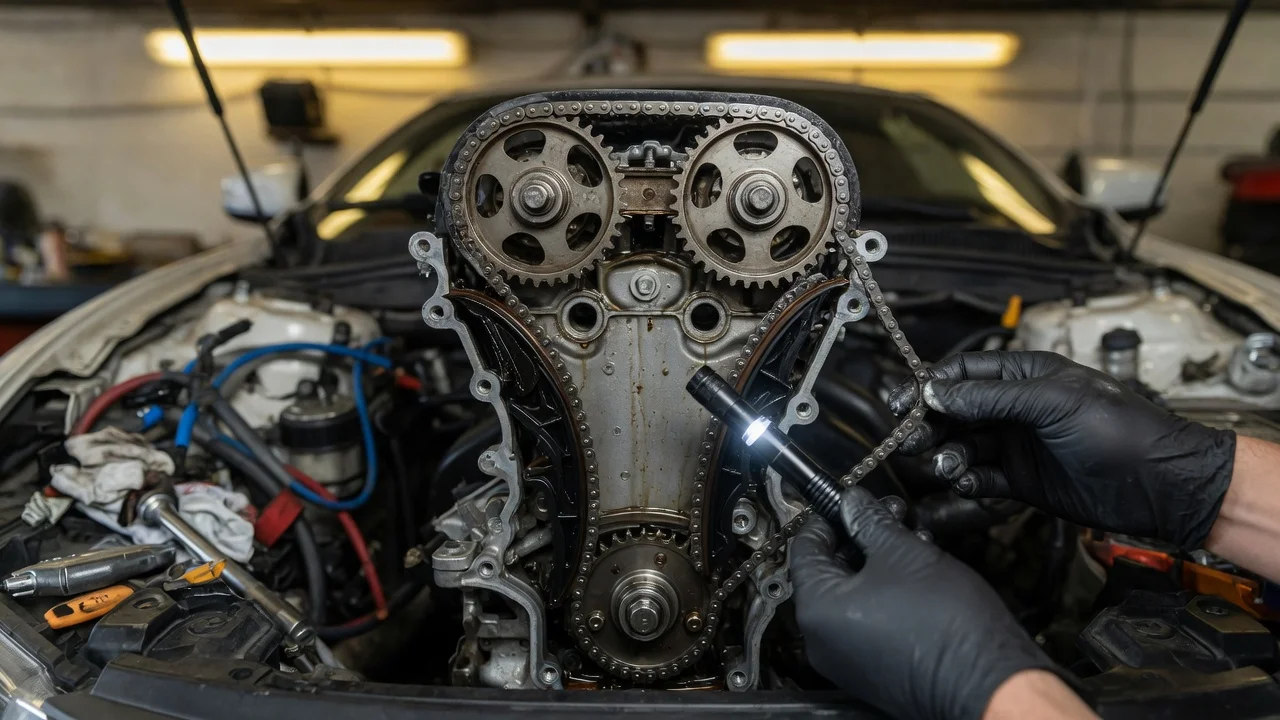
A timing chain links the crankshaft to one or more camshafts. The crankshaft drives the pistons, while the camshaft opens and closes the intake and exhaust valves. The chain keeps these parts in phase so valves open and close at the correct points in the piston cycle.
Unlike a timing belt, a timing chain is usually designed to last the life of the engine under normal service. However, it still depends on clean engine oil and a functioning tensioner, guides, and sprockets.
Common causes of timing chain failure
Timing chain problems usually develop gradually rather than failing without warning. Contributing factors include:
Worn or failed tensioner: The tensioner keeps the chain tight. When it weakens, the chain can slap or rattle. Worn chain guides: Plastic or nylon guides can crack, especially with age or heat cycling. Low or dirty engine oil: Insufficient oil pressure can affect hydraulic tensioners and increase chain and guide wear. Stretched chain: Normal wear can increase chain length enough to alter cam timing. Oil sludge or contamination: Blocked oil passages can prevent proper tensioner operation. Overheating: Excess heat can degrade chain guides and reduce oil performance.
Warning symptoms
Rattling or metallic ticking from the front of the engine, especially on cold start; Check engine light with camshaft or crankshaft correlation codes; Rough idle, misfires, or loss of power; Reduced fuel economy; Engine stalling or difficulty starting; Visible metal particles in the engine oil
These symptoms can also come from other faults, so they are not proof of timing chain failure by themselves. A proper diagnosis should confirm the cause before repair.
What defines failure
Broken chain: Immediate loss of synchronization; the engine usually stops or suffers severe internal damage if interference occurs. Skipped teeth: The chain can jump one or more sprocket teeth, causing incorrect valve timing and poor running. Excessive stretch: The chain becomes too long for the tensioner to control, leading to rattling and timing drift. Guide or tensioner collapse: Even an intact chain can fail to function if its supporting parts break.
Interference versus non-interference engines
In an interference engine, the piston can occupy the same space as an open valve if timing is lost. A broken chain in this design can bend valves or damage pistons and cylinder walls. In a non-interference engine, the piston and open valve do not occupy the same space, so timing loss may cause the engine to stop without the same level of internal collision damage.
Whether a particular engine is an interference design varies by manufacturer, engine family, and model year. The owner's manual or a professional diagnostic resource should be consulted for the specific vehicle.
What to do if you suspect a problem
Stop driving if the engine is making loud chain noise, running poorly, or showing timing-related fault codes. Continuing to operate the vehicle can turn a relatively modest tensioner repair into extensive engine damage.
Have the fault codes read with a scan tool. Inspect the oil level and condition if safe to do so. Have a technician confirm the source of the noise before replacing parts. Ask whether the engine is an interference design before assessing risk. Discuss whether chain, guides, tensioner, and sprockets should be replaced as a set.
Prevention
Regular oil changes with the correct specification help protect chain, guides, and hydraulic tensioners. Following the manufacturer's service schedule and addressing unusual engine noises early can reduce the chance of a sudden failure.
However, some engines have known timing chain weaknesses independent of maintenance. Design, materials, and manufacturing variation can affect longevity. When a pattern of failures is known for an engine family, that information should be treated as vehicle-specific rather than general.
Material uncertainty
This guide does not provide specifications, labor times, or exact vehicle applicability because those vary by engine and configuration. Diagnostic conclusions require access to the specific vehicle, its service data, and often physical inspection. Where the exact condition is not known, the wording here states that uncertainty rather than assuming a universal rule.