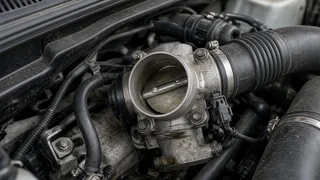
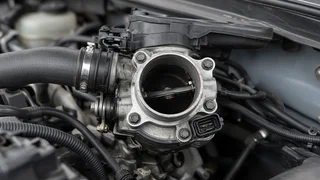
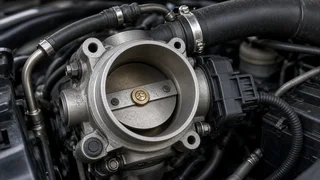
Throttle Body Spacer on a Turbo Car
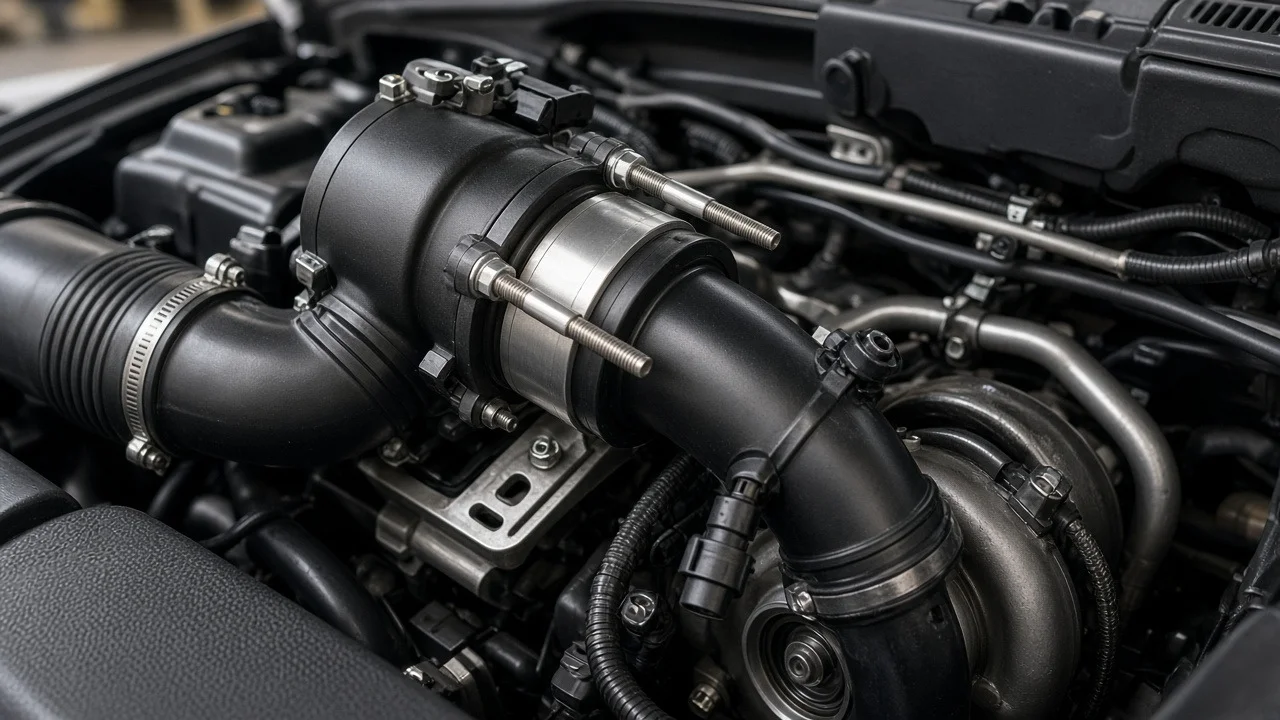
A throttle body spacer on a turbo car occupies a narrow space between the throttle plate assembly and the intake manifold. On a naturally aspirated engine, such a spacer is often marketed as a way to lengthen the intake passage and alter air swirl. On a force-fed engine, however, the spacer sits downstream of the intercooler and compressor, where airflow is already dense, pressurized, and managed by the engine control system. Understanding this position helps explain why the part behaves differently than it does on a vacuum-fed intake.
Essential answer
A throttle body spacer on a turbo car is a machined collar inserted between the throttle plate housing and the intake manifold plenum. Its advertised purpose is usually to change airflow behavior, create a swirl effect, or provide an extra port for water-methanol injection. Because turbocharged air is already compressed, the low-pressure vortex claims that apply to naturally aspirated engines do not transfer cleanly to this location. The spacer remains a minor airflow modification, not a primary boost or fueling device.
The direct answer is that a spacer is generally not a meaningful power part on a turbocharged engine. The throttle plate, position sensor, and idle adaptation logic already compensate for small changes in intake volume and surface contour, so any gain is usually within normal sensor tolerance. The more defensible use is as an installation point for supplementary injection, but that depends on the specific manifold design and control signal strategy. Without manufacturer-specific confirmation, no spacer should be treated as an automatic improvement for a turbo car.