Thermostat Housing in a Car Engine

A thermostat housing in a car engine is more than a simple mounting point. It encloses the thermostat, directs coolant flow, and seals a junction in the cooling circuit. When the housing leaks, warps, or traps air, warm-up behavior and temperature control change. Understanding its role helps you interpret coolant loss, overheating, or slow heating before replacing parts. This overview explains the housing’s function, common failure clues, and what the component means for everyday engine cooling system performance.
Essential answer
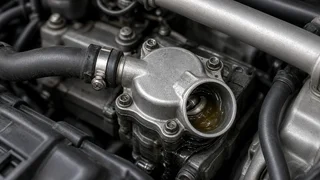
The thermostat housing is the engine-side enclosure that holds the thermostat against its seat and connects the engine’s coolant passages to the radiator hose. It forms a sealed chamber where the wax-filled thermostat opens as temperature rises. A housing may be cast metal or composite plastic, and it usually includes a gasket or O-ring. Its direct job is positioning the thermostat and containing pressurized coolant at the outlet from the cylinder head or intake manifold.
Because the housing sits at a transition between the engine and the upper radiator hose, it experiences repeated expansion and contraction. The cooling circuit pressurizes as the engine warms, and the pressure cap raises the boiling point. Any crack or sealing defect in the housing can release coolant slowly or suddenly. Air pockets may form after refilling if coolant is added too quickly, causing a false overheat or erratic gauge movement near the thermostat area.