Tesla Wheel Alignment: What Owners Should Know
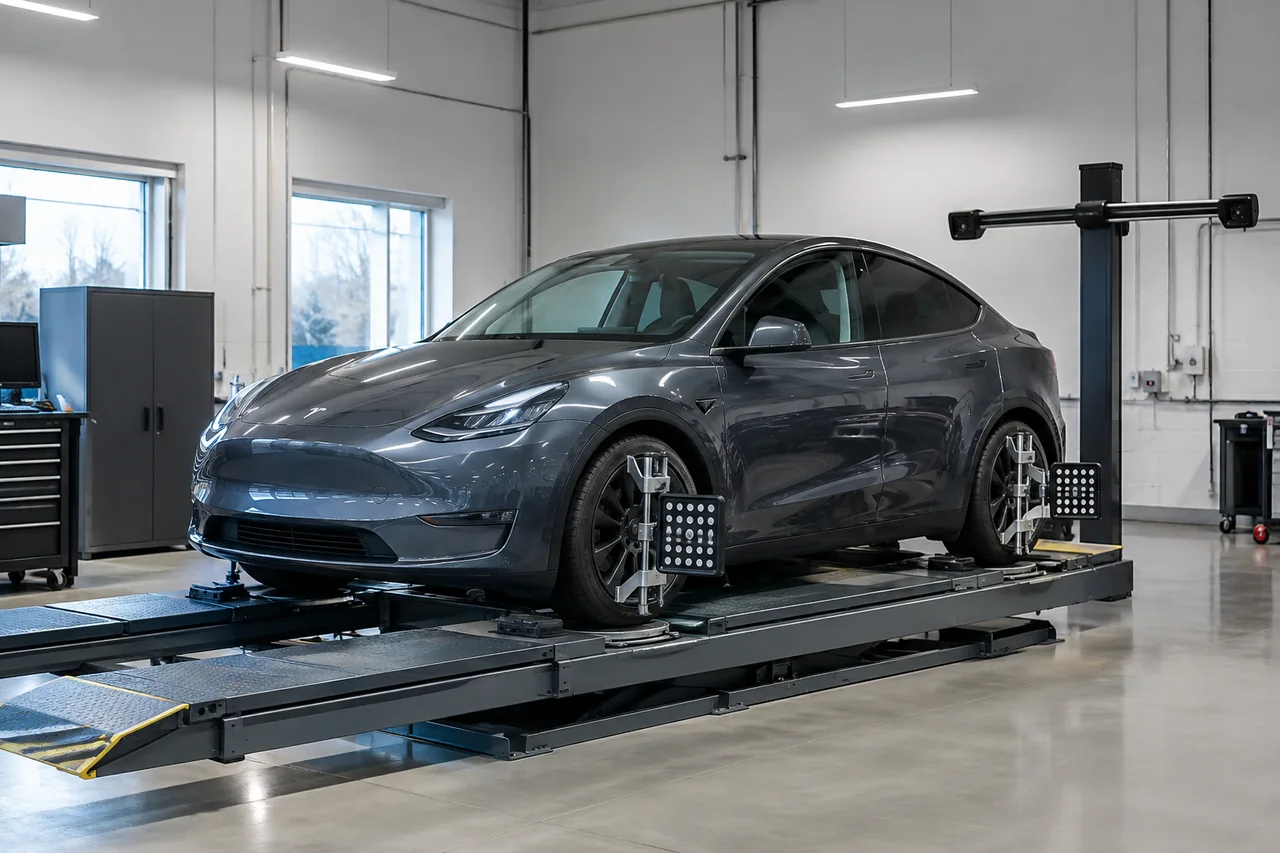
Tesla wheel alignment keeps the wheels pointed according to the vehicle's design so tires meet the road evenly and steering feels predictable. Owners of Model Y and other Teslas often look for wheel alignment for Tesla vehicles after a curb hit, new tires, or a pull. A Tesla wheel alignment service inspects and measures first, then adjusts only where the suspension allows. Configuration, wheel size, and recent impacts all matter.
What Wheel Alignment Does for a Tesla
Wheel alignment angles describe how each wheel sits relative to the car and the road. Toe is whether the front of a tire points slightly inward or outward. Camber is the inward or outward tilt when viewed from the front. Caster is the steering-axis tilt that influences straight-line stability and how the steering wheel returns to center. On a Tesla, not every angle is adjustable on every corner. The shop can only change what that suspension design allows, so four-wheel alignment can differ by configuration.
Those angles affect how much of the tread stays in contact as you drive, how the car tracks, and how quickly a tire wears on one shoulder. A Tesla that is out of specification can pull, feel vague, or chew the inner or outer edge of a tire even when pressures are correct. Alignment does not guarantee a particular range gain. Because Tesla models share a name but not identical geometry, the technician must use specifications and procedures for that vehicle's exact year, drivetrain, ride height, and wheel setup rather than a generic EV chart.
Signs That Justify an Alignment Inspection
Uneven tire wear, an off-center steering wheel position, and a persistent pull are reasons to have tracking inspected, not proof that the alignment is the only problem. Low or mismatched tire pressure, a damaged tire, a crowned road, and worn or bent suspension parts can produce similar behavior. A Tesla wheel alignment check should include looking at those items so the shop does not chase angles while a tire or control arm is actually at fault. Treat the symptoms as a starting point for diagnosis.
A hard pothole or curb strike is another common reason to schedule an inspection, especially if the Tesla then pulls, the steering wheel sits off center, or a new noise appears. Have the vehicle checked rather than waiting for a shoulder to wear through. Severe vibration, a sudden change in steering effort or direction, or visible tire damage are not DIY alignment clues. Slow down, stop in a safe place, and have the car transported or inspected professionally before more driving. Those signs can point to wheel, tire, or suspension damage.
What Owners Can Safely Check Before Booking
Before booking Tesla wheel alignment service, check cold tire pressures against the tire information label on the vehicle, not the number molded on the tire sidewall. Pressure that is low, high, or uneven can mimic a pull and change how the steering wheel sits. While the car is parked on level ground, look at the accessible tread and outer sidewalls for cupping, a worn inner or outer edge, cuts, and bulges. Do not lift the vehicle or reach underneath it. Note anything that looks damaged so the shop can inspect it on a lift.
Write down when the pull or off-center wheel appears, whether it happens more on braking or at highway speed, and any recent pothole, curb, tire rotation, replacement, or suspension work. That history helps a technician decide what to measure first. Home observations cannot establish wheel alignment angles and cannot rule out a bent knuckle, damaged subframe, or worn bushing. They only decide whether an inspection is overdue. Leave the actual four-wheel alignment measurements and any under-car inspection to a shop with the right equipment.
Model Y Details to Confirm With the Shop
Tesla Model Y wheel alignment is not a single recipe. Confirm the model year, drivetrain, ride-height setup, installed wheel and tire sizes, and any lowering kit, lift, or aftermarket control arms before the shop measures. Those details change which alignment targets apply and whether a given angle is even adjustable. Technicians should identify the applicable specifications and any specified preparation, such as settling the suspension or setting tire pressure, before they take readings. Measuring first and looking up targets later can produce a report that does not match the car.
Ask whether the shop's rack, clamps, and targets suit the Model Y's wheels and whether staff are familiar with Tesla lifting points and service procedures. Incorrect lift pad placement can damage battery or body structure, and the wrong clamps can give false readings. Do not expect a universal Model Y alignment setting that fits every year and option package. Adjustment hardware and allowable ranges vary, so a shop that treats every Model Y as identical may leave an angle uncorrected or force a change the suspension cannot safely make.
What a Tesla Wheel Alignment Service Should Include
A complete Tesla wheel alignment service starts with tire condition, matching cold pressures to the vehicle label, and a suspension inspection of the parts that actually hold the wheels. Bent rims, play in a ball joint, or a damaged control arm will keep the car from holding a setting. The shop should then measure all four wheels, compare the readings with the specifications for that Tesla, and make only the adjustments the design supports. Four-wheel alignment matters because rear toe and camber influence how the vehicle tracks even when the complaint feels like a front-end pull.
Request an alignment report that shows initial and final measurements for each wheel, plus a plain explanation of any value that remains outside specification. Some angles cannot be brought in without parts. Ask for an itemized estimate that separates inspection, the alignment itself, and any extra work that needs separate authorization, rather than a single bundled number. If the visit might include electronic checks or camera calibrations, those should follow the vehicle's service requirements for the work performed, not be assumed necessary every time wheels are aligned.
How to Assess the Result and Handle Persistent Symptoms
After wheel alignment for Tesla vehicles, pay attention during ordinary driving rather than a single parking-lot loop. The steering wheel should sit closer to centered on a straight, level road, and a previous pull should ease if alignment was the cause. Give the car a few typical trips, including highway speeds, because some tracking issues show up only then. Alignment does not restore tread that is already worn away. A tire that is cupped, flat-spotted, or worn to the cords may still vibrate or pull and may need replacement as a separate decision.
If the Tesla still pulls, the steering wheel remains off center, or a new wear pattern appears, return with the alignment report so the shop can recheck measurements and look at tires, wheels, steering, and suspension together. A setting that was correct on the rack can change if a part is loose or a wheel is bent. Follow-up should be driven by those symptoms, by visible tire wear, by later impacts, and by any manufacturer guidance for the vehicle, not by a made-up mileage interval that applies to every Tesla.