Subaru Wheel Bearing Replacement: Symptoms and What the Job Involves
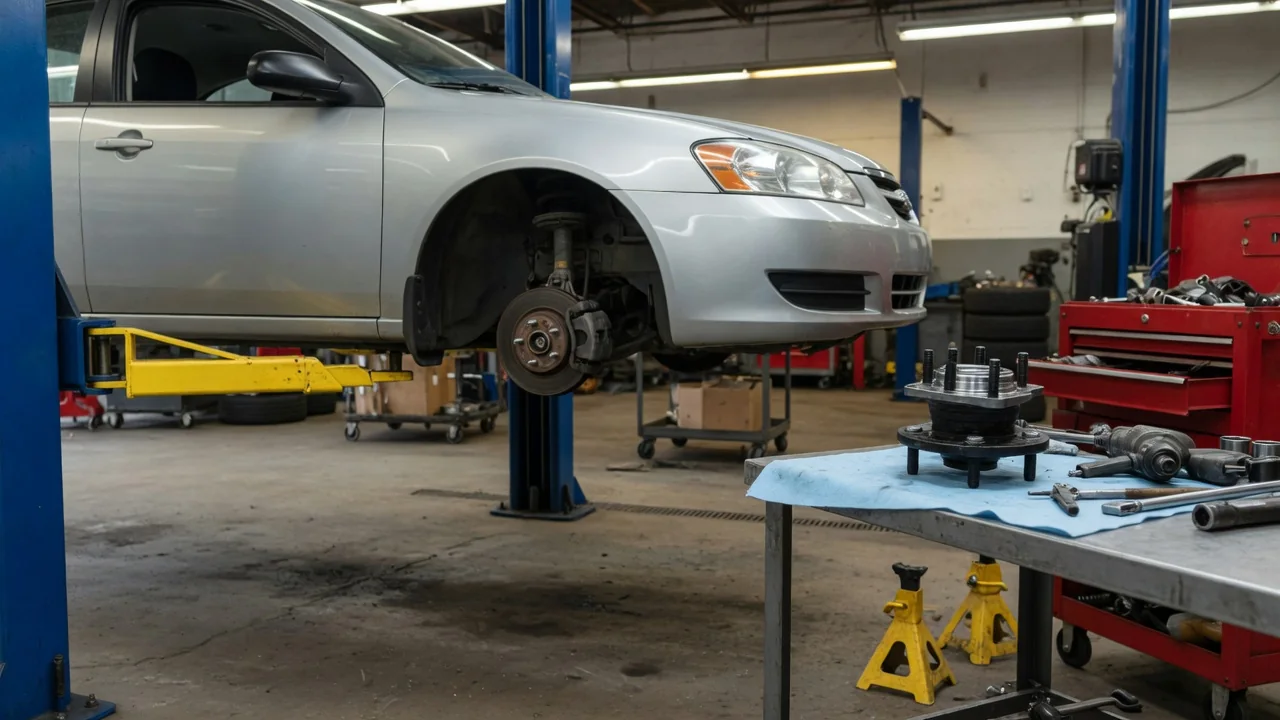
When a Subaru wheel bearing starts to wear, owners often notice a change in how the vehicle sounds or feels at the wheel. Replacing a Subaru wheel bearing is a model-family job that varies with year, axle position, and hub design, including Subaru Outback applications. Understanding how the bearing works, which symptoms may appear, how shops confirm a fault, and what replacement involves helps owners discuss the repair with a technician.
Understanding the Subaru Wheel Bearing and Hub
A Subaru wheel bearing lets the wheel spin on a fixed knuckle or hub while carrying vehicle weight, cornering loads, and drive torque on the driven axle. Inside the hub, rolling elements ride on races that must stay smooth and properly preloaded. As those surfaces wear, pits form, or the lubricant degrades, the assembly can develop play or a cyclic roughness. That roughness often reaches the cabin as a bearing hum, while looseness may show as slight wobble during a wheel-end inspection.
Bearing construction and replacement requirements are not the same on every Subaru. Front versus rear, all-wheel-drive layout, and the specific model year can change whether the shop services a pressed bearing or a complete wheel hub assembly, and whether an ABS wheel speed sensor is built into that hub. Wear, water and grit contamination, curb or pothole impact, and prior installation problems such as incorrect bearing fitment or axle nut handling can all contribute. Noise or play is a reason to inspect, not proof of one cause or of how often these parts fail.
Wheel Bearing Symptoms Subaru Owners May Notice
A humming, droning, or growling sound that rises and falls with road-speed noise is one of the reports Subaru owners associate with a wheel bearing. The pitch often tracks vehicle speed more closely than engine rpm, which is why the sound can seem louder on the highway than around town. That pattern is only a clue. Cupped or uneven tire wear, a failing tire belt, dragging brakes, and other rotating parts can produce similar tones. Cabin acoustics also bounce sound, so a noise that seems to come from one corner may actually originate elsewhere.
Useful notes for a shop include when the noise appears during ordinary driving, whether it changes on different road surfaces, and whether recent tire work, a pothole strike, or a curb impact preceded it. Those details help a technician plan a wheel-end inspection without asking the owner to swerve, coast in unusual ways, or otherwise drive diagnostically. If the vehicle develops severe grinding, visible wheel wobble, or handling that feels unstable, that is beyond a noise complaint. Stop in a safe place and arrange professional assessment or towing rather than continuing to drive.
Identifying the Correct Outback Bearing
Selecting a wheel bearing for a Subaru Outback starts with the vehicle itself, not a generic catalog photo. Model year, VIN, and whether the noisy corner is front or rear all change the Subaru Outback wheel bearing the parts department should pull. Generations use different hub diameters, mounting patterns, and sensor arrangements, so parts listings for a Subaru Outback wheel bearing may show several options for similar-looking vehicles. The affected wheel position also matters because a front hub may carry drive loads that a rear hub does not.
Confirmation has to come from vehicle-specific parts and service information, not from a box labeled for an Outback or from a hub that looks close. That information identifies whether the application uses a serviceable bearing or a sealed wheel hub assembly and whether the ABS wheel speed sensor is integral, a separate ring, or mounted nearby. Bearing fitment also covers spline count, bolt circle, and sensor air gap where those features apply. A similar-looking part from another generation does not establish compatibility, and Subaru Outback wheel bearing replacement should wait until the correct piece is verified.
How a Shop Confirms a Subaru Wheel Bearing Fault
A shop confirming a Subaru wheel bearing fault starts with a controlled assessment rather than replacing parts from the sound alone. The technician listens for road-speed noise on a short evaluation drive, then inspects tires for wear patterns, checks brakes for drag or roughness, and performs a wheel-end inspection for play, roughness when the wheel is rotated, and hub corrosion. Related components such as CV joints, heat shields, and splash shields get a look as well, because they can mimic or mask a bearing complaint.
A noisy bearing may still feel tight on a simple wiggle test, so the absence of obvious looseness does not clear the part. An owner also cannot reliably confirm condition from cabin sound, because volume and direction change with speed and road texture. The shop's job is to identify the affected corner with inspection and, when needed, a chassis ear before recommending Subaru wheel bearing replacement. An ABS warning light is evidence to interpret, not proof the bearing has failed; a wheel-speed sensor circuit, tone ring, or wiring issue can set the same lamp and needs vehicle-specific confirmation.
What Subaru Wheel Bearing Replacement Involves
Wheel bearing replacement on a Subaru is a hub-level repair, not a roadside swap. After supporting the vehicle, the shop accesses the affected hub, disconnects brake and sensor items as required, and removes the failed bearing or complete wheel hub assembly. Supporting surfaces on the knuckle, axle, and mating faces are inspected for scoring, rust scale, and distortion before the verified replacement goes in. Some applications use a bolt-on hub assembly, while others require pressing a bearing into the knuckle. The exact path comes from vehicle-specific service information, not from a one-size procedure.
Hub corrosion, a seized axle nut, or damage to a splash shield, stud, or sensor harness can expand the job when those conditions appear during disassembly. Those conditions do not show up on every Subaru, but they do change labor and parts when they are present. Correct press tooling or hub fixtures, specified fastener handling, and torque procedures protect preload and keep the new bearing from being damaged on installation. Wheel-speed components also need protection so the ABS circuit is not disturbed. That combination of fitment control and fastener practice is why professional service is the appropriate route.
Reviewing an Outback Repair Estimate and the Finished Job
A useful Subaru Outback wheel bearing replacement estimate names the confirmed wheel position, whether the part is a bearing or a wheel hub assembly, labor, required hardware such as an axle nut or hub bolts, and any extra work supported by inspection findings. Model year, hub design, the amount of hub corrosion the technician actually found, and local labor rates all move the total, so a neighbor's bill is a poor comparison. The estimate should not be treated as a fixed duration either, because seized parts and additional damage only become clear once the hub is apart.
Replacing another Subaru Outback wheel bearing requires its own condition assessment; shops should not pair corners automatically just because one hub was noisy. Ask whether the work performed, such as disturbing a control arm or subframe fastener, creates a need for alignment checks. After the job is finished, the original road-speed noise should be gone, the wheel should sit flush with correct hardware, and ABS or traction lights should not remain unexplained. If the same tone, a new grind, or a warning lamp appears on the drive home, return promptly so the shop can recheck the repair.