Subaru PCV Valve Replacement: Symptoms, Locations, Hoses, and Cost
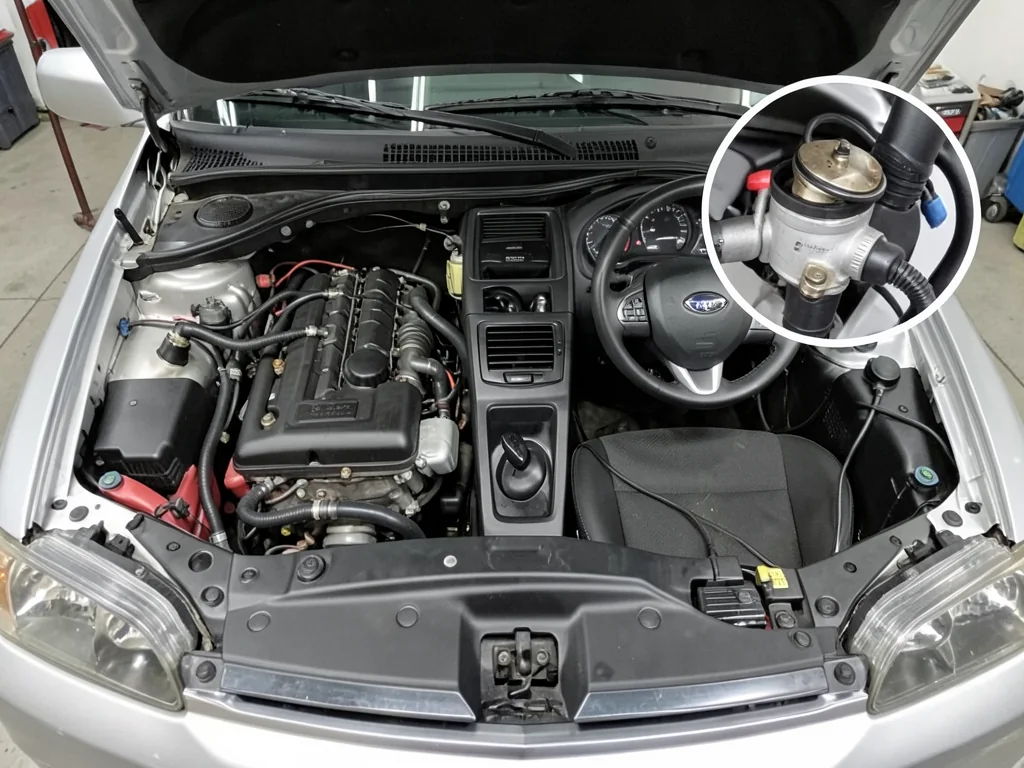
A Subaru PCV valve is a small but important part of positive crankcase ventilation on boxer engines used across Forester, Outback, Legacy, Impreza, Crosstrek, WRX, STI, and Ascent. Replacement is not a mileage-only job. Symptoms, hose condition, engine identification, and turbo layout all change what you inspect and how you confirm the part. Understanding the valve, the hoses, and the estimate helps owners decide when a check is warranted and when a technician should take over.
What the PCV Valve Does in a Subaru Engine
Positive crankcase ventilation on a Subaru engine captures blow-by gases that leak past piston rings and routes them into the intake system instead of venting them to the atmosphere. Intake vacuum helps draw those gases through the PCV valve so they can be burned with incoming air. The valve is only one piece of that path. Hoses, internal passages, and hose connections complete the circuit, and a restriction or leak anywhere in the system can raise crankcase pressure even if the valve itself still moves.
A Subaru PCV valve is not interchangeable across every boxer layout. Model year, engine identification, and whether the engine is turbocharged determine the correct component and the service procedure that applies. Forester, Outback, WRX, and Ascent ventilation layouts can differ even when the part looks similar. Mileage alone does not prove a failed valve. A PCV concern needs diagnosis that considers oil consumption, leaks, hose condition, and how the engine is actually running before anyone orders a replacement.
Symptoms That Warrant a PCV System Check
Subaru PCV valve symptoms often show up as a rough idle, a change in oil consumption, fresh oil leaks, or exhaust smoke that was not present before. Those clues can justify a ventilation-system check, but they have many other causes. A stuck-open valve can lean the idle mixture by adding extra crankcase flow into the intake, while a stuck-closed valve or blocked hose can push crankcase pressure toward seals. None of those observations, by themselves, confirm that the PCV valve has failed.
Safe observations come first. Record when the idle, smoke, or leak appears, and check oil level using the procedure in the owner's manual rather than guessing from the dipstick at a random temperature. Look for seepage with the engine off and cool. A rattle from the valve or oil residue on a hose does not prove correct operation or identify the source. If an oil-pressure warning appears or the engine runs severely poorly, stop safely and have the vehicle professionally tested instead of continuing to drive.
Finding the Correct Valve on Forester, Outback, and Legacy
Forester, Outback, and Legacy owners should start with model year and engine identification, then consult vehicle-specific service information before assuming where the PCV valve sits. A 2010 Subaru Forester PCV valve location is a common question, but that year still covers more than one engine configuration, so a single under-hood spot cannot be assigned to every vehicle. The same caution applies to a 2014 Forester and a 2013 Outback: confirm the engine code and the labeled diagram first, then compare the actual fittings on the engine.
A labeled service diagram is what distinguishes the PCV valve from nearby breather connections, vacuum fittings, and other hose attachments that can look similar on a boxer engine. Replacing the PCV valve on a Forester, Outback, or Legacy depends on that confirmation. A useful replacement assessment establishes the correct component, how it is accessed, whether attached hoses are still serviceable, and which procedure applies to that engine. Guessing from the model name alone is how the wrong valve gets ordered.
Impreza and Crosstrek PCV Identification and Access
An Impreza or Crosstrek owner should gather the model year, engine identification, and any turbo or naturally aspirated designation before locating or ordering a PCV valve. Replacing an Impreza PCV valve and replacing a Crosstrek PCV valve can look like the same job, yet those nameplates span multiple engines and ventilation-hose routes. Vehicle-specific information is what confirms valve placement and how the ventilation hose is routed from the crankcase path into the intake. The model name on the badge is not a parts catalog.
Access and hose condition then set the real scope of work. If the valve is buried behind intake plumbing, replacement may include removing neighboring parts just to reach hose connections and inspect them. Soft, collapsed, or oil-soaked hoses can make a simple valve swap incomplete. Confirm the applicable valve, seals, and hose connections for that vehicle and engine rather than assuming fitment from Impreza or Crosstrek branding. Ordering the wrong Crosstrek PCV valve or Impreza part delays the job and can leave the original ventilation problem untouched.
WRX, STI, and Ascent PCV Service Considerations
WRX, STI, and Ascent ventilation layouts also depend on the exact year and engine configuration. A 2002 WRX PCV valve, sometimes listed as an 02 WRX PCV valve, belongs to that generation's service information and should not be assumed to match later WRX or STI arrangements. WRX PCV valve replacement and STI PCV valve replacement therefore start with engine identification, not with a photo of a later engine bay. Ascent PCV valve replacement needs the same year-and-engine confirmation because that model's layout is not a WRX copy.
Turbocharged WRX and STI engines see changing intake conditions as boost comes and goes, so the ventilation system must keep blow-by gases moving without letting pressure reverse through the wrong path. Correct hose routing matters more in that setting than on a simple naturally aspirated layout. Aftermarket catch cans, oil separators, or altered hoses can change how the system behaves and should be disclosed to the technician before diagnosis. Restricted access, uncertain routing, or suspected crankcase-pressure problems are reasons to stop guessing and have the layout assessed professionally.
PCV Hose Checks and the Scope of Valve Replacement
A Subaru PCV valve hose should be inspected with the engine off and cool. Look at accessible hoses for cracks, loose connections, collapse, and oil seepage at the ends. Damaged hoses or obstructed passages can produce the same idle, leak, and consumption complaints as a faulty valve, even when the valve still functions. Checking only the valve and ignoring the ventilation hose is a common reason a replacement does not restore normal crankcase ventilation. Soft spots and oil-soaked sections deserve the same attention as the valve body.
Replacement itself stays a confirmation process rather than a universal Subaru procedure. Confirm the diagnosis and the part, assess attached hoses and seals, follow the vehicle-specific installation requirements, and verify operation afterward. Service information is required for any seals, sealing materials, and tightening specifications; those details are not the same on every boxer engine. Brittle fittings, difficult access, and uncertain component identification are practical reasons to use a qualified technician. Forcing a hose onto a cracked nipple can create a new leak while leaving the original ventilation problem in place.
What Shapes a Subaru PCV Replacement Estimate
Subaru PCV valve replacement cost is not a single number. An estimate usually includes diagnosis, the valve, any necessary hoses or seals, access labor, and shop charges that apply to that visit. Engine configuration and how buried the valve is change labor time. Local rates and damaged hose connections change the parts line. A turbo WRX or STI with extra intake plumbing can take longer than a more open naturally aspirated Forester or Outback layout, even when the valve itself is inexpensive.
Ask for an itemized estimate that names which components need replacement and what evidence supports that work. After service, check that the original symptoms have eased, connections are secure, oil level is stable using the owner's manual method, and no new leaks or running problems remain. Do not treat a Subaru-wide PCV replacement interval as a given; use the maintenance information that applies to that vehicle. Persistent oil consumption, smoke, or leaks after a valve change still need further diagnosis rather than another parts-only attempt.