Splicing In-Tank Fuel Pump Wires
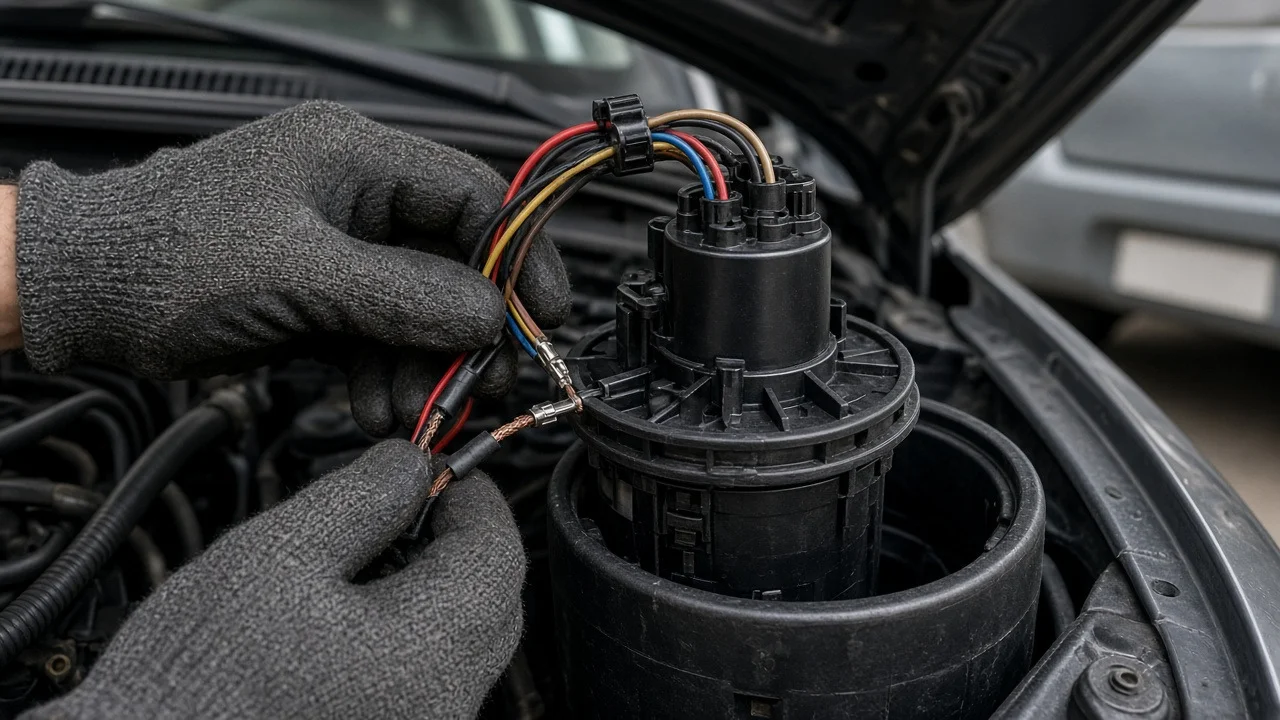
Splicing the wiring for an in-tank fuel pump is a repair task that raises immediate concerns about safety, fuel pressure, and long-term reliability. A pump submerged in fuel depends on sealed, low-resistance electrical connections to keep the injector rail supplied at the correct flow. When a connector melts, a wire chafes, or a previous repair corrodes, the circuit can fail intermittently or stop the engine entirely. Understanding how the splice interacts with the pump, the fuel filter, and the engine configuration matters before cutting any wire. The work must be evaluated against the specific harness design, because some fuel pump assemblies use special insulated wire that resists gasoline exposure better than generic automotive wire.
Essential answer
The essential answer is that in-tank fuel pump wires can be spliced, but the repair is only as dependable as the splice method, the insulation, and the condition of the surrounding harness. A pump inside the tank operates in a wet fuel environment, so the connection must remain mechanically secure and electrically stable while submerged. A poor crimp, a loose solder joint, or a connector that allows fuel to reach the copper strands can raise resistance. That resistance reduces current to the pump, weakens fuel pressure, and may make the pump run hotter or trigger fuel trim corrections at the injector.
A safe splice also depends on confirming the circuit rather than assuming a fault code directly identifies the pump or its wiring. A code related to fuel pressure or pump control is a diagnostic starting point, not proof that a wire must be cut. Before splicing, the technician should inspect the sender flange, the in-tank pigtail, and any bulkhead connector. If the damaged section is outside the tank, the repair is less demanding than splicing the submerged portion. If the damage is inside the tank, the splice must use fuel-rated insulation and a method that cannot loosen inside the module.