Speaker Wire for Car Subwoofer
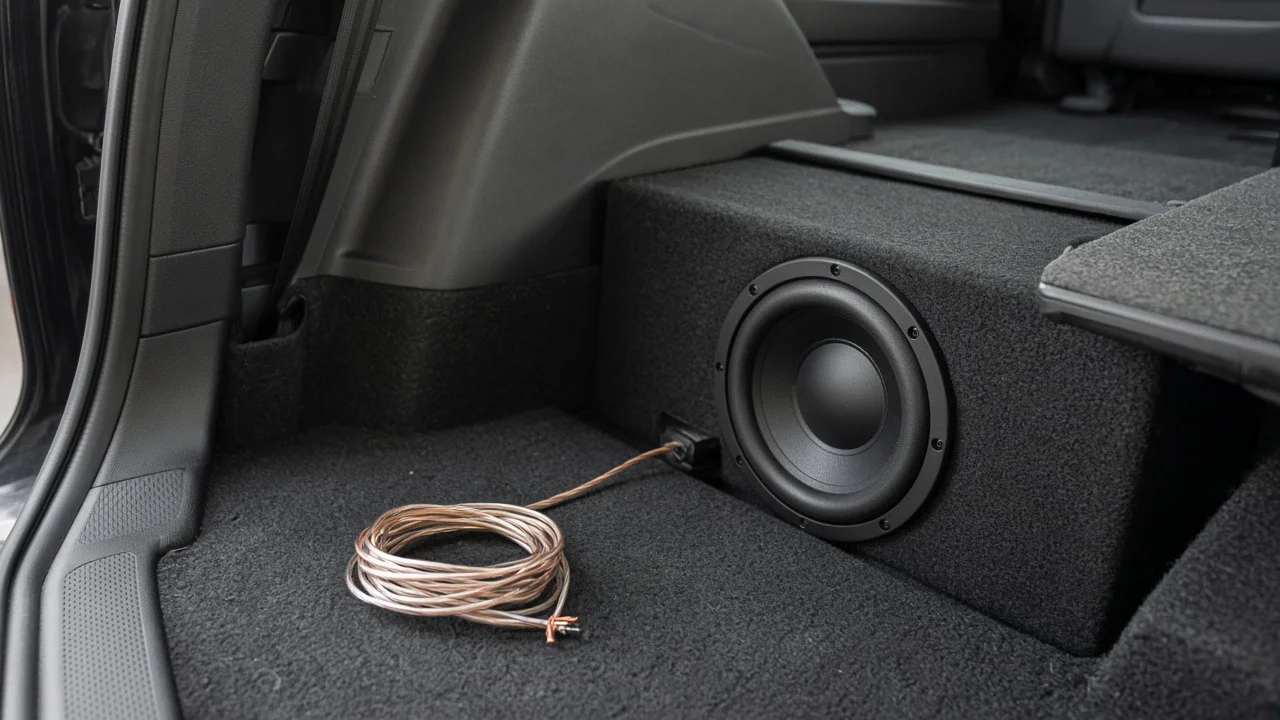
Choosing speaker wire for a car subwoofer is about preserving the low-frequency signal between the amplifier and the driver. Subwoofer circuits carry more current than typical full-range speaker wiring, so resistance and installation durability matter more than elusive sonic magic. The vehicle environment adds heat, vibration, and tight panels that challenge ordinary cable. This overview explains what makes subwoofer wire suitable and what a buyer should prioritize.
Essential answer
Subwoofer wire connects an audio source, usually through an amplifier, to the large low-frequency driver. The most important property is current capacity relative to run length: longer automotive runs increase resistance and can reduce damping control over the cone. In practice, a stranded copper conductor with sufficient cross-sectional area keeps voltage drop low and resists breakage from body flex. The size must match the amplifier power and the distance through the vehicle, not simply the connector diameter.
Installation context separates car subwoofer wire from home audio cable. The cable may pass near the head unit, antenna, or other vehicle integration points, so routing can influence signal reception and induced noise. A flexible jacket that tolerates heat and abrasion helps the run survive door sills and seat tracks. While manufacturer-dependent color codes and terminal styles require vehicle-specific confirmation, the essential answer is straightforward: choose properly sized, stranded copper wire with a durable automotive-rated jacket and secure terminations.