Spare Tire Basics: Types, Where It Lives, and What the Spare Tire Well Is For
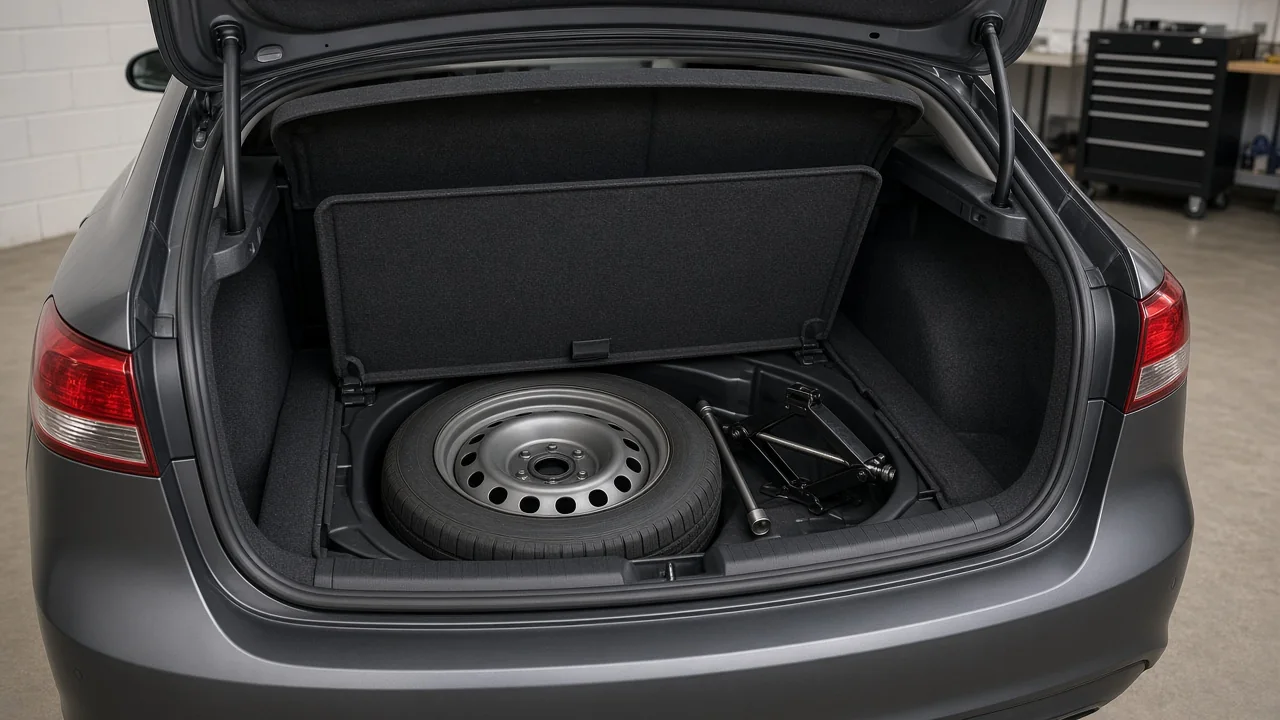
A spare tire is easy to forget until you need it. When that moment comes, it helps to know what kind you have and where it's stored. Some vehicles carry a full-size spare, others a compact space-saver or another temporary design, and some have no spare at all. Knowing the differences, and what the spare tire well is for, makes a roadside flat much less stressful.
What a Spare Tire Is and Why Cars Carry One
A spare tire is a complete backup wheel and tire that replaces a flat, punctured, or damaged tire so the vehicle can move again. It rarely travels alone. Most cars pair it with a jack to lift the vehicle and a lug wrench to remove and tighten the wheel nuts, and those tools usually sit near the spare. Some manufacturers skip the spare and supply a tire inflator kit with sealant instead. That can handle a small puncture in the tread but not a torn sidewall or a bent wheel.
Equipment varies a lot between vehicles, so check what your own car actually carries rather than assuming. Some vehicles use run-flat tires, which can support the car for a short distance after losing pressure, and have no spare or jack at all. Even when a spare is there, it only helps if it holds air, the jack works, and nothing blocks access to it. A spare buried under luggage or sitting half-deflated protects no one, so a quick periodic check is worth the time.
Full-Size Spare Tires: Matching Wheels and Matching Tires
A full-size spare is a tire and wheel the same size as the four already on the vehicle. Sometimes it comes on a matching alloy wheel, making it a true fifth tire. Other vehicles put it on a plainer steel wheel that fits correctly but looks different. Once it's on, a full-size spare can generally be treated much like a regular tire. Its tread depth and age may not match the others, though, especially if it sat unused while the road tires wore down.
The tradeoff is space and weight. A full-size wheel and tire is bulky and heavy, which is why it shows up most often on pickups, SUVs, and some larger sedans. It's less common on compact cars built around cargo space and efficiency. A spare that never touches the road still ages, because rubber breaks down over time and air slowly seeps out. Checking its pressure and reading the date code on the sidewall now and then tells you whether it's still trustworthy.
Compact Space-Saver Spares: The Narrow Donut Explained
The compact space-saver, commonly called a donut spare, is a narrower, lighter tire on a small steel wheel. Automakers use it to free up trunk space and cut weight while still giving drivers a way to deal with a flat. It's easy to recognize. The tread is visibly slimmer than a normal tire, the wheel is plain and often brightly painted, and the sidewall carries printed warning text saying it's meant only for temporary use.
A compact spare is meant to get you to a tire shop or another safe place, not to be driven on for days or weeks. Its speed and distance limits are printed on the sidewall and repeated in the owner's manual, and those are the numbers to follow. Space-savers also usually need a higher inflation pressure than standard tires. The required pressure is printed on the tire itself or on a nearby label, so check it rather than guessing.
Temporary Spare Tires vs. Space-Savers: Are They the Same Thing?
The terms overlap, which causes confusion. Temporary spare is the broad label for any spare not meant for full-time driving, and the compact space-saver is simply the most common kind. Not every temporary spare is narrow, though. Some are close to full diameter but sit on a lightweight or non-matching wheel, or are built in a way that isn't meant for ongoing use. So a spare that looks close to normal size can still have temporary restrictions, and a quick glance may not tell you.
The reliable way to tell is to read the markings on the sidewall and any label on or near the spare. Look for wording such as temporary use only, along with any stated maximum speed and inflation pressure. The owner's manual usually repeats this information and lists any extra cautions for your vehicle. Because restrictions differ between vehicles and tire designs, follow the limits marked for your own spare rather than a general rule of thumb, since another car's numbers may not apply.
What the Spare Tire Well Is and Where It Is Located
The spare tire well is the recessed compartment, usually under the trunk or cargo floor, shaped to hold the spare along with the jack and tools. A removable floor panel covers it. Foam trays, brackets, or a central hold-down keep the jack, lug wrench, and wheel lock key in place so they don't rattle or shift. Not every vehicle has a well. Many trucks and some SUVs carry the spare under the rear of the vehicle on a carrier that lowers with a cable winch, and some mount it on the tailgate.
Because the well is the lowest point of the cargo area, it can collect water if a trunk seal, taillight gasket, or drain plug is leaking. Lifting the floor panel now and then to check for dampness, a musty smell, or rust keeps a small leak from turning into corrosion. On cars sold without a spare, the well may hold a foam block, an inflator kit, or nothing at all. If you're adding an aftermarket spare kit, make sure it actually fits the well and that the floor panel still closes properly.
How to Tell Which Type of Spare Your Car Has
The best time to identify your spare is in the driveway, not on a dark roadside. Lift the cargo floor panel or look under the rear of the vehicle to find it. Then compare it with the road tires. A noticeably narrower tread or smaller wheel points to a compact spare, while a matching width and wheel size suggests a full-size one. Read the sidewall for temporary use only wording, and check the owner's manual and the tire information placard for the spare's required pressure and any restrictions.
While you're there, make sure the jack, lug wrench, and any wheel lock key are present, because a locking lug nut can't be removed without its key. Check the spare's pressure with a gauge, since a flat spare is no help on the roadside. If the spare is missing or damaged, or its mounting hardware or carrier cable looks badly corroded, a tire shop can recommend a safe replacement that suits your vehicle and fits where the spare is stored.