Sodium-Ion EV Batteries: How They Work and Which Cars Use Them
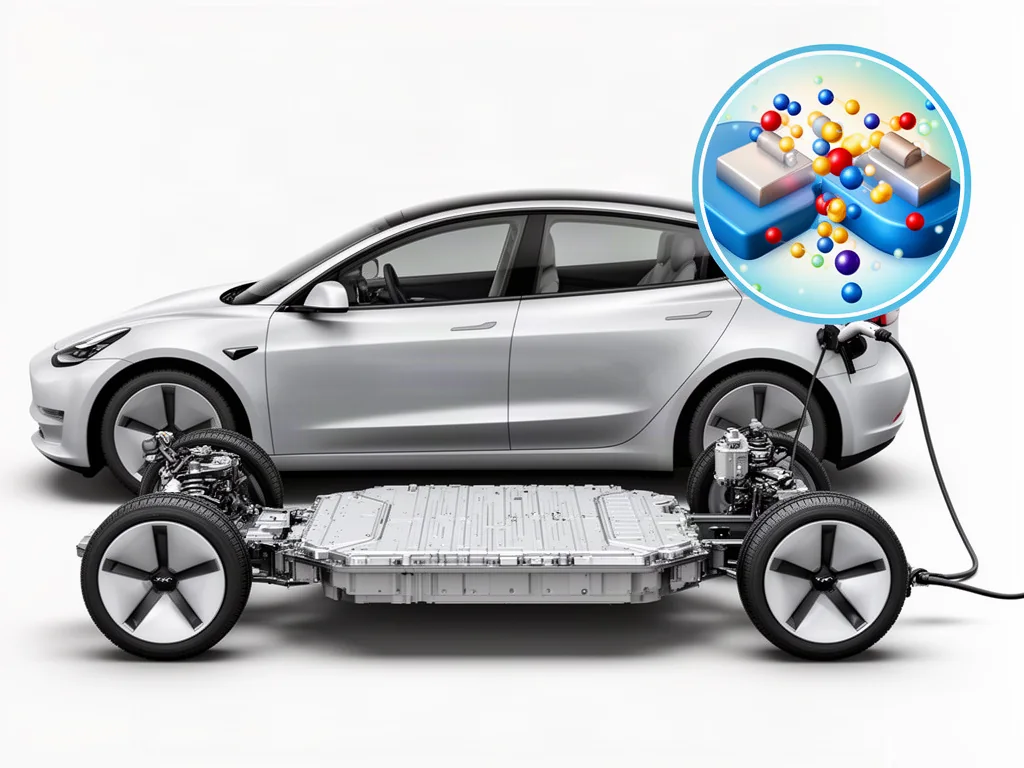
A sodium ion battery for EV use is a rechargeable traction pack that stores energy by moving sodium ions between electrodes, then feeding the drive system. This article explains how sodium-ion cells work, what shapes range and charging, which production cars actually use a sodium EV battery, and what buyers should verify before treating a sodium-ion battery EV as the right purchase.
What a Sodium-Ion Battery Does in an Electric Vehicle
A sodium-ion battery for an EV is a rechargeable electrochemical system. During charge and discharge, sodium ions shuttle between a positive electrode and a negative electrode while electrons travel through the vehicle’s high-voltage circuit. That stored energy is what a traction inverter draws to run the motor. The same idea underpins a lithium-ion pack, but the working ion is sodium rather than lithium. Calling something a sodium EV battery therefore describes how energy is stored, not a single catalog part number, voltage, or pack size.
Cells are grouped into modules and then into a traction pack that supplies the drive system, accessories, and thermal hardware. Because several cathode materials, anode recipes, and electrolytes exist, sodium-ion battery EV designs are a family of chemistries rather than one fixed specification. Stationary storage projects and grid cabinets often use similar cells, yet those announcements do not mean a road-going EV with sodium ion battery hardware is on sale. For cars, the relevant question is whether a production vehicle actually carries a sodium-ion traction pack, not whether sodium cells exist in a warehouse.
How Sodium-Ion Cells Store and Release Energy
When the car is charging, an external charger raises cell voltage so sodium ions leave the cathode, travel through the electrolyte, and insert into the anode, while electrons flow through the pack wiring. During driving the process reverses: ions return toward the cathode and electrons leave the pack to the inverter. A porous separator keeps the electrodes from touching while still letting ions pass. Exact cathode materials and electrolyte salts vary by supplier, so two sodium-ion battery for EV products can share the ion-shuttle principle and still differ in voltage window, rate capability, and temperature limits.
Hard carbon is a common anode in many sodium-ion designs because graphite, which works well with lithium, does not host sodium ions as readily. Cathodes may use layered oxides, polyanion compounds, or Prussian-blue analogs, each with its own energy density and stability trade-offs. A battery management system watches cell voltages, current, and temperature, while thermal management heats or cools the pack so chemistry stays inside its allowed window. Those pack controls, not the marketing name sodium-ion ev battery, determine how hard the cells can be charged or discharged on a given day.
What Determines Range, Charging, and Cold-Weather Operation
Range is not a property of the chemistry name alone. Usable pack capacity, vehicle mass, aerodynamics, rolling resistance, climate-control load, and driving style set how far an EV with sodium ion battery hardware will travel on a charge. Energy density describes how much energy fits in a given mass or volume; a lower-density sodium battery for EV use needs more pack mass or space to match a higher-density lithium-ion pack of the same kilowatt-hours. That packaging constraint can affect cargo room, curb weight, and how much energy remains after the manufacturer reserves a buffer for longevity and cold-weather operation.
Charging speed depends on the specific cell design, pack temperature, the battery management system’s current limits, and the charger the car is plugged into. Laboratory coin-cell or pouch results should not be read as the complete vehicle’s highway range or DC fast-charge curve. Any numerical claim needs the test cycle, temperature, and whether the figure is cell, module, or vehicle level. Cold weather slows ion transport and can force the thermal system to spend energy heating the pack; that behavior is design-specific. A winter result from one sodium-ion battery ev should not be treated as a universal sodium battery EV trait.
Which Production Cars Actually Use Sodium-Ion Batteries?
As of 26 September 2026, publicly documented retail sodium-ion traction use remains concentrated in China rather than in a global catalog of nameplates. JAC’s Yiwei (Hua Xianzi) small electric car, offered in the Chinese market, has been the most widely cited production example of an EV with sodium-ion battery cells supplied in a CATL-related program, including mixed-chemistry battery pack layouts that pair sodium-ion modules with lithium iron phosphate rather than an exclusively sodium-ion pack in every version. Customer deliveries of that model family in China have been reported; equivalent retail offerings under other brand names should be confirmed on the specific window sticker or Chinese homologation sheet for that year and trim.
Announcements, prototypes, and pilot fleets are not the same as series production with established customer deliveries. Several suppliers have shown sodium-ion cells for automotive qualification, and mixed-chemistry packs are a documented way to use sodium cells without committing the entire traction battery to that chemistry. In the United States, no retail EV with a factory sodium-ion traction pack can be confirmed as a customer-deliverable offering at this writing. That is a market-availability limit, not a claim that sodium-ion hardware is unused everywhere. Buyers outside China should treat export rumors as unproven until the selling market’s official configuration list names the chemistry.
Materials, Manufacturing, and Battery Life
Sodium is abundant in the Earth’s crust and in brines, which is why a sodium ion battery for EV discussion often starts with raw-material availability. Abundance of the element is not the same as a ready supply of battery-grade salts, cathode precursors, hard carbon anode feedstock, and dry-room cell plants. Commercial viability still depends on material purification, electrode coating yield, formation cycling, pack integration, and whether factories can run at automotive quality and volume. A cheaper feedstock does not automatically produce a cheaper, durable sodium-ion EV battery if processing scrap or pack engineering offsets the mineral advantage.
Cycle life and calendar aging follow the chosen cathode, anode, electrolyte, depth of discharge, temperature history, and charge rates; no single lifespan number applies to every sodium-ion cell. Recycling and end-of-life handling matter, but collection networks, hydrometallurgical or direct-recycling routes, and local regulations are not uniformly in place, so recovery should not be assumed. Safety is a system property: cell design, current interrupt devices, pack enclosure, thermal management, and crash validation all contribute. The chemistry should not be called fireproof. A diagnostic trouble code is evidence of a condition to interpret, not proof that a module has failed, and manufacturer-specific codes need vehicle-specific confirmation.
What Buyers Can Verify Before Choosing a Sodium-Ion EV
Before choosing a sodium-ion battery for EV shopping list, verify the exact model year, market, and version, because chemistry can differ by trim. Ask the seller to document whether the traction pack is sodium-ion, lithium-ion, or a mixed-chemistry battery pack, plus usable capacity, certified range on the local test procedure, onboard charger rating, and DC peak charge rate with the stated temperature window. A cell maker’s technology day does not set the kilowatt-hours, thermal architecture, or software limits of a particular car. Warranty language, roadside assistance, and service documentation are market-specific; read the booklet that applies to the vehicle identification number rather than assuming coverage from another region.
You cannot reliably tell battery chemistry from body style, badge, or everyday smoothness of the drive. Identification belongs in the window label, battery data plate, owner’s literature, or a scan performed by qualified service personnel. Do not open the pack, swap cells, or attempt a chemistry conversion. If a warning lamp or stored fault appears, treat it as a prompt for diagnosis, not as a parts list. Confirming a sodium battery for EV purchase is a paperwork and service-network question: chemistry, capacity, charging specs, and support in your market, written for that car.