Shock Absorber Mounts, Bushings, Bolts, and Brackets Explained
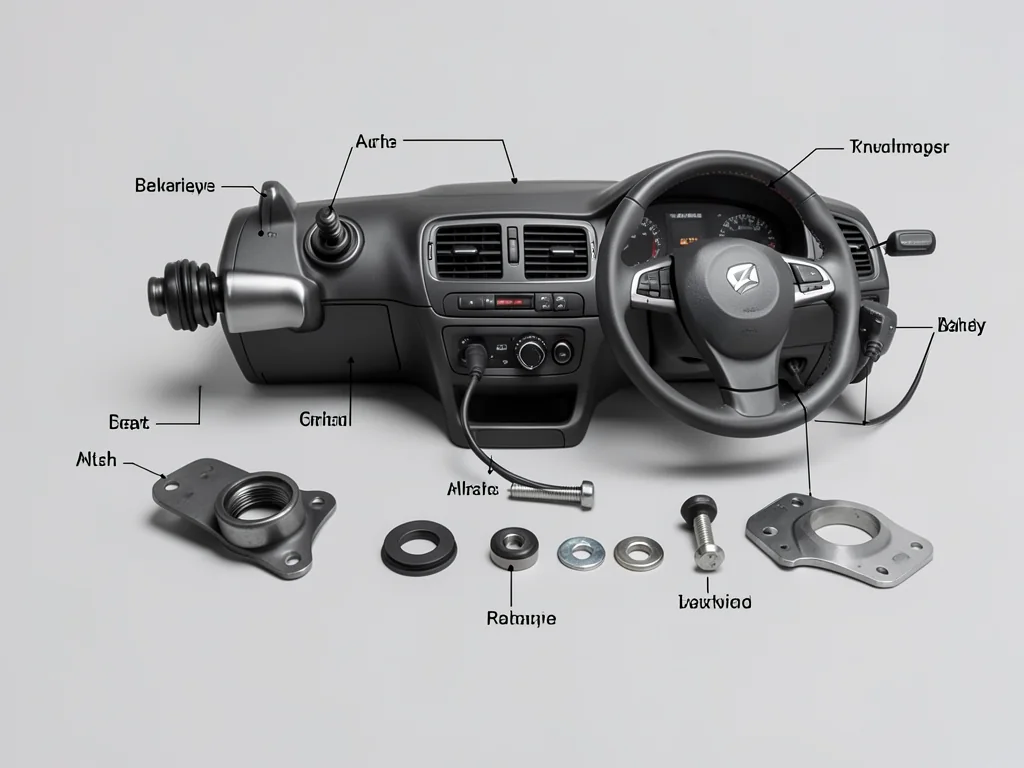
A shock absorber only damps motion if its mounting hardware holds the assembly to the vehicle. The bolt for a shock absorber, the shock absorber mount, rubber bushings, a mounting stud, washers, spacers, and a mounting bracket all share that job. Layouts differ by axle and suspension design, so identifying the vehicle and the actual connection comes first. Wear, corrosion, and missing parts at those attachment points change how damping forces reach the chassis.
How Shock Absorber Mounts Secure the Assembly
Shock absorber mounts connect the damper to the vehicle and transmit damping forces through their attachment points. A through-bolt, a shock absorber mounting stud, or a combination of both clamps the eye, stem, or housing so those forces reach the body, subframe, or axle instead of rattling the unit in free space. Shock absorber mounting is therefore structural as well as locational: if the connection is loose, the damper cannot control wheel motion as designed.
A shock absorber top mount often sits at the strut tower on a MacPherson-style front end, while a rear shock absorber mount may be an eye on an axle, a tower pad, or a link-style bracket. Those locations and constructions depend on the suspension, so a top mount shock absorber is not the same hardware as a lower eye with a rubber bushing. Identifying the vehicle, axle position, and mounting arrangement is required before choosing a shock absorber mounting kit. Bearings and spring seats appear on some strut mounts only; they should not be assumed for every shock absorber mount.
What Rubber Bushings Do and How Wear Appears
Rubber bushings at the shock absorber mounting connection isolate vibration and allow the damper to articulate as the suspension travels. The term rubber shock absorber usually means those bushings, and shock absorber rubber or shock absorber rubbers in catalogs commonly describe the same isolators, sometimes bonded to a sleeve and sometimes separate. Identifying the actual component matters before shock absorber mount replacement, because a worn bushing is not the same repair as a leaking damper or a damaged top mount.
Rubber deterioration shows up as splitting, displaced rubber, bond separation from a sleeve, or missing material around the eye. Those signs justify inspection; they do not by themselves prove the bushing is the only worn part or that the damper has failed. Clunks, harshness, and vibration at the mounting area can also come from a loose shock absorber bolt, a damaged top mount, a worn link, or a distorted bracket. Tracing the source requires looking at the whole connection, not treating surface appearance as a complete diagnosis.
Mounting Bolts and Studs: Fit, Torque, and Seizure
Shock absorber bolts clamp the joint to a specified preload, whether that fastener is a through-bolt at an eye or a set of shock absorber mounting bolts at a flange. A shock absorber stud or shock absorber mounting stud does similar work when the damper stem or housing threads into a nut and washer stack. Fit depends on diameter, length, thread pitch, strength grade, and engagement depth, plus any locking feature the design uses. Substituting an unmatched fastener can leave the joint short of clamp load or let a bolt bottom out.
Fastener torque, tightening sequence, and whether a used shock absorber mounting bolt must be replaced come from vehicle-specific service information; there is no universal value. Some bonded rubber bushings require final tightening at a specified suspension position so the rubber is not preloaded in twist, and that condition has to be confirmed for the vehicle. Corrosion can leave a seized mounting bolt stuck inside a spacer sleeve, which complicates removal. When hardware resists, professional assessment is the safe path. Applying lubricant or anti-seize without an approved procedure can change friction and throw off the tightening result.
Washers, Spacers, and Mounting Kit Contents
Shock absorber washers spread clamp load and can retain a bushing. Specified retaining washers protect a stem nut or rubber eye from point loading and can keep the rubber from extruding. A shock absorber spacer, spacer sleeve, or pair of shock absorber spacers sets the stack height, the crush limit of a bushing, or the clearance so the eye can pivot without binding. Order and orientation come from the assembly diagram for that vehicle; there is no universal hardware stack. Reversing a cupped washer or omitting a sleeve changes how the joint clamps.
A shock absorber mounting kit may include bushings, washers, sleeves, nuts, and sometimes a new bolt, yet contents vary by application. The kit has to be checked against the vehicle and against the parts actually required for the repair, because one catalog listing can omit a unique washer or include hardware meant for a different mount. Missing spacers, the wrong washer shape, or improvised hardware can keep the connection from clamping as intended. That can leave the damper free to knock, or it can crush the rubber past its intended limit.
Mounting Brackets and Their Attachment Points
A shock absorber bracket positions the damper eye or stud relative to the body, axle, or subframe and carries load into that structure. Shock absorber mounting brackets may be welded, bolted, or formed as part of a control arm or tower, and a shock absorber mounting bracket is only as sound as the metal and fasteners that hold it. Load from damping and from the unsprung mass travels through those attachment points; if the bracket is bent, cracked, or loose, a new bushing or bolt cannot restore the geometry the damper needs.
Visible cracks, distortion, substantial corrosion, and displaced attachment points are reasons for professional inspection of the shock absorber mounting. Suspected elongated holes or torn weld metal go beyond replacing a bolt or bushing, because the supporting structure no longer locates the damper. Bracket bending, welding, drilling, or hole enlargement is not a field workaround; damaged mounting structures need an approved repair approach for that vehicle. Until the structure is sound, new mounting hardware cannot hold clamp or alignment.
When Mounting Hardware Needs Replacement
Persistent noise at the mounting area, visible rubber separation, damaged threads, and confirmed looseness all call for inspection; none of those signs by itself is a complete diagnosis. A driver can note what is safely visible with the vehicle parked on level ground, such as a dropped top mount, a missing washer, or an obviously detached shock absorber mount. Crawling under an unsupported vehicle or loosening suspension hardware is not part of that check. Replacement decisions still need the condition of the mount, any surrounding attachment damage, the correct hardware, and the service requirements for that application.
Professional follow-up should confirm the noise source, inspect the full mounting connection, verify the repair specification, and check the completed assembly after the work. Shock absorber mount replacement is not finished when a new damper is in place if the bushings, bolt, stud, washers, or bracket were left in poor condition. If a mount is visibly detached or a structural attachment is broken, stop driving; the damper can leave the wheel poorly controlled. Arranging professional assistance is the next step.