Serpentine Belt Replacement Cost: Parts, Labor, and What Affects the Price
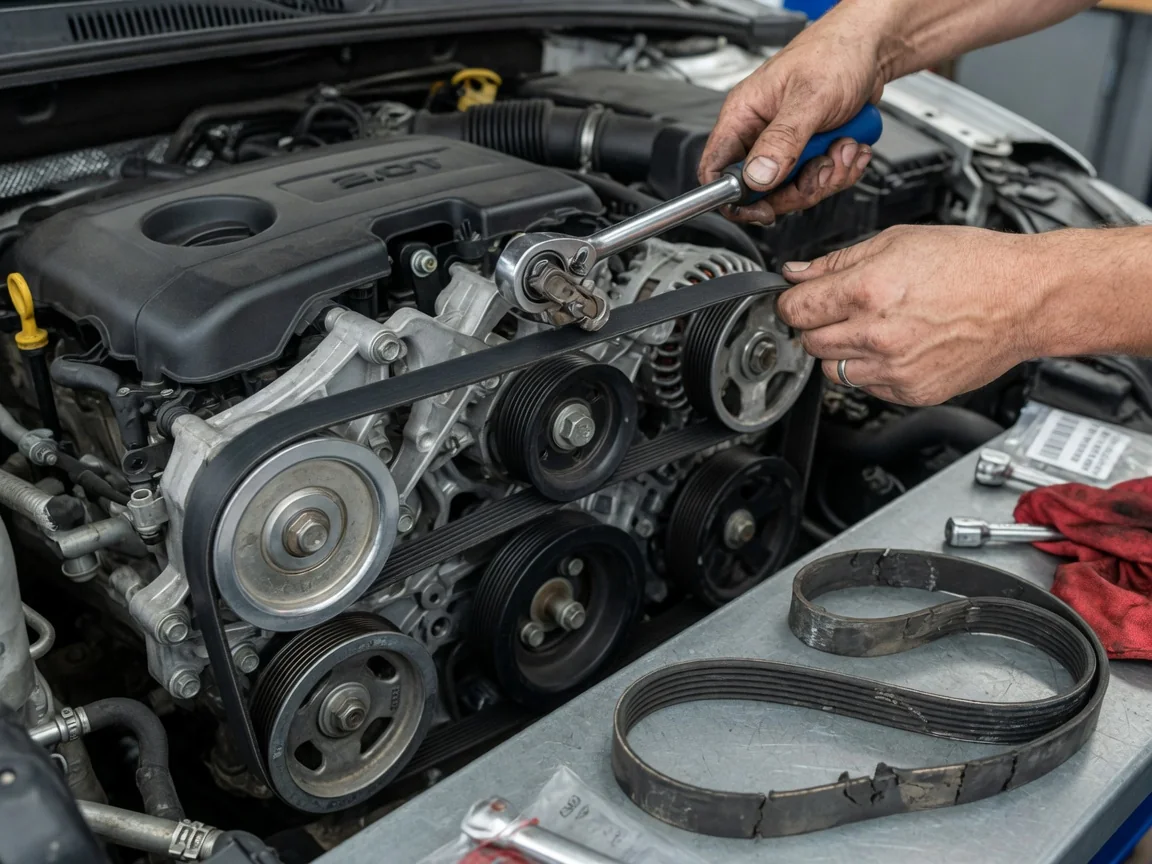
The price for serpentine belt replacement depends on more than the belt itself. Labor time, the condition of the tensioner and pulleys, and how deeply the belt is buried in the engine bay all shape the final bill. Knowing how those pieces fit together helps you read an estimate, decide whether a do-it-yourself job makes sense, and spot recommendations that need a clear explanation.
What a Serpentine Belt Replacement Usually Costs and Why Ranges Vary
Every bill for this job has two parts: the accessory drive belt and the labor to install it. Both vary with the vehicle and the location. Belt prices differ by engine, and shop rates differ by region, so a single national figure rarely matches the quote you actually get. It's more useful to think in ranges, then narrow the range by calling local shops with your exact year, model, and engine.
Labor time depends mostly on access. On some engines the belt runs across the front, and a technician can release the tensioner and swap it quickly. Other layouts require removing a splash shield, an engine mount, or intake components before the belt comes out, which multiplies the hours billed. A belt-only replacement on an easy-to-reach engine sits at the low end of the range. Added parts or difficult access push the total higher.
Belt Part Prices: Standard, Premium, and Dealer Options
The belt alone comes in roughly three tiers. Economy aftermarket belts cost the least. Premium branded aftermarket belts sit in the middle, and OEM belts from a dealer parts counter usually cost the most. Higher prices generally reflect a more crack-resistant rubber compound, a better rib design, and manufacturer claims of quieter running and longer life. A premium belt isn't automatically the right choice for every vehicle, but the quality differences are real.
Getting the right fit matters more than the brand. One model can use several belt configurations depending on engine size, air conditioning, and other accessories, so confirm the correct length and rib count for your exact engine before ordering. A belt that is even slightly the wrong size won't tension properly. Even a premium belt is usually a small share of the total once labor and any related parts are added, so saving a little on the belt rarely changes the final bill much.
Labor Costs at Shops, Dealers, and Mobile Mechanics
Most shops calculate labor by multiplying a published time estimate for your vehicle by their hourly rate. You pay the listed time whether the technician finishes faster or slower. Independent shops often charge less per hour than dealerships, which have higher overhead but offer factory parts and model-specific experience. Mobile mechanics can be affordable and convenient, though jobs that require removing a lot of parts may go better in a shop with a lift.
A proper replacement involves more than swapping the belt. The technician should check that the tensioner moves smoothly and holds tension and spin each idler and accessory pulley to check for roughness or play. After installation, they should confirm that the new belt tracks straight across every pulley. Ask for an itemized estimate that lists the belt, the labor time, and any recommended extra parts separately. That breakdown makes it easy to compare shops and see what each recommendation adds.
Tensioner, Idler Pulley, and Other Add-Ons That Raise the Bill
Shops often suggest replacing the belt tensioner or an idler pulley along with the belt when the bearings sound rough or the tensioner spring has weakened. Because the belt is already off, these parts add only a little extra labor, although the parts themselves can cost more than the belt. Skipping a worn component can be a false economy. A new belt running over a weak tensioner or wobbling pulley may slip, squeal, or wear unevenly, and you'll pay for labor a second time.
The job can also turn up other accessory drive problems. With the belt off, a technician may notice a noisy alternator bearing, a water pump with play or seepage, or an air conditioning compressor that drags. These findings are worth knowing about, but they are separate repairs with their own diagnosis and cost. Ask for them to be quoted separately, with a description of what the technician observed, so you can decide when to do them instead of approving everything at once.
DIY Replacement Versus Paying a Shop: Real Savings and Limits
Doing the work yourself removes labor from the bill. What's left is the cost of the belt plus any tools you need, such as a serpentine belt tool or a long-handle wrench to release the tensioner. When the belt is exposed at the front of the engine with plenty of room around it, the job can be a reasonable afternoon project. Many transverse engines are different. The belt is tucked beside the inner fender and partly hidden behind mounts, hoses, or shields that must come off first.
Before starting, find the belt routing diagram, which is often on an underhood decal, or photograph the old belt's path. Turn the engine off, let it cool, and remove the key before working near the belt, because a running or hot engine can cause serious injury. Correct routing and tension are essential. If the tensioner arm feels jerky or a pulley grinds when you spin it by hand, the job has grown beyond a basic belt swap and needs a professional assessment.
Fixing or Repairing a Serpentine Belt: Why Replacement Is the Only Option
People often search for a way to fix a damaged belt, but a serpentine belt can't be repaired. Cracks across the ribs, a shiny glazed surface, frayed edges, or missing chunks of rib all mean it needs replacing. The symptoms behind the search are familiar: a squeal on cold startup, a chirp at idle, or a battery or temperature warning. Those warnings can appear when a slipping or broken belt stops driving the alternator or, on many engines, the water pump.
Not every noise comes from the belt itself. A dry idler bearing, a weak tensioner, or a slightly misaligned pulley can cause a squeal or chirp that a new belt won't cure, so get a diagnosis before buying parts. If a belt failed suddenly or shredded, have the vehicle inspected professionally instead of just installing another belt. A seized accessory, a failing pulley, or misalignment may have caused the failure and could quickly destroy the new belt as well.
How to Get a Fair Quote and Avoid Overpaying
A fair quote starts with a few direct questions. Ask which brand and grade of belt the shop plans to use and how much labor time it's charging. Also ask whether the tensioner and pulleys were actually inspected and what warranty covers the parts and labor. Get at least two written estimates for the same vehicle and make sure they cover the same work. One quote may look cheaper simply because it leaves out a tensioner that another shop found worn.
Combining jobs can cut down on duplicate labor. If a water pump or other front-of-engine service that requires removing the belt is already planned, replacing the belt during the same visit means you don't pay twice to reach it. Be cautious about add-ons offered without a clear reason, though. A recommendation to replace a pulley or tensioner should be backed by something the technician actually found, such as bearing noise, visible wobble, or a tensioner that moves poorly.