Serpentine Belt Noises: Chirps, Squeals, Grinding, and Likely Causes
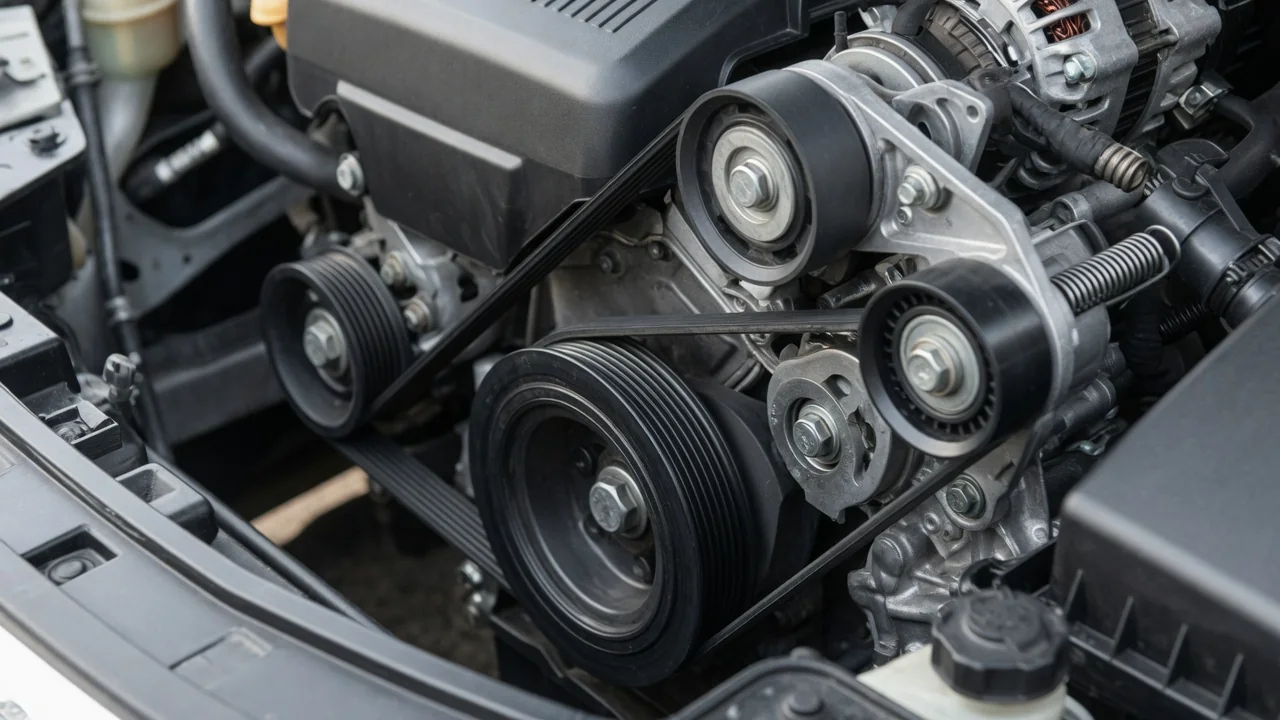
A noisy serpentine belt is not a diagnosis by itself. Serpentine belt noise can come from the belt, an automatic belt tensioner, an idler pulley, or an accessory bearing on the accessory drive. Matching the serpentine belt sound to when it appears at startup, after warmup, in damp weather, or during normal accessory load helps a shop isolate the source. Common serpentine belt noises become easier to sort once the sound type and those conditions are clear.
Identify the Sound and When It Happens
A sound near the serpentine belt can originate from the belt, the tensioner, an idler, or a driven accessory. Sound alone cannot confirm the failed component. When a serpentine belt is making noise, listen for a rhythmic chirp, a sustained squeal, a rumble, grinding, or a rattle rather than treating every belt-area complaint as the same problem. Those serpentine belt sounds travel through brackets and housings, so the loudest point is not automatically the worn part.
Note whether the noise occurs during cold startup, after the engine has warmed, in damp weather, or while accessories such as the air conditioner or charging system are working under ordinary load. Do not rev the engine or spray anything to provoke the sound. Record those conditions so a technician can compare them with belt, tensioner, and accessory findings. Squeal that begins only after a belt has already been replaced is a separate issue and is not part of this identification process.
Rhythmic Chirping Can Point to Belt Contact or Alignment
A repeated chirp is a short, regular tick or tweet that often tracks engine speed. Irregular belt contact with pulley grooves can produce that pattern when belt ribs do not seat evenly as they wrap a pulley. Pulley alignment errors, rib damage, and belt contamination from oil, coolant, or power-steering fluid can all contribute. None of those conditions is proven by the chirp itself; each is a possible explanation that needs inspection rather than a parts swap based on sound.
Even a chirp that rises and falls with engine speed still cannot identify a specific pulley or accessory. Every rotating part on the accessory drive shares that speed relationship, so the rhythm only shows that something in the belt path is involved. Persistent chirping belongs in a shop, where technicians can check belt tracking, pulley alignment, and the automatic belt tensioner. Tracking that walks toward one edge, a cocked pulley, or a tensioner that does not hold a steady arc all change how the belt meets the grooves.
Squealing Can Signal Belt Slip or Excessive Drive Resistance
Belt slip can create a sustained squeal when friction or tension is inadequate for the load the accessory drive must carry. Glazed or polished belt surfaces, fluid contamination, a weak automatic belt tensioner, and an accessory that resists turning more than it should can each reduce grip. A long, high-pitched squeal differs from a short chirp: it often continues while the belt is trying to drive a pulley that is not keeping up with crankshaft speed.
A squeal that appears at startup, then fades, or that grows when the air conditioner clutch engages, is useful context. Those naturally occurring patterns still do not establish the cause, because a damp belt, low tension, and a dragging accessory can produce similar timing. Belt dressing, lubricant, and spray tests are unsuitable diagnostic shortcuts. They can contaminate neighboring components, hide the original condition, and create a slipping or fire hazard. Leave isolation of belt slip versus accessory resistance to a technician with the engine secured.
Grinding, Rumbling, and Rattling Need Pulley and Accessory Checks
Rough bearings in an idler pulley, a tensioner pulley, or a driven accessory can produce grinding or rumbling near the belt. An accessory bearing that is beginning to fail often sounds lower and more continuous than a chirp, and the roughness may change as the bearing warms. Tensioner mechanism wear, a weak damper, or loose hardware can add rattling. Nearby heat shields, splash shields, and exhaust parts can rattle as well, so a belt-path rattle is still only a clue.
Sound travels through engine components, so the apparent location is unreliable. A failing water-pump bearing can seem as loud at the tensioner as at the pump, and an idler can throw noise toward the alternator. Professional isolation uses visual inspection of pulleys at rest, play and roughness checks on accessible bearings, and comparison of noise with accessory operation. Do not remove the belt or run the engine without it as a home test; that approach can damage remaining driven components and is not a safe isolation method.
Visible Belt Wear Helps Establish Whether the Belt Is Involved
A worn serpentine belt sound is not a unique signature. The same belt may look tired and stay quiet, or a relatively intact belt may chirp because of alignment or contamination. Visible warning signs still matter: fraying, missing rib material, damaged or glazed edges, and fluid contamination on the ribs or backside. Those findings support the idea that the belt is involved, but they do not prove it is the only source of serpentine belt noise.
The absence of obvious cracks does not establish belt condition. Many modern belts age by losing rib height and profile rather than by opening deep surface cracks, so rib wear may require a suitable gauge and a professional assessment. Evidence of contamination or uneven wear also calls for finding the underlying cause before deciding that belt replacement alone will quiet the drive. A leaking seal, a misaligned pulley, or a failing tensioner can ruin a new belt quickly if those conditions remain.
Make Safe Observations and Recognize When to Stop Driving
Limit close visual inspection to a cool engine that is fully off and secured against automatic restart, following the vehicle's precautions for stop-start and hybrid systems. Keep hands, clothing, tools, and listening devices away from moving belts and fans. Do not reach into a running engine bay to feel a pulley, hold a phone near the belt, or trace a noise with a screwdriver. Those habits put you in the path of the accessory drive if the belt jumps or a fan engages.
Stop safely and shut the engine down if you see smoke, smell burning rubber, notice the belt riding off a pulley, overheating, or a sudden loss of steering assistance. Arrange assistance rather than continuing to investigate while driving. A charging warning or loss of belt-driven functions needs prompt attention; consequences depend on the vehicle's accessory layout, including whether the water pump or power steering is belt-driven. Give the shop a clear description of the sound and the operating conditions in which it appeared.