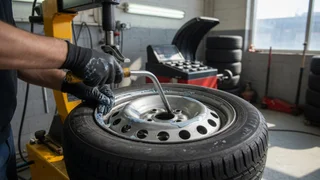
Seating a Tire Bead With Ether
The phrase “using ether to seat tire bead” refers to a hazardous workshop method for mounting a tubeless tire when the bead will not climb onto the rim with normal inflation pressure. A volatile starting fluid or similar aerosol is sprayed into the tire cavity and ignited, producing a rapid pressure rise that shoves the sidewall outward. This approach is not a manufacturer service procedure; it is an emergency improvised technique that carries serious burn, blast, and injury risk. Understanding why a bead resists seating and how the controlled expansion works helps separate useful diagnosis from unacceptable danger.
Essential answer
Seating a tire bead with ether is an improvised inflation aid, not a recommended repair step. A tubeless tire seals only when its bead seats firmly against the rim flange. If residual mounting lubricant, low compressor volume, or a distorted sidewall prevents that initial seal, the tire cannot build pressure. The ether method injects a flammable aerosol into the unseated tire and ignites it near the opening. The combustion expands gases almost instantly, forcing the tire outward with enough force to snap the bead onto the rim seat.
The relevant automotive distinction is between a seating technique and the seating position itself. In vehicle seating systems, a secure mounted position depends on matching rim contour, bead geometry, and controlled air volume. Using a combustible spray replaces gradual, controllable inflation with a violent pressure spike. That can seat the lower bead while leaving the upper bead twisted, damage the tire cords, or blow the wheel assembly apart. Any practical assessment must treat the ether method as a last-resort diagnosis of poor bead contact, never as a substitute for proper tire mounting tools.