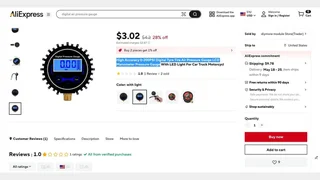
Roadgear Tire Pressure Gauge

Checking tire pressure seems simple until a gauge gives a reading you do not trust. A Roadgear tire pressure gauge is a niche accessory, so buyers often weigh how its measurement range, accuracy, and connection style match the valve stems they actually use. The practical question is not only whether the tool works, but whether it reads consistently in psi, kPa, or bar and remains convenient when pressures fall between checks. That matters more than brand familiarity when a small error can change steering feel, wet braking, and tread wear.
The direct answer
A Roadgear tire pressure gauge is best treated as a measurement tool whose value depends on confirmed accuracy and the ability to hold a steady connection to the valve while reading pressure. Without published specifications, you should not assume a particular tolerance, but you can still evaluate whether the gauge seats firmly and repeats a number when checked twice on the same tire. If the reading jumps after wiggling the chuck, air is escaping during the measurement or the seal is inconsistent.
The immediate answer for purchase research is to confirm the units and usable measurement range suit your vehicle specification before relying on the gauge for cold inflation adjustments. For a car tire, the expected span is modest, but a pickup or trailer may approach the upper end of a compact gauge’s scale. A gauge that tops out near your required pressure may be less trustworthy than one operating comfortably within its range. That condition, rather than the Roadgear name alone, should guide the buying decision.