Recover a caliper piston pushed out too far
The short answer
Whether an overextended caliper piston can be recovered depends on one condition: is the piston still held by its seal inside the caliper bore? If it is, and no fluid is leaking, the piston can usually be pushed back into place and the caliper reused. If the piston has come past its seal, is leaking fluid or has come out of the bore, the caliper needs to be rebuilt or replaced, and the brake system will need bleeding before the vehicle is driven.
This guide covers conventional hydraulic disc brake calipers in general terms. No vehicle-specific specifications, torque values or factory procedures were supplied for this article. Steps for your car depend on its model year, caliper design and parking brake type, so confirm them in the service information for your vehicle.
How a piston ends up pushed out too far
The usual cause is pressing the brake pedal while the caliper is off the rotor or the pads are removed. With nothing to push against, hydraulic pressure keeps moving the piston outward. The piston (the cylinder that presses the pads against the rotor) is sealed by a rubber square-cut seal in the bore. That seal keeps fluid in and also helps pull the piston back slightly when the pedal is released.
Check which situation you have
Piston extended but still sealed, with no fluid at the piston edge or dust boot: usually recoverable by retracting it. Fluid weeping around the piston or the dust boot torn or displaced: the seal may be damaged or the bore contaminated, so plan to rebuild or replace the caliper. Piston out of the bore or fluid has drained: rebuild or replace the caliper, then bleed the system. Air may have entered the lines. Brake fluid reservoir low or empty: air may be in the system even if the caliper looks intact, so bleeding is likely needed.
Retracting a piston that is still sealed
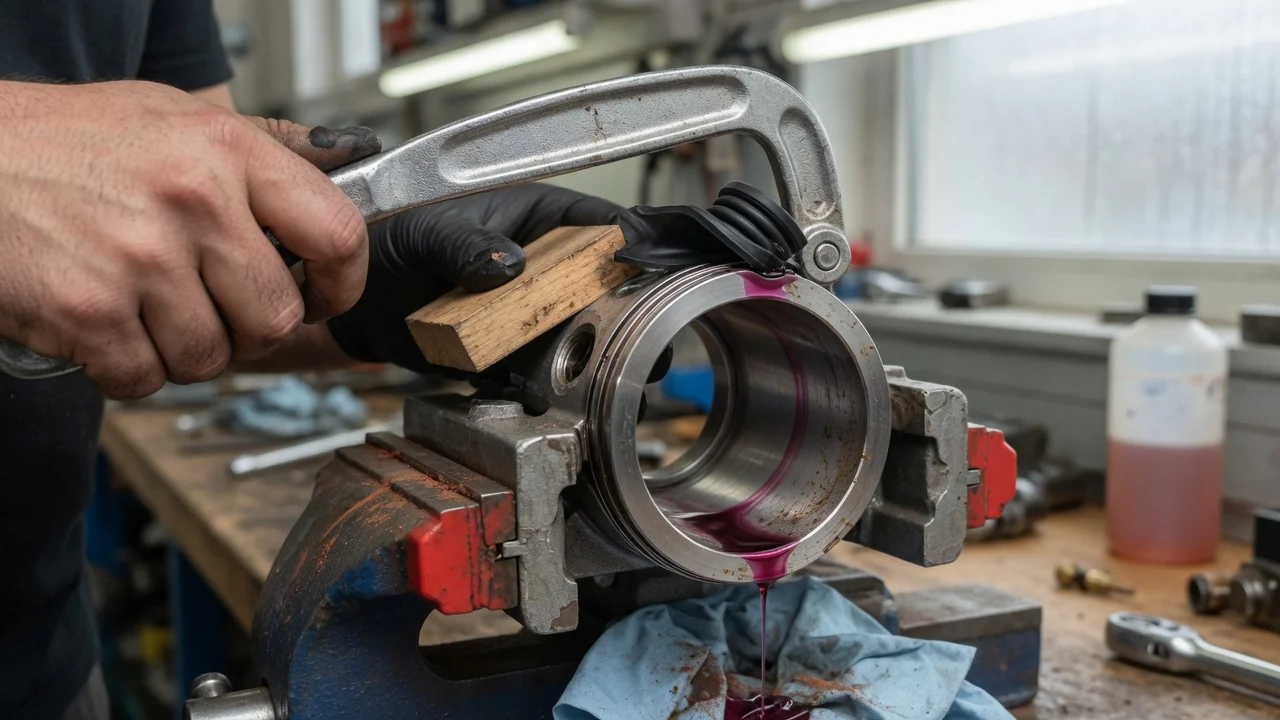
Keep the work area clean. Dirt on the exposed piston surface can be dragged past the seal as it retracts, so wipe the piston clean before pushing it back. Decide how to handle the displaced fluid. Retracting the piston sends fluid back toward the reservoir. Many technicians open the caliper bleeder and catch the fluid instead, which avoids pushing old fluid back through the system. If you do this, close the bleeder before releasing pressure on the piston so air is not drawn in. Push the piston back slowly and squarely using a piston compression tool or a C-clamp with an old pad or flat plate across the piston face. Pressing on one edge can cock the piston in the bore and damage the seal. Watch the reservoir level if you are not using the bleeder, so it does not overflow. Brake fluid can damage paint. Reassemble, then pump the brake pedal several times before driving to bring the pads back into contact with the rotor. Check for leaks and a firm pedal.
Rear calipers with an integrated parking brake
Many rear calipers combine the hydraulic piston with a mechanical parking brake mechanism. On many of these designs the piston must be rotated as it is pushed back, typically with a caliper wind-back tool, and forcing it straight in with a clamp can damage the internal mechanism. Vehicles with an electronic parking brake usually need the system placed in a service or maintenance mode, using a scan tool or a built-in procedure, before the piston can be retracted. The correct method varies by vehicle, so check the service information before applying force.
When to rebuild or replace instead
If the piston came out of the bore, the seal was damaged, or the bore or piston shows scoring or corrosion, a rebuild kit with a new seal and dust boot may be enough when the metal surfaces are smooth. Pitting or scoring on the piston or bore generally means the caliper should be replaced. In either case, fully bleed the brakes afterward. Many owners choose a replacement caliper over a rebuild for convenience. That is a practical choice rather than a technical requirement.
Before you drive
Confirm that the pedal is firm and does not sink, that there are no leaks at the caliper or bleeder, that the reservoir is at the correct level, and that the wheel turns without dragging. A soft or sinking pedal suggests air in the system or a failed seal. Do not drive the vehicle until that is resolved. If you are unsure about the caliper's condition or the procedure for your vehicle, have a qualified technician inspect it. A failed brake caliper is a safety-critical fault.
Information gaps
This article does not include manufacturer specifications, fluid type requirements, bleeding sequences or torque values for any specific vehicle, because none were provided. These vary by make, model year and brake system, including ABS and electronic parking brake configurations, and should come from the vehicle's service information.