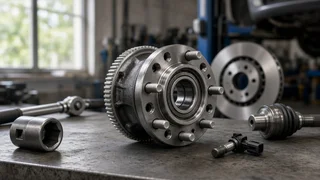
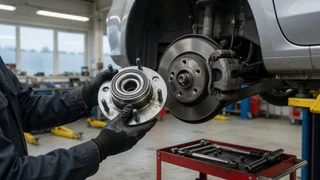
Rear wheel bearing and hub assembly
A failing rear wheel bearing announces itself as a low growl that climbs with speed, sometimes accompanied by looseness or an uneven brake pedal. Choosing the correct wheel bearing and hub assembly rear replacement requires matching the part to your axle, brake configuration, and driving conditions. The right unit restores smooth rotation, keeps the wheel properly located, and protects the axle flange and brake components. A complete assembly that includes the hub and bearing simplifies repair because critical fits are already factory-set rather than pressed together in the workshop.
The direct answer
For most modern vehicles, the most practical fix is an all-in-one wheel bearing and hub assembly rear unit. This packaged design places the rolling elements, grease, seals, and mounting flange inside one bolt-on housing. When the bearing develops play or noise, replacing the complete assembly addresses both the worn bearing and any corrosion or runout in the hub face. The advantage is consistency: bearing preload and seal position are established during manufacture, so there is no separate bearing seat to clean or press-fit tolerance to calculate.
However, the correct answer depends on the axle design. Some older rear axles use a serviceable wheel hub bearing where the bearing is pressed into the knuckle or axle housing and a retaining ring holds the shaft. In those cases, a separate bearing and seal may be required. Before buying, confirm whether your application is a sealed bolt-on hub assembly or a serviceable bearing arrangement. Matching the rear unit to the brake type and whether the axle carries drive power helps avoid a part that fits the bolt pattern but fails on the road.