Rear Wheel Bearing and Hub Assembly: What It Is and How to Choose One
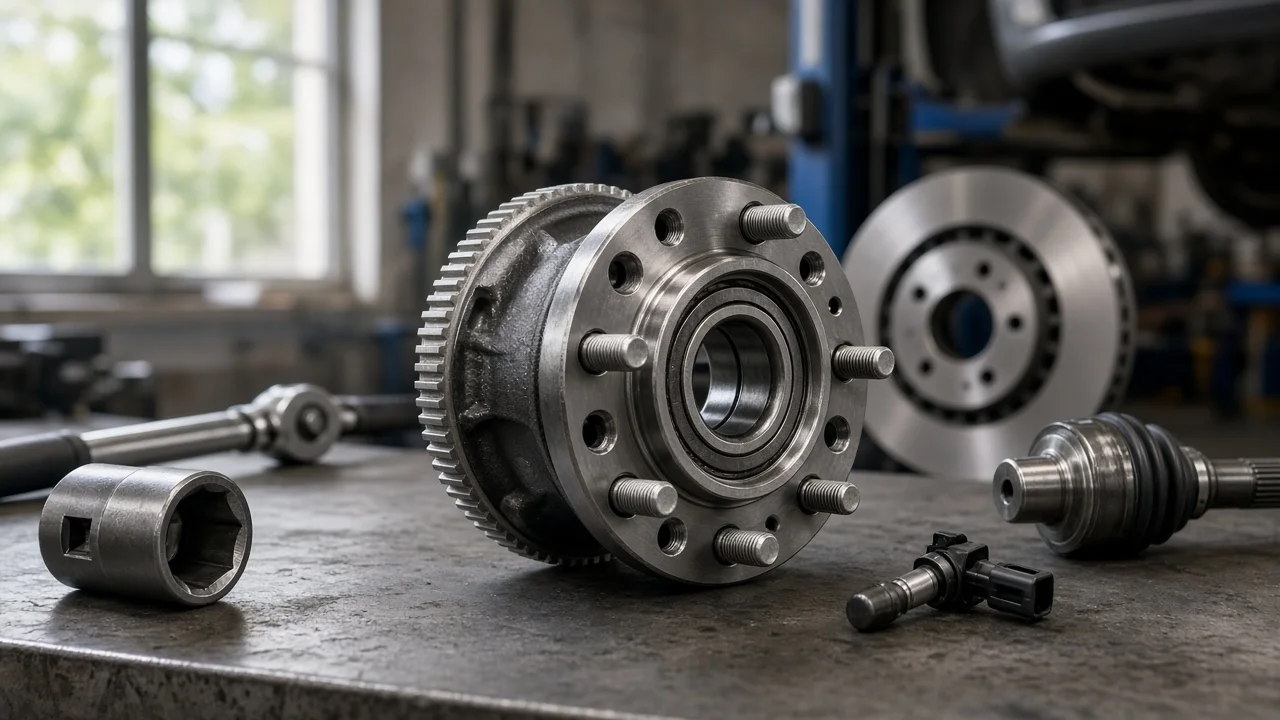
A rear wheel bearing and hub assembly carries the weight of the rear of the vehicle and lets the wheel spin with minimal friction. On many cars it also sends wheel-speed data to the ABS and stability systems. When it wears, you typically hear a hum or growl that rises with road speed. The replacement has to match your vehicle exactly. This guide explains what the assembly does and how to choose the right one.
Define the job the product must do
Start by confirming what kind of rear corner your vehicle has. On many front-wheel-drive cars and crossovers, the rear wheel hub and bearing come as one sealed, bolt-on unit. That unit combines the flange that carries the wheel studs, the bearing races and rolling elements, and often the ABS sensor or encoder ring. Other vehicles use a separate bearing pressed into the knuckle, with the hub pressed through it. Many solid-axle trucks and older rear-wheel-drive cars have no hub assembly at all and use an axle bearing inside the axle housing instead. The design decides whether you are buying a complete assembly, a bearing alone, or a different part entirely.
Before ordering, make sure the noise or looseness really comes from the bearing. Cupped or unevenly worn tires, worn suspension bushings and loose brake hardware can sound or feel similar. Raise the vehicle and secure it on proper stands at the manufacturer's lift or support points, never on a jack alone. Grip the tire at the top and bottom and rock it to check for play, separating bearing play from joint play in suspension arms or bushings. Then spin the wheel by hand and listen for roughness. A stored wheel-speed or ABS code on one corner can point to an integrated sensor or a damaged encoder. Also consider how you use the vehicle. Regular towing, heavy loads or rough roads make a quality unit and periodic inspection more important.
Check compatibility
Hub assemblies that look nearly identical can differ in ways that stop them from fitting or working. Match the part using your year, make, model and drive type. Where catalogs ask for it, also use the VIN or production date, because manufacturers sometimes change rear hubs partway through a model year. On all-wheel-drive and independent rear-wheel-drive vehicles, the rear wheel is driven, so the hub needs the correct spline count for the axle shaft. A non-driven rear wheel uses a hub without splines.
Then compare the physical interfaces: • The flange shape and the number of mounting points to the knuckle or axle; • The bolt hole spacing; • The wheel bolt pattern and stud count; • The pilot diameter that centers the wheel and brake rotor; • Whether the hub works with disc or drum rear brakes; Some rear drums are integrated with the hub, which changes what you need to buy. On press-in designs, the bearing's outer diameter and width must match the knuckle bore.
ABS compatibility is the detail most often missed. Some assemblies have the wheel-speed sensor built in, with a specific cable length and connector. Others use a separate sensor that reads a tone ring or a magnetic encoder in the bearing seal. A magnetic encoder must face the sensor, so orientation matters when installing press-in bearings. A mismatch can trigger ABS, traction control or stability warnings even when the bearing itself is fine.
Features that affect the choice
Once fitment is confirmed, the meaningful differences are in how the unit is built and what comes with it. Check whether: • The wheel studs are already installed; • The ABS sensor is integrated or must be transferred from the old part; • New mounting bolts and an axle nut are included; A clear statement that the part matches original-equipment specifications for your exact application is more useful than general claims about quality.
Treat labels such as heavy duty, premium, severe service or lifetime with caution unless the seller explains what they mean in terms you can verify. Useful examples are a written warranty with a clear claim process or a stated bearing type. Original-equipment parts usually cost more but remove guesswork about sensor compatibility and dimensions. Reputable aftermarket units can be good value when the listing gives a precise application match and documented specifications. Very cheap unbranded hubs often lack that information, and missing evidence is a reasonable reason to pass.
Limitations and ownership costs
A bolt-on rear hub assembly is usually the simpler job, but it still takes work. The vehicle must be properly supported, and the wheel, brake caliper and rotor or drum must come off. The old hub is often seized and has to be freed without damaging the knuckle. Press-in bearings need a hydraulic press or a dedicated bearing tool, and many owners have a shop do that step. Clean rust and debris from the mounting surfaces so the new hub sits flat. Do not hammer on the hub flange or use an impact wrench to run the axle nut fully home, because both can damage a new bearing.
Tighten the hub bolts, axle nut and wheel fasteners to the fastener specification in your vehicle's service information. Replace any fasteners the manufacturer lists as single-use. If you loosened control arm or bushing bolts during the job, some vehicles require final tightening with the suspension at normal ride height to avoid preloading the bushings. Replacing a hub does not normally change wheel alignment by itself. However, some rear suspensions use shims behind the hub or adjustable links that can be disturbed during the repair, and then an alignment check is the safe next step.
Ownership costs can include: • The part itself; • A new axle nut and bolts; • A replacement ABS sensor if the old one is damaged during removal; • Shop time for pressing or alignment; A new hub will not fix noise caused by tires, a bent wheel, worn bushings or a damaged axle shaft. No part number can tell you how long a noisy original bearing will last. If a rear bearing is grinding, loose or setting warning lights, have the vehicle inspected before driving further.
Build a practical shortlist
Collect your vehicle details first, then check every candidate against the same points: • The application matches your year, make, model, drive type and, if requested, VIN or build date; • The design type is correct, either a bolt-on unit or a press-in bearing; • The flange, mounting bolt pattern, wheel stud count, pilot size and brake type match your vehicle; • The ABS arrangement matches, including an integrated sensor, connector style and cable length, or the encoder location
Next, note what is in the box: installed studs, sensor, mounting bolts and axle nut. Compare each brand's documented specifications, warranty length and claim process rather than marketing adjectives. Finally, add the cost of tools or shop help, and check whether the job on your vehicle is likely to require an alignment. The units that pass every fitment check and come with clear documentation make a sensible shortlist. Choose among them based on your budget and how hard you use the vehicle.