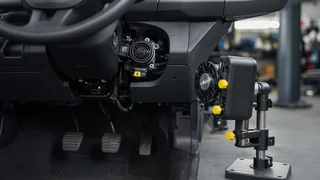
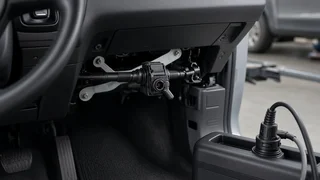
Ram 1500 Steering Angle Sensor Reset and Calibration
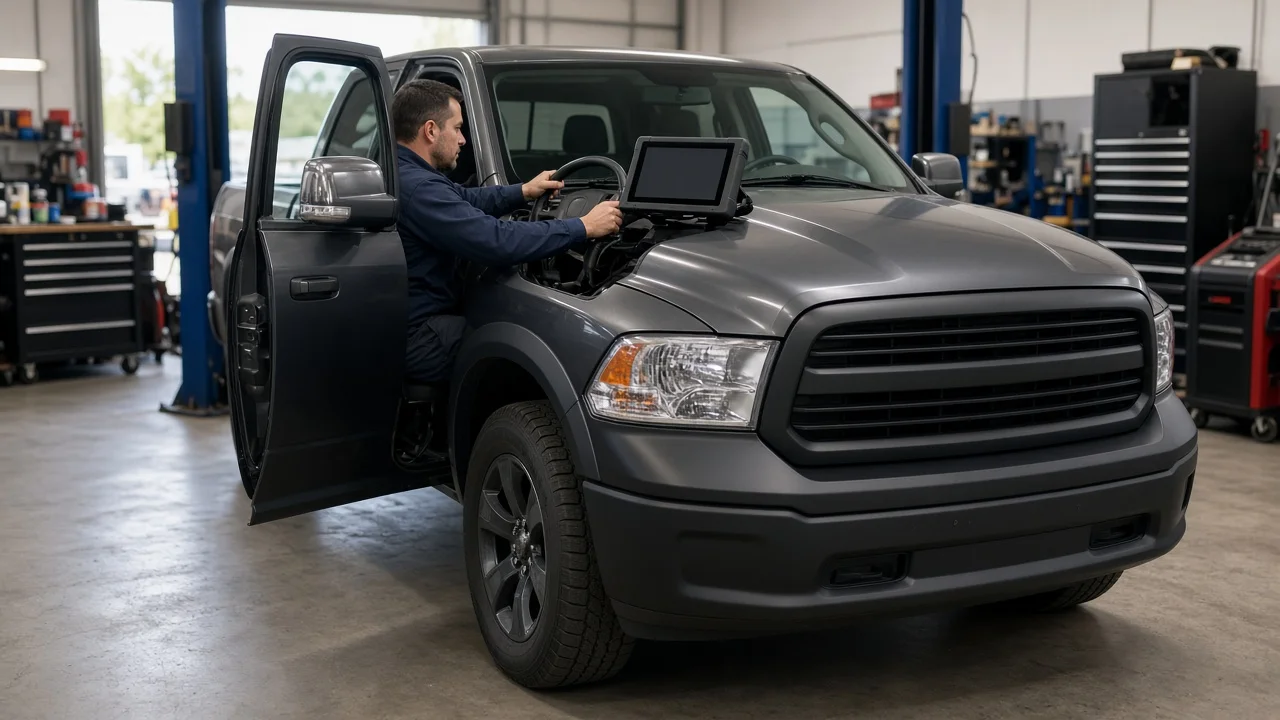
A Ram 1500 steering angle sensor problem can look like a cluster of warning lights, stiff or wandering steering, or a stability control message that appears without an obvious mechanical failure. The phrase usually describes one of two related jobs: electronically re-centering the sensor after a repair, or relearning a zero-point that the vehicle’s stability and traction systems rely on. The correct procedure depends on the model year, the brake and chassis electronics, and the tools available. A stored fault code is an observation that helps identify the affected circuit, but it does not automatically prove that the sensor itself is bad. Understanding how the signal is produced, compared, and validated is the most useful way to avoid replacing parts on a guess.
Essential answer
The essential answer is that a Ram 1500 steering angle sensor usually needs a reset or calibration when its learned center position no longer matches the true straight-ahead position of the steering wheel. This can happen after a wheel alignment, front-end work, steering column service, suspension repair, or an electrical interruption. The reset tells the control module where the sensor should read zero, allowing the vehicle to interpret steering rotation correctly for electronic stability control, traction control, and other driver-assist functions. On many Ram trucks, the process requires a scan tool that can request the calibration routine through the ABS or steering module rather than a simple ignition-cycle procedure.
The scope of the job changes materially with the type of fault. A sensor that was disturbed during work may only need a relearn, while a sensor with a broken signal, a bad ground, a damaged clock spring, or a misaligned steering shaft may need mechanical or electrical correction first. The steering angle signal is normally compared with yaw rate, wheel speed, and sometimes lateral acceleration data. If any of those inputs disagree with the steering angle value, the system can disable stability assistance or trigger a warning. For that reason, a calibration should follow the underlying repair rather than serve as a blind reset that temporarily clears a malfunction indicator.