Ram 1500 5.7 oil pressure
Oil pressure on the Ram 1500 5.7 HEMI
On a Ram 1500 with the 5.7-liter HEMI V8, oil pressure is a moving value that depends on engine speed, oil temperature, oil viscosity, and model year. Factory service specifications for many 5.7 HEMI years set a fully warm idle minimum near 4 psi and a higher minimum near 3,000 rpm, commonly around 25 psi. Those figures are diagnostic floors. A mechanically sound engine typically runs well above them once the oil is at operating temperature and the truck is under way. Confirm the specification table for the exact model year and engine code before treating any one psi figure as a pass or fail.
Why the number changes with year and conditions
The 5.7 HEMI has been used in Ram 1500 trucks, and earlier Dodge Ram 1500 trucks, from the 2003 model year through later generations. That span includes MDS cylinder-deactivation engines and, in later 1500s, eTorque mild-hybrid 5.7 combinations. Sender calibration, cluster gauge behavior, oil-pump hardware, and the specified oil grade have changed across those years. A reading that is acceptable on one model year can sit outside the table for another truck with the same displacement.
Typical running behavior versus the factory minimum
Factory minimums describe the lowest acceptable pressure at a defined speed and temperature. With the year-specified viscosity, a fully warm 5.7 HEMI commonly shows a modest idle reading that climbs as rpm increases and then holds in a stable mid-range while cruising. Cold starts read higher until the oil reaches operating temperature. A sudden collapse toward the bottom of the gauge, a dedicated oil-pressure warning, knocking or ticking that tracks a low reading, or pressure that will not rise with rpm falls outside that pattern.
What moves oil pressure on this engine
Engine speed: gallery pressure rises with rpm until the pump reaches its bypass point. Oil temperature: hot oil is thinner, so idle pressure is lowest when the engine is fully warm. Viscosity and level: the specified grade and a correct sump level on level ground both affect the reading. Filter and pickup: a restricted filter or a clogged pickup screen lowers pressure at the galleries. Wear in the pump, bearings, or MDS oil passages reduces pressure, especially at hot idle. The sending unit and wiring: a failed sender can drop the gauge while actual pressure remains normal.
Dash gauge versus measured gallery pressure
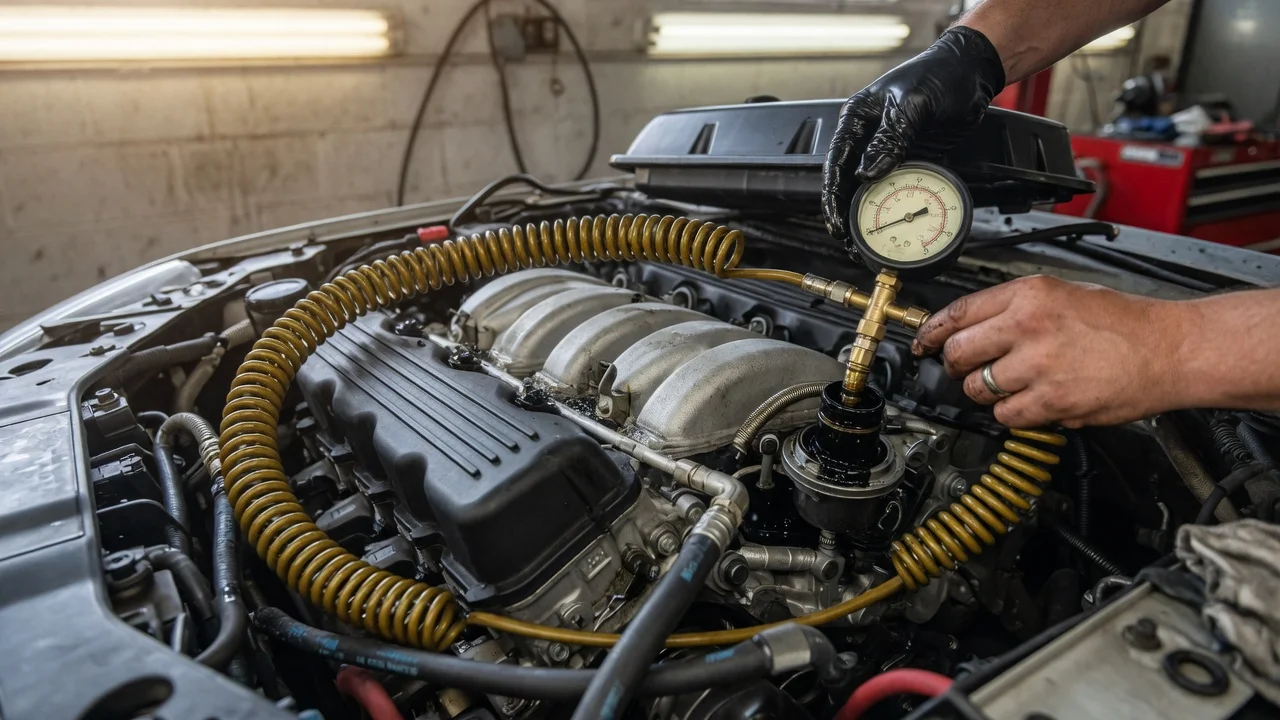
The instrument-cluster oil-pressure display on many Ram 1500s is driven by a sending unit. A failed or oil-soaked sender, damaged wiring, or a cluster fault can drop the needle or post a message while gallery pressure remains within specification. The reliable check is a mechanical gauge threaded into the oil-pressure port and read at the factory test points: fully warm idle and the specified higher rpm, typically around 3,000 rpm. Compare those readings with the service specification for that model year, and record oil grade, temperature, and rpm with the result.
MDS, oil grade, and related systems
From the mid-2000s onward, most 5.7 HEMI Ram 1500 engines use Multi-Displacement System (MDS) cylinder deactivation. MDS solenoids and lifters are oil-pressure operated. Pressure below the system’s needs, the wrong viscosity, or sludge in the MDS passages can disable cylinder deactivation, set related diagnostic trouble codes, or contribute to lifter and cam distress. Later eTorque 5.7 combinations still rely on the same basic oiling circuit. Use the viscosity and specification called out for the truck’s year in the owner’s manual. A much thicker oil, used only to raise the indicated reading, can interfere with MDS operation.
When a low reading needs action
Treat the following as reasons to diagnose promptly. They identify risk; they do not by themselves prove a failed oil pump.
Oil-pressure warning lamp or a hard low-pressure message, especially with unusual engine noise. Pressure that stays low as rpm rises after the engine is warm, confirmed on a mechanical gauge against the year specification. A sudden gauge drop with unchanged engine sound and temperature, a pattern that often traces to the sending unit. Repeated MDS or oil-pressure-related trouble codes. Metallic knock, especially at hot idle, together with a verified low mechanical reading.
Practical next steps
Check oil level and condition first, with the truck on level ground after a short wait. Confirm the installed oil matches the grade specified for that model year. If the gauge dropped suddenly and the engine sounds normal, inspect the oil-pressure sending unit and its connector as an early diagnostic step. If the warning is on, the engine is noisy, or a mechanical gauge reads below the published minimum at the specified rpm, stop driving and have gallery pressure, the oil pump, pickup, and filter circuit tested. Pair every reading with model year, engine, oil grade, temperature, and rpm so the comparison to factory specifications is valid.