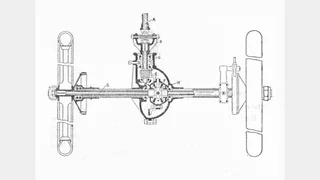
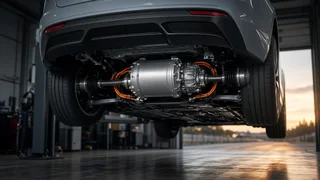
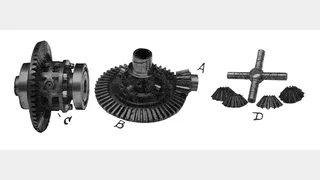
Rally Car Differential Setup
On loose gravel, mud, or snow, a rally car’s differential setup decides how effectively engine torque becomes forward motion and rotation. The differential is the final gear assembly that lets the driven wheels spin at different speeds while still transmitting power. Rally drivers and technicians tune its locking, preload, and ramp behavior to make the car stable under braking and agile mid-corner. Understanding this tuning explains why two similar all-wheel-drive cars can feel completely different on a special stage.
Essential answer
A rally car differential setup is the deliberate tuning of the front, center, and rear differentials to suit loose, changing surfaces. Unlike a road car tuned for quiet understeer, a rally differential is often configured to lock aggressively under load so both wheels on an axle pull together when traction is split. That reduces the loss of drive when one tire is on gravel and the other is in a rut or off the ground. The setup balances corner entry stability, mid-corner rotation, and corner exit traction.
The exact settings depend on drivetrain layout, transmission type, and surface. A two-wheel-drive rally car uses a limited-slip rear differential with ramps controlling lock on acceleration and deceleration, while a four-wheel-drive car also adjusts the center differential to divide torque between axles. These adjustments change shift behavior indirectly, but their primary role is to make the car predictable. Because no single setup works everywhere, teams change ramp angles and preload between stages rather than treating the differential as a fixed component.