Porsche 996/997 Emergency Hood Release Cable
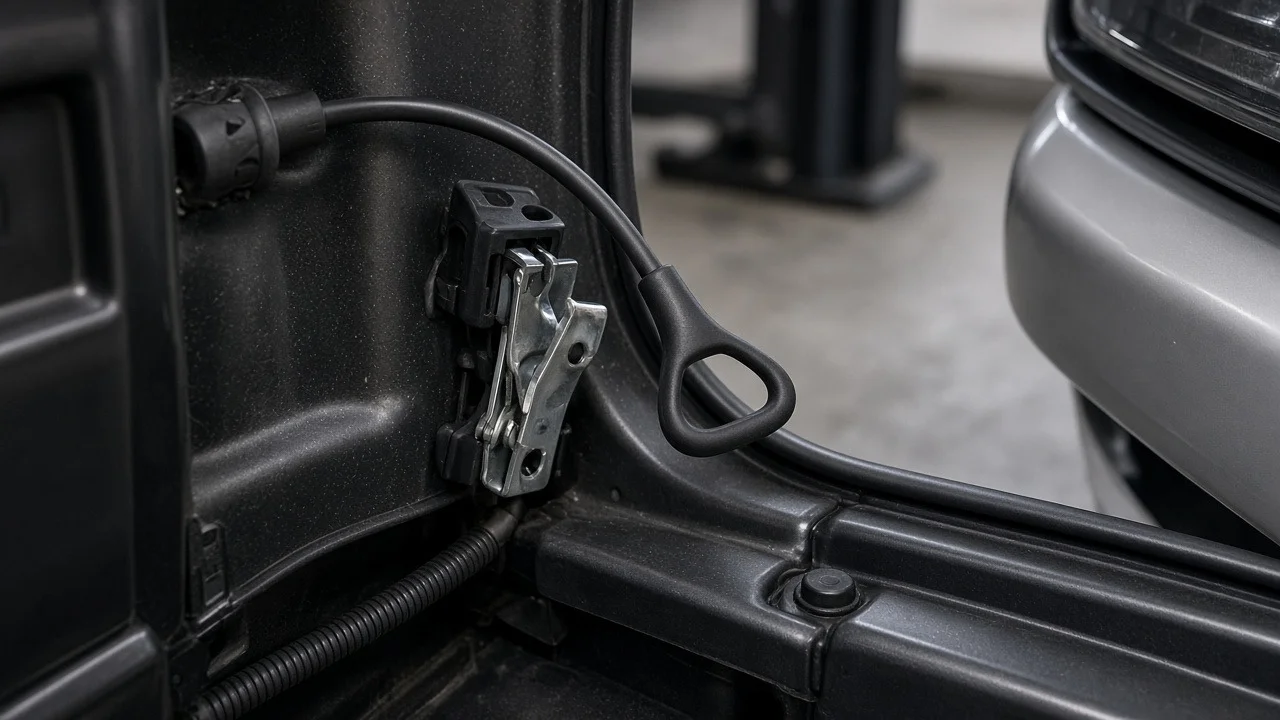
A hood release cable on a Porsche 996 or 997 can fail without warning, leaving the front storage compartment closed when access matters most. The emergency cable exists as a manual bypass for that failure, but its location and routing differ enough between generations that owners should understand what they are reaching for before a latch problem occurs. This overview explains the cable’s role in the hood opening system, how it interacts with the latch and actuator, and what the essential answer means for someone trying to open a stuck lid safely.
Essential answer
The essential answer is that the emergency hood release cable is a secondary mechanical path to the hood latch, intended for use when the primary cabin lever or cable has lost tension, broken, or released from its anchor. On the 996 and 997, the front hood covers a luggage compartment rather than an engine, so the cable serves a body opening system that is shaped by crash structure, hinge placement, and weather seal pressure. Because the latch may be under load from strut pressure or panel alignment, the emergency cable often works best when combined with light downward pressure on the hood to reduce friction at the striker.
Its scope includes diagnosis as much as access. A slack primary release cable can mean a detached ferrule, a stretched inner wire, or a latch that is not returning fully, and the emergency cable helps distinguish a cable fault from a failed latch mechanism. The 996 and 997 layouts place the emergency release in different wheel well or underbody locations, so the term covers a model-specific routing rather than one identical part. Owners should treat any difficulty as a sign to inspect hood alignment, the release handle, and the latch return spring before assuming the emergency cable alone has failed.