Porsche 924 in-tank fuel pump
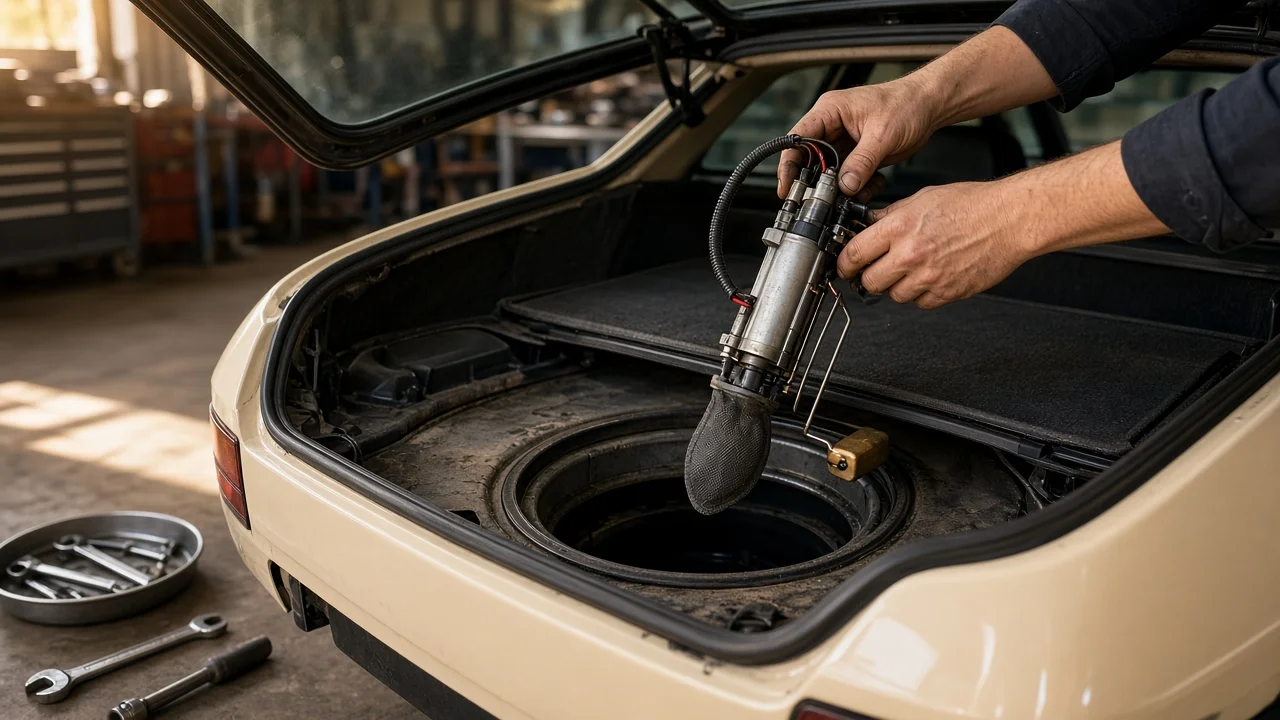
Choosing a Porsche 924 in-tank fuel pump means interpreting more than a part number. These early transaxle cars place the primary lift pump inside the fuel tank, where a failing assembly can mimic ignition or airflow trouble. Owners often notice hard starting, a flat spot under load, or rising fuel pressure instability before a complete no-start. Because supply, return flow, and the external pump relationship depend on the car’s engine configuration and market specification, a careful check of pressure behavior and delivery volume gives the clearest buying signal. A replacement decision should weigh electrical, hydraulic, and fitment evidence together, not just a single stored fault or old pump noise.
The direct answer
The immediate answer is that the in-tank fuel pump acts as a lift and circulation stage, so its failure can produce weak fuel pressure, injector starvation, and hard hot starts while the engine may still run briefly. Buyers should first confirm the pump is the actual restriction by checking delivery and pressure behavior rather than assuming age or noise means failure. On a Porsche 924, a dead or weak in-tank assembly often leaves the main fuel pump straining, which changes the sound and can damage the broader fuel system if the car is driven long enough.
A materially important condition is whether the vehicle still runs on partial throttle but loses pressure under higher demand. That pattern points to reduced pump volume more than a complete electrical failure. Before purchasing a replacement, check the electrical supply at the tank connector and the condition of the fuel filter, since a clogged filter or poor ground can create the same symptom. Compatibility also depends on the car’s fuel system arrangement, so a pump assembly that fits one production version may not fit another without confirmation.