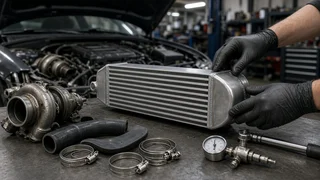
Porsche 911 Turbo intercooler upgrades
Upgrading the Porsche 911 Turbo intercooler changes how consistently the engine can deliver boost pressure during hard driving. The stock charge-air cooler works well in normal conditions, but repeated acceleration, high ambient heat, and aging cores can raise charge-air temperature and reduce power. Owners of the 930, 964, 993, 996, and 997 generations often compare larger cores, improved end tanks, and stronger hose connections when looking at a Porsche 911 Turbo intercooler upgrade. Understanding how these parts manage compressor outlet heat helps separate worthwhile changes from parts that mainly add underhood visual appeal.
The direct answer
A Porsche 911 Turbo intercooler upgrade is most useful when the existing unit cannot shed enough charge-air heat for the way the car is driven. Repeated high-load pulls, higher boost pressure, track use, or a worn original core can make intake air hotter than ideal. In those conditions, a larger or more efficient core can reduce charge-air temperature, lower pressure loss, and help the engine keep making consistent power. A stock replacement is often enough for a preserved street car that is rarely pushed hard, so the decision should match the actual use of the vehicle.
The older 930, 964, and 993 Turbo models have air-to-air coolers packaged tightly in the rear fenders or under the deck lid. The 996 and 997 generations use liquid-to-air charge coolers with separate water circuits. That difference matters when comparing parts. An upgrade for a 997 Turbo may involve a larger heat exchanger, while a 930 Turbo intercooler upgrade may focus on a bigger finned core and better airflow through the side intake. Any replacement should fit the existing mounting points and hose connection layout without forcing changes to the intake plumbing.