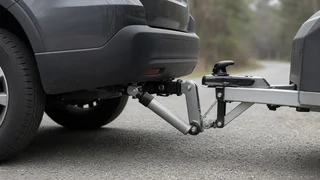
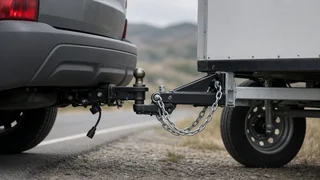
Pole Tongue Trailer Sway Control

Pole tongue trailer sway control is a towing stability question that centers on how a trailer's coupler and drawbar arrangement interact with the tow vehicle. Sway often begins when side forces, passing trucks, crosswinds, or abrupt steering inputs excite the trailer, and the hitch resists or amplifies that motion. A pole tongue design places the coupler on a projecting beam, which changes the leverage between the trailer axle and the hitch. Understanding this configuration helps owners evaluate tongue weight, axle rating, payload, and the weight ratings that govern a safe, predictable combination.
Essential answer
Pole tongue trailer sway control refers to the methods and hardware used to reduce side-to-side yaw oscillation on a trailer whose coupler is mounted at the end of an extended pole or drawbar rather than a conventional A-frame tongue. The pole concentrates fore-and-aft loads into a single structural member while leaving the hitch with less inherent triangulation. That long load path can increase leverage between the trailer axle and the hitch, so small lateral movements at the rear may feel larger at the coupler and require damping or a weight-distributing setup to remain stable.
The term is not a single branded device. It covers the broader approach of stabilizing a pole-tongue trailer through correct loading, adequate tongue weight, and, where appropriate, friction or electronic sway control at the hitch. Because the configuration may place the coupler farther from the trailer body, the dynamic behavior differs from a shorter A-frame trailer. Owners should first confirm how the pole tongue affects gross vehicle weight rating, combined weight rating, and axle loading before adding sway control equipment or changing the hitch setup.