PCV Valve Types Explained: Designs, Connections, and Fitment
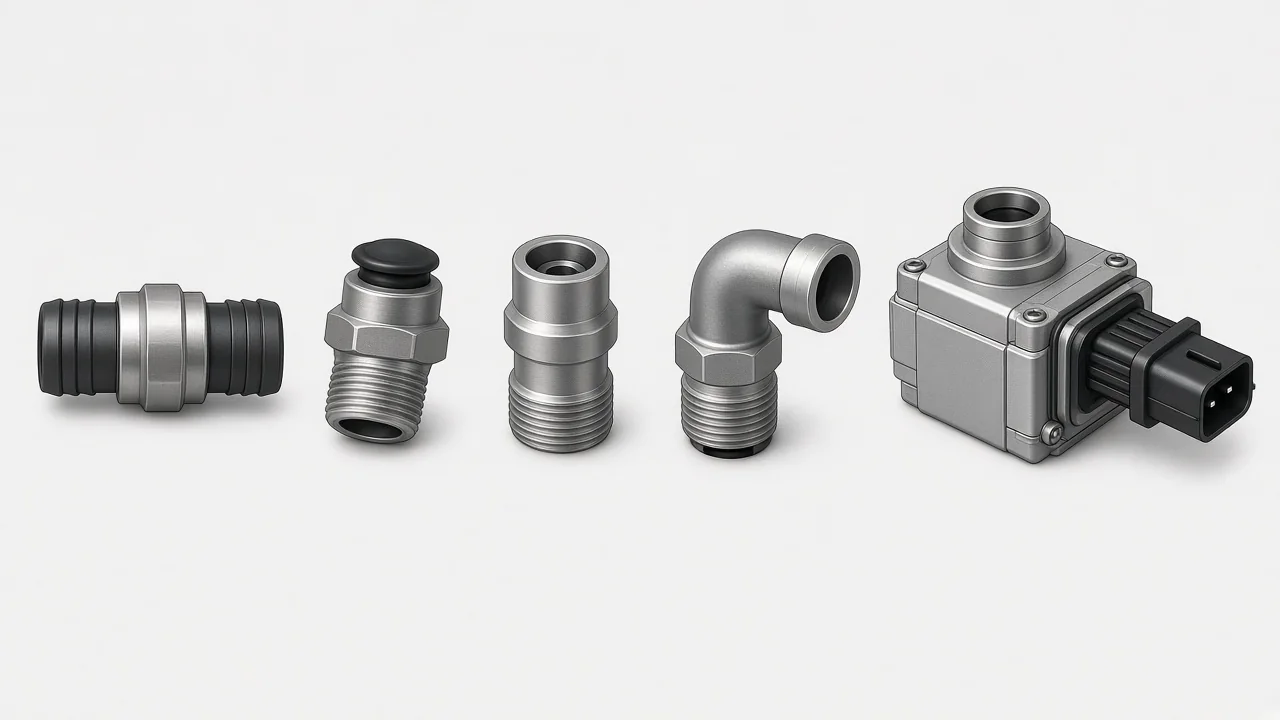
Positive crankcase ventilation uses a PCV valve to meter crankcase vapors into the intake under manifold vacuum. Shoppers encounter several styles: an in line PCV valve, threaded or screw in designs, fixed orifice units, 90-degree housings, heated assemblies, and adjustable PCV valves for modified engines. Connection size, flow calibration, and engine fitment matter more than appearance. OEM, aftermarket, and universal listings still require vehicle-specific confirmation.
Inline PCV Valves and 3/8-Inch Hose Connections
An inline PCV valve sits in the hose path between the crankcase or valve cover and the intake, so crankcase vapors can be drawn in as metered airflow under manifold vacuum. Inline describes placement and connection style rather than the valve's internal flow calibration or which engine it belongs on. The same hose-mounted body may contain a spring-loaded plunger or a simple passage. Confirm any manufacturer-marked flow direction, because reversing the valve can change ventilation behavior.
A 3/8 PCV valve listing, including in line PCV valve 3/8 and inline PCV valve 3/8 descriptions, usually names a nominal hose connection rather than a complete engine specification. Check both ends, the listed dimensions, and the intended hose inside diameter so the tubing seats without forcing. Valve-cover clearance, hose routing, and any flow arrow still must match the installation. Similar-looking hose valves can use different barb geometry or a different flow calibration even when both are sold for 3/8 tubing.
Threaded and Screw-In PCV Valve Fitment
A threaded PCV valve or screw in PCV valve is typically secured through a threaded boss in a valve cover, intake fitting, or related housing rather than sitting entirely in a hose. Thread diameter, pitch, sealing arrangement, body length, and the hose outlet all affect whether the part can seat and connect as intended. Matching the visible threads is only the start of engine fitment. A shorter body may bottom out, while a longer body may crowd nearby components.
Visible thread agreement still cannot establish the internal flow characteristics that the ventilation system was designed around. Two screw-in bodies can share a similar hex and still meter crankcase vapors differently under the same manifold vacuum. Limit owner inspection to accessible markings, documentation, and the published application, and leave removal, sealing, and tightening requirements to vehicle-specific service guidance. Forcing a close-looking aftermarket PCV valve into a threaded port can damage the boss.
How Fixed-Orifice PCV Designs Meter Flow
A fixed orifice PCV valve meters crankcase ventilation through a calibrated opening instead of a moving plunger that opens and closes with vacuum. Some components sold as PCV valves have no moving metering element; the orifice itself is the flow control. Fixed orifice describes that metering design, while inline, threaded, and angled can describe other features of the same part. The opening belongs to the engine's ventilation calibration and should not be chosen by how large the hole looks.
A rattle test can suggest that a spring and plunger are free to move, but it says little about a fixed orifice and even less about whether the remaining opening still matches the intended metered airflow. Lack of rattle is expected when there is no moving element. Drilling, enlarging, or otherwise altering an orifice is not an appropriate diagnostic shortcut, because it changes crankcase pressure control. Confirm the published part and its flow design rather than modifying the opening.
90-Degree PCV Valves and Hose Routing
A 90 degree PCV valve, also listed as a 90-degree PCV valve, uses an angled outlet so the hose can leave the valve cover or intake fitting without a sharp bend in the tubing itself. The elbow is a routing feature for the intended installation layout, not a statement of flow calibration. Outlet orientation, hose diameter, mounting style, and surrounding clearance still have to be verified, because a 90-degree body that points the wrong way can strain the hose.
With the engine off and cool, look for kinked hoses, strained connections, and visible cracking or oil soaking around the angled joint. Those observations help explain why a 90-degree housing was specified, but they do not prove the valve itself is the correct calibration. An angled housing does not authorize substituting a similar-looking part, even if the elbow appears to point the same direction. The replacement still has to match the documented mounting style and hose inside diameter.
PCV Heaters and Heated Ventilation Assemblies
Some positive crankcase ventilation systems include a PCV heater so moisture in crankcase vapors is less likely to freeze in a designated portion of the path during cold operation. A PCV valve heater may be built into the valve, a hose, or another assembly, so the actual arrangement has to be verified for the vehicle rather than assumed from a generic heated listing. The heater protects a specific routing rather than changing ordinary vacuum metering.
Replacement selection still depends on assembly fitment and the electrical connector, including pin count, latch style, and harness reach. A heated housing that does not mate to the original connector leaves the PCV heater unused even if the hose connections appear to fit. Limit owner observations to accessible damage or disconnected wiring with the engine off and cool. Electrical checks and cold-weather operation testing belong with a qualified technician.
Adjustable PCV Valves for Modified Engines
An adjustable PCV valve is designed so specified metering characteristics can be changed after installation, and the adjustment method depends on the product rather than on a single industry standard. Some designs use a screw, a replaceable insert, or another control that alters how much metered airflow the crankcase can exchange with the intake. That flexibility is aimed at engines whose vacuum signal or ventilation demand no longer matches the original calibration.
Engine modifications that change manifold vacuum, boost, cam timing, or crankcase pressure can shift how much ventilation the system needs, so the complete PCV path deserves evaluation rather than a valve swap alone. Selection still requires the engine configuration, intended operating conditions, and manufacturer application guidance. When calibration is uncertain, have crankcase pressure and engine operation assessed professionally instead of relying on a universal setting or tuning by idle quality alone.
Confirming OEM, Aftermarket, and Universal PCV Applications
OEM, aftermarket, and universal are sourcing or application labels, not independent proof that a valve suits a particular engine. An OEM PCV valve is the part the vehicle maker specified for that application, while an aftermarket PCV valve may follow that design or take a different approach. A PCV valve universal listing, or a universal PCV valve, typically emphasizes connection convenience rather than a documented calibration. Confirm fitment with the VIN, model year, engine identification, and applicable part number, including any documented supersession.
A Toyota OEM PCV valve, Honda OEM PCV valve, or Subaru OEM PCV valve still has to be confirmed for the specific engine, and an OEM Honda PCV valve listing is not interchangeable across Honda engines. None of those makers uses a single PCV design for every application. A universal listing needs explicit support for the intended application, connection dimensions, metering requirements, and any required heating or pressure-control features. Rough idle, oil leakage, whistling, or oil consumption can justify checking ventilation but cannot identify a failed valve or the correct replacement style without diagnosis.