PCV Valve Hose, Elbow, and Connector: Leaks and Replacement
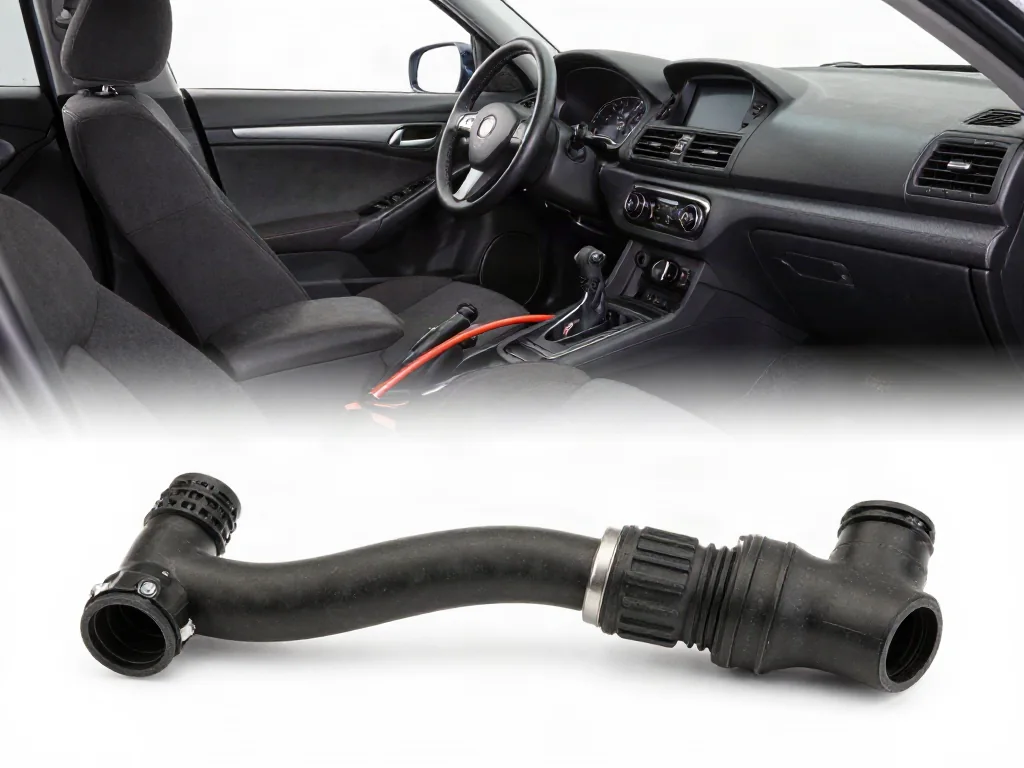
A PCV valve hose is the passage that carries crankcase gases away from the engine's lower end so they can be drawn back into the intake and burned. Because it often runs under vacuum, a small crack or loose connector can upset idle quality and ventilation. Understanding the hose, tube, elbow, line, and connector helps explain how leaks show up, what replacement involves, and what shapes the cost.
What the PCV Hose Carries and Where It Connects
Crankcase ventilation exists because some combustion gas always slips past the piston rings, carrying oil vapor and moisture into the crankcase. The PCV system uses intake vacuum to pull those blow-by gases out through the valve or an integrated separator, then routes them into the intake to be burned. The PCV valve hose, sometimes called the PCV valve vacuum hose, is the path between those points. Every joint must seal, because a leak admits unmetered air on the vacuum side and can allow vapor to escape or pressure to build on the crankcase side.
Parts listings use hose, tube, tubing, and line loosely. A PCV valve tube may be a rigid molded plastic piece, PCV valve tubing may describe flexible rubber stock, and a PCV valve line can mean either, sometimes with a molded hose and quick-connect fitting combined in one assembly. On some engines the hose clips onto a separate valve; on others it joins a ventilation module built into the valve cover. Because several vacuum lines can look alike, confirm which one belongs to the PCV circuit with engine-specific routing diagrams rather than appearance.
Symptoms and Safe Checks for Hose Leaks or Collapse
Symptoms of a bad PCV valve hose can include a hissing sound near the valve cover, a rough or surging idle, hesitation, or a check engine light with lean-condition or idle-related codes. None of these proves the hose has failed. Intake gaskets, other vacuum lines, sensors, and the valve itself can produce similar behavior, and any stored code is evidence to interpret with vehicle-specific information. A crack on the vacuum side typically lets in unmetered air, while a collapsed or kinked section can restrict flow and, depending on layout, allow crankcase pressure to rise.
With the engine off and cool, look along the full length for splits, kinks, abrasion, softened spots that squeeze flat easily, and ends that have slipped off. Oily residue near a joint is worth noting, but oil mist can collect there without a leak, so residue alone proves little. If a PCV valve hose leak is suspected but not visible, a technician can smoke test the intake and ventilation circuit or check crankcase pressure. Avoid spraying flammable cleaners on a running engine, and keep hands away from belts and fans.
Elbows, Connectors, and Seals That Need Inspection
A PCV valve elbow, or elbow hose, is usually a molded rubber or plastic bend that turns the line tightly around the valve cover or intake without kinking. That shape makes it vulnerable. Heat cycles harden rubber at the outside of the bend, and plastic elbows can crack where they meet a fitting. A cracked elbow may look intact until flexed slightly, and a split hidden underneath the bend can leak vacuum constantly. Damage at the ends is especially important, since that is where the hose must grip or seal against its mating port.
Each PCV valve hose connector adds another possible leak point. Depending on design, a PCV valve connector may use a quick-connect fitting with a locking tab, a separate retaining clip, a spring clamp, or an internal sealing ring, and not every assembly uses the same hardware. With the engine off and cool, check accessible fittings for cracked bodies, missing retainers, and ends that are not fully seated. Before buying an individual elbow, connector, or seal, confirm it is sold as a separately serviceable part; some are only available with the complete hose assembly.
Confirming Hose Fit, Material, and Kit Contents
Hose material matters as much as shape. PCV passages must resist oil vapor, engine heat, and vacuum without softening or collapsing, which is why many are molded from specific compounds or reinforced to hold their shape. A universal PCV valve hose can be acceptable only where the service information allows generic hose, and matching the inner diameter does not establish suitability. Ordinary fuel or heater hose may swell, soften, or collapse under vacuum. The replacement also needs the correct length and bend shape so it follows the original routing without kinks.
A PCV valve hose kit or replacement kit may include elbows, connectors, seals, and retainers, but contents vary widely. Compare the listed pieces against the actual assembly on the engine, noting each fitting type and end connection, before starting work. For a Ford PCV valve hose, provide the year, model, engine, and any applicable build details, because different engines and production changes within one model can use different routing and connectors. A part number confirmed against that information is more reliable than a listing claiming broad brand compatibility.
Planning a Safe PCV Hose Replacement
Before replacing PCV valve hose, confirm the new assembly matches the old one, let the engine cool fully, and photograph the routing and clip locations. Consult the vehicle-specific removal procedure, since some hoses are reachable at the valve cover while others sit beneath intake components. Release quick-connect fittings and retainers the way the procedure specifies. Aged plastic can snap, and a broken port on the intake or valve cover enlarges the repair. If a connection is hidden or its release mechanism is unclear, professional service is the safer choice.
Install the new hose along its original path, fully seating each end until retainers lock, and check that it is not twisted, kinked, stretched, or touching exhaust parts, belts, or other hot or moving components. Afterward, listen from a safe distance for hissing and watch for a warning light or idle changes. If symptoms remain, further professional diagnosis is needed. A request for PCV valve and hose replacement does not by itself establish that the valve needs replacing; that decision should rest on separate evidence.
What a PCV Hose Replacement Estimate Should Include
PCV valve hose replacement cost depends mostly on design and access. A short hose clipped between the valve cover and intake may take little labor, while an assembly routed beneath the intake manifold or combined with a ventilation module can require significant disassembly. Diagnostic time for smoke testing adds to the total, and assemblies that must be purchased complete with molded elbows, connectors, and sealing rings usually cost more than simple hose. Prices vary by vehicle and region, so a local quote tied to the specific engine is the only reliable figure.
Ask for an itemized estimate listing the hose assembly, associated fittings or seals, labor, and any diagnostic charge. When a PCV valve and hose replacement cost is quoted together, ask what finding justifies each item, such as a documented crack or a failed test result, rather than accepting both as a package. Old fittings sometimes break or reveal damaged ports during removal, which can change the estimate. A reputable shop should document that damage and get approval before doing additional work.