How to Perform a Parasitic Draw Test With an Innova 3320
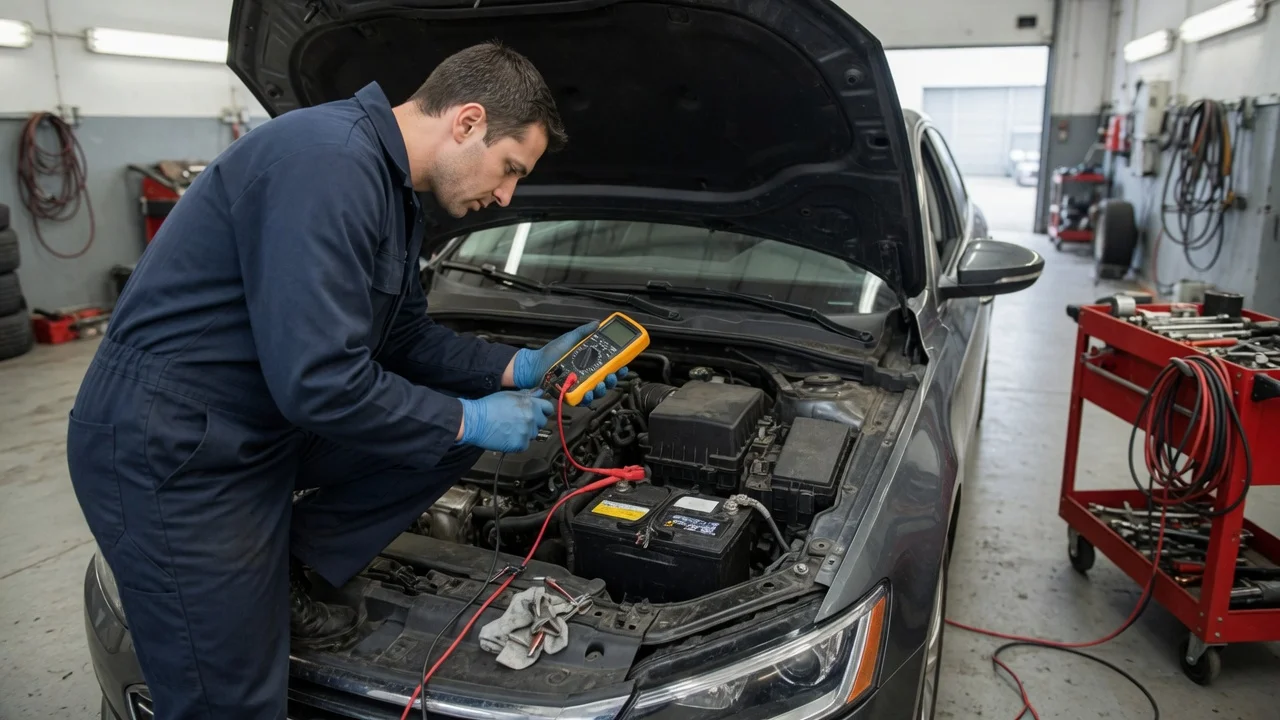
A parasitic draw test measures current leaving the battery while the vehicle is off. The Innova 3320 can perform this test in its DC amps range, but the procedure requires careful setup and a stable vehicle state. Use this guide when a battery loses charge after sitting overnight or for several days.
Before you start
Park the vehicle in a safe location and let it sit with the ignition off for at least 20 to 30 minutes before testing. This gives modules time to enter sleep mode. Turn off the ignition, remove the key, close all doors, and switch off lights, the radio, and any accessories. If the vehicle has an underhood light, disconnect it or work with the hood latch in the closed position so the light does not affect the reading.
The test is performed locally at the vehicle battery with the Innova 3320 set to measure DC current. No external service or software is required. Have the meter, its test leads, and a way to secure the connection ready before you disconnect the battery.
Step-by-step instructions
Set the Innova 3320 to the highest DC amps range. Many meters have a 10A input jack for current measurements. Move the red lead to the amps input and leave the black lead in the common jack. Select DC amps, not AC amps.
Loosen, but do not remove, the negative battery terminal clamp. Prepare to lift the clamp off the post while keeping the meter in series with the circuit. If the vehicle has a large or awkward terminal, secure the lead connections before releasing the clamp.
Connect the meter between the negative battery post and the disconnected negative battery cable. Clip one meter lead to the negative post and the other to the cable end. Lift the negative clamp off the post without letting the cable touch the battery. Current now flows through the meter.
Wait for the initial wake-up current to settle. Opening a door or reconnecting power can wake control modules and produce a temporary spike. Keep the vehicle closed and undisturbed while the meter reading stabilizes.
Read the display in DC amps. If the value is small, switch to a lower DC amps range only if the meter is rated for the present current and the method is safe for the test. Do not change the dial while current is flowing unless the meter instructions permit it; a safer approach is to note the high-range value first, then adjust the setup if needed.
When finished, reconnect the negative battery cable before turning the meter off or removing the leads. Ensure the terminal is tight and secure. Restore any disconnected underhood light.
Check the output
A healthy draw after shutdown is typically well under 100 milliamps on many vehicles, with many modern vehicles drawing roughly 20 to 50 milliamps or less in sleep mode. Manufacturer specifications vary, so compare the reading with the service information for the specific vehicle rather than treating one figure as universal.
Expect the highest current immediately after connecting the meter, followed by a gradual drop as modules enter sleep. A reading that remains high after the waiting period points to a drain that should be investigated. A reading in the milliamp range may require a meter with sufficient resolution in that range, and the 10A input is not precise for very low current measurements.
Common problems and next steps
A common mistake is leaving a door open or a hood switch triggered, which can keep modules awake and produce a falsely high reading. Close the latches or use the appropriate closed-position method. Another mistake is connecting the meter in parallel across the battery instead of in series, which does not measure drain in the same way and may blow the meter fuse.
If the reading is zero or the display does not change, check that the red lead is in the amps input jack, the dial is on DC amps, and the internal fuse is intact. A failed amps fuse is a frequent cause of no current reading on digital multimeters.
To narrow down a confirmed drain, leave the meter connected and remove fuses one at a time from the fuse panels. When the current drops significantly, that circuit is contributing to the draw. Use the vehicle wiring information to identify which components are on that circuit, then inspect those components for stuck relays, aftermarket accessories, or modules that stay awake.
Use caution with the amps input. High startup current from a circuit that wakes up can exceed the meter fuse rating. Avoid opening doors, turning on lights, or operating loads while the meter is in series. If the vehicle has multiple batteries or a high-current aftermarket system, confirm the expected draw range before testing.