What Is a Parasitic Draw in a Car?
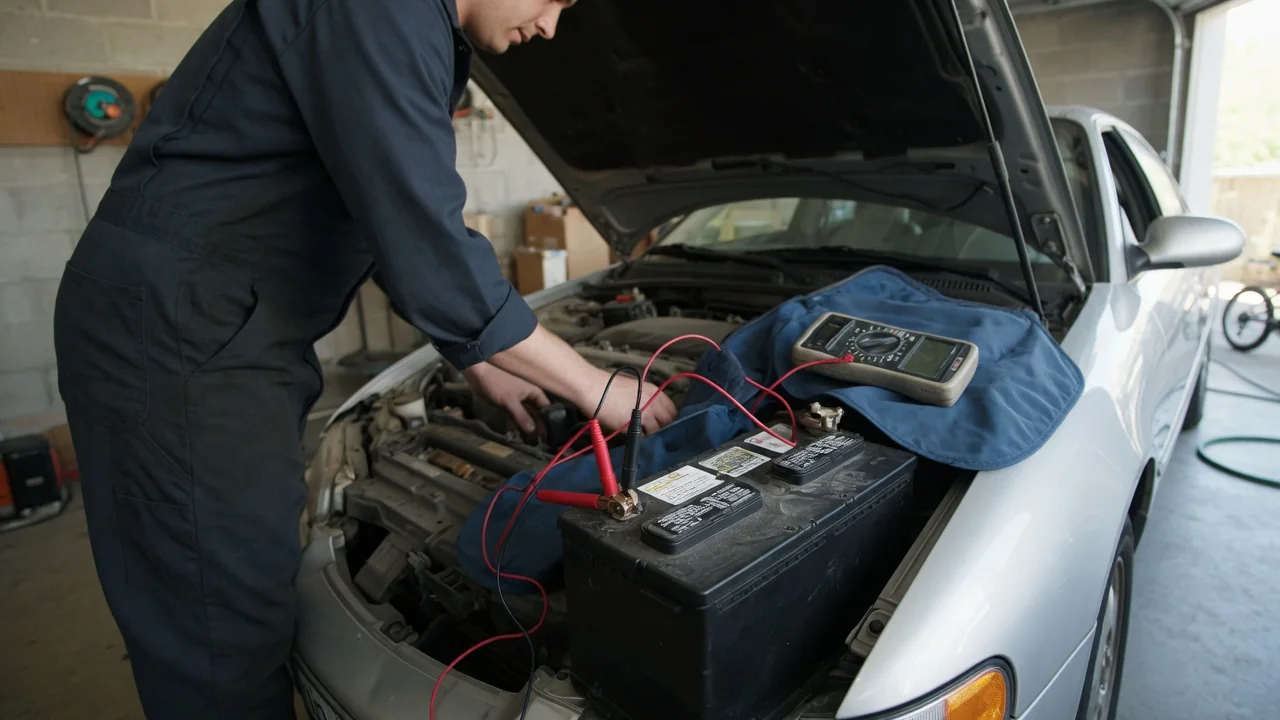
Anyone asking what is a parasitic draw in a car is usually dealing with a battery that keeps going flat while the vehicle sits. The term describes electrical current that continues flowing after the ignition is off and the car is locked. Some of that current is expected, but when a circuit or module consumes more than it should, the battery slowly drains while parked.
Normal standby
A modern vehicle is never completely off. With the key removed, the battery still supplies a trickle of current to keep certain memory and standby functions alive. The clock, radio presets, engine computer learned values, the security system, and the receiver that listens for the key fob all need a little power. This background consumption is often called key-off load or quiescent current, and it is a designed part of the electrical system rather than a fault.
Standby does not begin the instant the door closes. Many control modules stay awake for a period after shutdown, finishing tasks such as cooling fan run-on, evaporative system checks, or telematics communication, then drop into a sleep mode in stages. During that wind-down the current can be noticeably higher than the final resting level. How long this takes and how low the resting draw should settle depend on the make, model, and installed equipment, so the manufacturer's specification is the reference point.
Typical symptom
The classic sign of excess draw is a battery that tests healthy, starts the car fine after a drive, and yet is too weak to crank after sitting overnight or over a long weekend. The engine may turn slowly, the starter may only click, or the dash lights may flicker and dim. Because the charging system refills the battery during the next trip, the problem tends to repeat in a pattern linked to parking time rather than driving conditions.
Other clues can show up before a no-start. A glove box, trunk, or vanity mirror lamp that stays lit, a relay that feels warm long after shutdown, a faint hum from a module or pump, or an infotainment screen that wakes by itself all suggest something is not going to sleep. Some vehicles also display low-battery warnings or disable convenience features to protect starting power. These signs vary widely, and an aging battery or weak alternator can mimic the same behavior.
Diagnostic process
Diagnosis starts by ruling out the simpler explanations. A technician will usually test the battery's condition and confirm the charging system is working, since a battery that can no longer hold a charge will go flat with perfectly normal standby current. Stored fault codes may also be reviewed, though a code is a clue to interpret rather than proof that a component has failed, and manufacturer-specific codes need to be checked against information for that exact vehicle.
If the battery and alternator check out, the key-off current is measured with an ammeter or a clamp meter suited to small currents, after the vehicle has been given time to enter sleep mode. A reading above the manufacturer's specification confirms an abnormal draw. The circuit responsible is then narrowed down, commonly by checking voltage drop across individual fuses or isolating circuits one at a time, and wiring diagrams identify which modules, lamps, or accessories share that fuse.
Everyday Use and Observations
Daily habits affect how much a given draw matters. A car driven for a long commute every day may hide a moderate drain for months, because the alternator restores the charge before it becomes critical. The same vehicle left at an airport for two weeks, or used only for short trips that never fully recharge the battery, can fail to start. Cold weather tightens the margin further, since a chilled battery delivers less cranking power.
Owner-added equipment deserves attention. Dash cameras with parking mode, plug-in trackers, diagnostic dongles left in the data port, phone chargers, and aftermarket alarms or audio amplifiers can all keep drawing power, and some prevent the vehicle's network from sleeping. Keeping a smart key close to the car, or repeatedly unlocking it and opening doors, may also wake the modules. Noting when the battery dies, how long the car sat, and what was plugged in gives a technician a useful starting point.
Limits and Next Steps
Tracking down a draw has real limits. Intermittent faults are the hardest, because a module that wakes only occasionally, or a switch that sticks in certain temperatures, may behave perfectly during a test. Measurements can also be misleading if a door is opened or a circuit is disturbed, which wakes the system and resets the sleep timer. On vehicles with many networked modules, finding the one keeping the others awake may require a factory-level scan tool and service information.
A sensible next step is to remove any plug-in accessories, confirm that interior and cargo lamps go out, and have the battery tested, since those checks are low risk. If the battery still drains, professional diagnosis is worthwhile rather than swapping parts on a guess. Repeated deep discharge shortens battery life, so a maintenance charger can protect a car that sits for long stretches. Be aware that disconnecting the battery may erase stored settings on some vehicles, so check the owner's manual first.