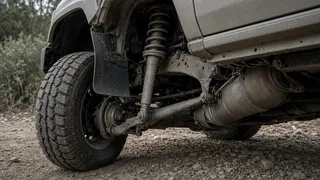
Pajero 2.8 intercooler turbo fuel economy

Fuel economy on a 2.8-liter turbo-diesel Pajero often changes after an intercooler retrofit, repair, or upgrade because charge-air temperature, boost response, and fueling interact closely. The stated subject is informational rather than a confirmed test result, so precise mileage figures cannot be provided from the supplied evidence. Instead, the useful answer is how the intercooled turbo system influences consumption in everyday driving, what mechanical and fuel-system conditions alter the result, and which measurements help an owner judge whether observed mileage is reasonable for the vehicle’s configuration and operating conditions.
Essential answer
The essential answer is that an intercooled 2.8 turbo-diesel engine is generally more efficient at converting fuel into usable work than a non-intercooled equivalent under sustained load, but real-world mileage depends on driving style, vehicle weight, terrain, gearing, and engine health. An intercooler reduces intake-air temperature after the turbocharger compresses it, increasing air density. Cooler, denser intake charge supports more complete combustion, so the engine can make the same road speed with less throttle or fuel per stroke in many steady-load conditions rather than simply burning more fuel.
Fuel pressure, injector condition, the fuel filter, and fuel trim behavior all determine whether that efficiency actually appears on the road. The intercooler is not a fuel-economy device by itself; it supports the turbo system’s operating envelope. If a boost leak, restricted air path, or inaccurate fuel delivery exists, the engine may compensate with higher fuel demand and erase the expected benefit. Interpreting the phrase “Pajero intercooler turbo 2800 mileage” therefore requires separating the potential of the system from the condition of the supporting fuel and induction components, since the subject describes a configuration rather than one measured value.