P1741 to P1756 Codes: Manufacturer-Specific Transmission Codes Explained
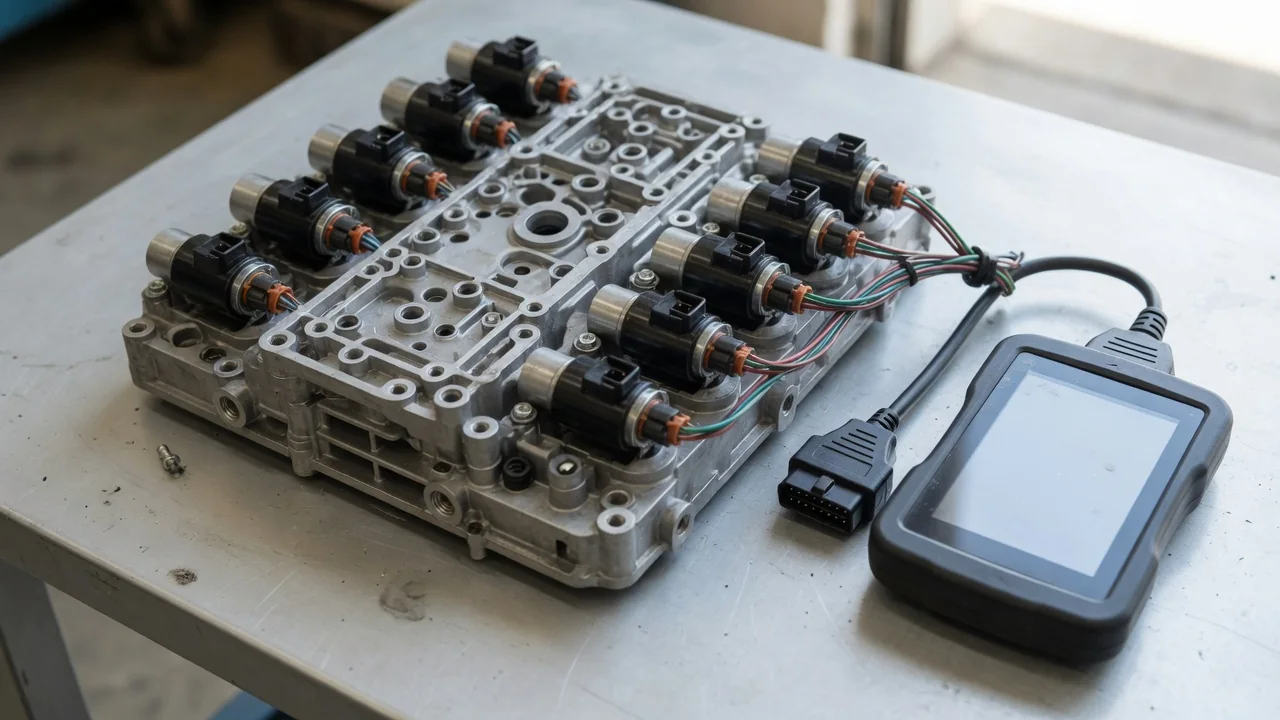
When a check engine light reveals a code such as P1750, the first challenge is knowing what it means for your vehicle. P1741 through P1756 are manufacturer-specific transmission codes, so the same number can signal different torque converter clutch, pressure control or solenoid faults depending on make, model and year. A generic OBD-II reader may show only the code and a vague description, leaving the actual problem unclear until you confirm the enhanced definition for your exact transmission.
Why P1741–P1756 Codes Mean Different Things on Different Vehicles
Codes beginning with P1 are manufacturer-controlled, meaning each automaker assigns its own meaning to numbers in this range. A P1756 code on one vehicle might refer to a torque converter clutch solenoid circuit, while on another it could indicate a pressure control solenoid performance issue. Because the definitions are not standardized across the industry, using a chart or memory from a different brand can lead you to the wrong diagnosis. Always confirm the exact description using factory service information for your vehicle's year, model, engine and transmission type.
The fault areas these codes often cover include torque converter clutch engagement, line pressure regulation and various solenoid circuits inside the valve body. Some codes point to electrical circuit malfunctions such as opens or shorts, while others describe performance problems like a clutch not applying smoothly. A generic scan tool may display only the numeric code or a generic phrase like 'transmission control system malfunction,' which is not enough to act on. Freeze frame data captured at the moment of the fault and any related codes stored alongside can give a technician critical context for interpreting the true failure.
P1741 and P1749 Codes: Confirming the Make-Specific Definition
P1741 and P1749 appear in different forms across automakers, and their meanings must be verified for your specific vehicle. On some models, these numbers relate to torque converter clutch engagement or release, while on others they may describe pressure control or internal ratio errors. The code alone does not tell you which component is at fault, but the monitored condition can offer clues. Review the freeze frame to see transmission temperature, engine load and vehicle speed at the moment the code set, as these values help a technician decide whether the issue is electrical, hydraulic or mechanical.
If either code has set, you may notice subtle changes in the way the torque converter locks up, such as engine rpm hunting at steady highway speed or a shudder during light acceleration. Alternatively, the transmission might enter a reduced-power or limp-home mode that limits gear selection to protect components. Safe initial checks include noting whether the transmission warning light is also on, whether the vehicle starts in a higher gear than normal, and whether other diagnostic trouble codes are stored in the control module. Remember that a code identifies a condition the module detected; it is not proof that a particular solenoid or clutch pack has failed.
P1750 and P1751 Codes: Solenoid and Shift Control Faults
P1750 and P1751 frequently involve shift solenoids or the circuits that control them, but the exact component or function can vary by manufacturer. On one vehicle, P1751 may indicate an open circuit to a shift solenoid, while on another it could mean a stuck solenoid or an internal valve body problem. Always pull the enhanced description from the transmission control module using a professional scan tool. Drivability symptoms you might experience include delayed engagement when shifting into drive or reverse, harsh upshifts that jolt the vehicle, or the transmission refusing to shift out of second or third gear.
Understanding the difference between an electrical circuit fault and a performance or function fault matters for diagnosis. A circuit code suggests the control module detected a voltage or resistance problem in the wiring, connector or solenoid coil itself. A performance code means the module commanded a gear change or pressure adjustment but observed unexpected output from speed sensors or pressure switches. Replacing a solenoid based only on the code number can waste time and money because the true cause might be corroded terminals, a damaged wire harness, contaminated fluid or a faulty module.
P1752 and P1753 Codes: What to Record Before Diagnosis
P1752 and P1753 are likewise manufacturer-defined, so confirm the meaning for your exact transmission before drawing any conclusion. The freeze frame data for these codes is especially valuable because it captures operating conditions such as vehicle speed, throttle position, calculated gear and transmission fluid temperature at the moment the fault appeared. Determine whether the code is current, pending or stored as a history item. A pending code means the condition occurred once and the module is waiting to see if it repeats, while a stored code indicates a past fault that may be intermittent.
Intermittent faults can set and clear these codes unpredictably as connectors flex, temperature changes affect resistance or fluid viscosity alters hydraulic behavior. A code that disappears on its own still deserves attention because the underlying issue remains. Clearing codes with a scan tool erases the freeze frame and any valuable readiness data, forcing the technician to wait for the fault to reappear. Instead of clearing the memory, record all relevant data and take note of what the vehicle was doing when the check engine light illuminated, such as cold start, highway cruise or stop-and-go traffic.
P1754, P1755 and P1756 Codes: Pressure and Solenoid Circuit Concerns
P1754, P1755 and P1756 carry make-dependent meanings, but they typically involve pressure control solenoids, torque converter clutch circuits or related hydraulic control systems. Symptoms that may accompany these codes include increased shift firmness, delayed or slipping shifts, flare where engine rpm rises between gears, or an automatic failsafe that holds the transmission in a single gear. These are possibilities rather than certainties, and the same code on a different vehicle might produce no noticeable symptom at all beyond the illuminated check engine light.
If multiple P17xx codes are stored together, that pattern can guide diagnosis toward a shared electrical issue rather than several failed solenoids. For example, codes referencing different solenoid circuits at the same time may indicate a common power supply, ground or transmission control module problem. Always record every code in the order they appeared and whether each one is current or historical. The code itself does not reveal whether a part is electrically faulty, mechanically stuck or responding to contaminated fluid, so avoid assuming a solenoid replacement will fix the condition.
Symptoms, Driving Precautions and Safe Checks
Certain symptoms call for reducing driving and seeking prompt inspection. If the transmission enters limp mode and limits gears, that is a protective strategy, but continuing to operate for long distances can still increase wear. A burning smell, visible fluid leaks under the vehicle, or no movement in any selected gear indicate damage that can worsen with use. If you notice slipping under acceleration or a shudder from the torque converter that grows worse when hot, have the vehicle towed rather than risk complete failure while driving.
Safe checks you can perform without tools or disassembly include looking for red or brown fluid spots on the ground, confirming whether only the check engine light or also a dedicated transmission warning light is on, and if the owner's manual describes a simple dipstick procedure, checking the fluid level with the engine idling and the transmission warmed up. Note the conditions when symptoms appear: cold starts versus full operating temperature, specific speeds or gears, uphill inclines, and whether the issue is worse after long highway runs. These observations help a technician prioritize tests and avoid replacing parts based on guesswork.
When Professional Transmission Testing Is Needed
Pinpoint testing of solenoid circuits, pressure checks and module diagnostics requires factory wiring diagrams, a calibrated scan tool and high‑impedance test leads. A professional transmission shop can confirm the code definition for your exact vehicle, inspect related technical service bulletins that may describe a known software or harness problem, watch live data from speed sensors and solenoids, and test the harness and connectors for opens, shorts or high resistance. Fluid condition is also evaluated for metal particles or a burned smell that indicate internal mechanical wear.
Before approving any repair, ask the shop what the code means for your specific year and model, what tests confirmed the root cause, and whether wiring, software or module concerns were ruled out. A trustworthy diagnosis explains how the identified fault matches the recorded freeze frame and live data. Engine codes and transmission codes sometimes interact, so a technician should also check for related powertrain codes that could affect torque management. Making a repair decision only after the vehicle-specific definition and proper testing protects you from unnecessary solenoid replacements and repeated transmission problems.