P1683 to P1699 Codes: Manufacturer-Specific Control Module Codes Explained
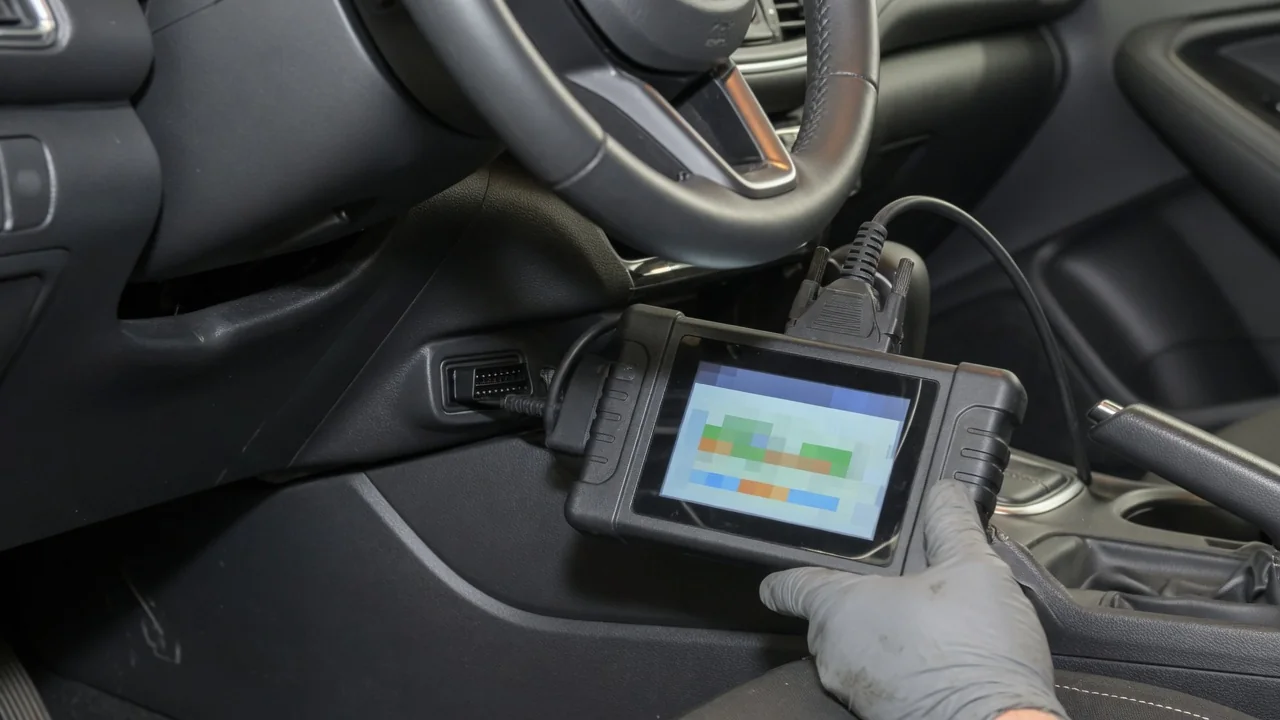
When a check engine light reveals a P1683 code, the first hurdle is recognizing that this number does not have one fixed meaning across all vehicles. Codes from P1683 through P1699 are manufacturer-specific, so a phrase that fits one make may be wrong for another. The same number can represent different control module or communication issues depending on the car, truck, or SUV. This guide explains how to approach these codes, confirm the definition for your exact vehicle, and decide when professional module testing is necessary.
Why P1683–P1699 Codes Have No Single Universal Definition
P1xxx codes are reserved for manufacturer control, allowing each automaker to assign unique meanings to the same four-digit number. A P1683 code on one brand might involve a fuel pump control module, while on another it could reference a transmission range sensor or an immobilizer data fault. Even within a single make, model year changes can alter the definition. Because these enhanced code definitions are tied to the vehicle's engineering and firmware, assuming a universal interpretation can send a diagnosis in the wrong direction before any testing begins.
Factory service information, a dealer parts or service department, or a professional scan tool with VIN-specific software can provide the accurate meaning. Generic OBD-II readers often show "manufacturer control" or a blank description because they do not load the proprietary lookup tables. Such vague output is a signal to verify, not a reason to replace a part. On many vehicles codes in this range relate to control module performance, communication integrity, or electrical monitoring, but that remains a possibility to investigate rather than a conclusion to assume.
P1683 and P1685 Codes: Confirming the Meaning for Your Make
Treat P1683 and P1685 as lookup-first codes. Before interpreting either one, record the full alphanumeric code, every accompanying active or pending code, freeze frame data from the moment the fault set, and the exact VIN. The VIN allows a technician or dealer system to pull the correct enhanced definition for that vehicle's build configuration. Stored versus pending status matters too: a code that is history may be from a past event, while a pending code means a fault has been detected but not yet confirmed over enough drive cycles to illuminate the light.
Clearing the code with a scan tool and seeing whether it returns can show repeatability, but clearing does not repair the underlying cause. If the code resurfaces under similar driving conditions, the fault is actively monitored. A definition found on a forum for another brand or even another model year may not apply; watch for mismatches like a transmission-related definition appearing under a manual-transmission vehicle, which indicates the looked-up meaning is not valid for that VIN. During observation, note any warning lights, hard starting, rough idle, or electrical accessories that stopped operating.
P1686, P1687, P1688 and P1689: Reading Them Alongside Other Stored Codes
P1686, P1687, P1688, and P1689 should never be read in isolation. These code numbers can be triggered by a module that lost communication, detected an internal memory error, or flagged a calibration mismatch, but only a full-system scan reveals the wider picture. Body control modules, transmission controllers, antilock brake modules, and even instrument clusters may store related network codes. When several modules report a fault simultaneously, the shared cause is often a power feed, ground connection, or CAN bus wiring problem rather than multiple failed computers.
Replacing a control module based only on a code number overlooks common causes like corroded connectors, weak battery voltage during cranking, or interrupted communication after a recent repair. If the codes appeared after a battery replacement, jump start, accessory installation, or body work, that event is a critical clue. A driver can note which codes return, whether they appear together, and under what conditions, but cannot safely probe network wiring or module pins without factory diagrams and the correct diagnostic procedures.
P1690, P1692 and P1694: Communication and Module-Related Possibilities to Verify
On some vehicles, codes such as P1690, P1692, and P1694 may be associated with communication between modules, but this must be confirmed for the specific make and model. A communication-related fault often produces intermittent symptoms: warning lights that flicker, gauges that drop out, accessories that operate erratically, or a module that does not respond when a scan tool tries to query it. These signs suggest the network data is not reaching all modules reliably, which can stem from wiring, connectors, or module power rather than an internal module failure.
Low or unstable battery voltage is a frequent cause of false module codes because control units are sensitive to voltage drops during cranking or heavy electrical loads. A shop can perform a battery load test and charging system check to rule out a weak cell or failing alternator before chasing network faults. Owners should note whether symptoms occur only on cold starts, in wet weather, or on rough roads, and record that pattern. Unplugging modules or probing CAN bus wires without the correct procedure can introduce additional faults and damage sensitive electronics, so avoid hands-on network testing.
P1696 and P1697: Memory, Programming and Stored-Data Considerations
Some manufacturers use P1696 and P1697 for internal module memory, calibration, or stored-data concerns, while others assign completely different meanings. Verification comes first through factory service information. Software updates, module replacement, or reprogramming can be part of the diagnosis on certain vehicles, because a corrupted memory location or outdated calibration may set a code. However, this is not true for every model that displays one of these numbers, so it should be confirmed before any part is ordered.
Used or aftermarket modules often require VIN-specific programming to match the vehicle's immobilizer, options list, and drivetrain configuration. A module that physically fits and plugs in may still communicate with wrong data or trigger security codes if not programmed correctly. Ask a dealer whether any software updates or technical service bulletins apply to your exact VIN; there may or may not be one, but the inquiry costs nothing and can reveal a known fix. Bring the full code list, freeze frame data, symptom description, recent repair history, and battery age to the shop for efficient diagnosis.
Symptoms, Driveability Concerns and Safe Observations
Codes in the P1683–P1699 range can appear with a variety of symptoms or none at all. The check engine light may be on steady, other warning lights such as ABS, traction control, or security may illuminate, the engine may crank but not start, or starting may be extended. Gauges can behave erratically, or transmission shifting may feel abnormal. Some drivers notice nothing different, which means the code is an early warning rather than an active failure. Any flashing check engine light, stalling, braking or steering problem means the vehicle should not be driven until a professional evaluates it.
Safe observations without tools can help: note the battery's age and whether corrosion is visible on terminals without touching live parts, record exactly when the light comes on and whether it goes off on its own, and list any recent jump starts or electrical work. Clearing codes repeatedly to see if the light stays off only erases freeze frame data that captures engine load, temperature, and vehicle speed at the moment the fault set. That snapshot is often the quickest path to an accurate diagnosis, so avoid erasing it. Do not attempt repairs involving airbag, immobilizer, or high-voltage systems.
When Professional Diagnosis and Module Testing Are Needed
Confirming power, ground, and network integrity usually requires a wiring diagram, a digital multimeter or oscilloscope, and a factory-level scan tool that can command actuator tests and read module-specific data. A technician can check the voltage at module connectors, measure ground resistance, and monitor CAN bus waveforms. When several modules report faults, when a no-start or security warning is present, or when a module is suspected of internal failure, a dealer or specialist with manufacturer-authorized tools is the appropriate next step. Programming, module replacement, and security-related procedures often require online access to the manufacturer's server for anti-theft relearn and VIN coding.
Ask the shop which definition applies to your exact VIN, what tests confirmed the cause, and whether wiring, power, and ground were checked before any part was replaced. A reputable technician should be able to explain why a module failed and what evidence supports that conclusion, not just point to the code. Repair costs and parts availability vary widely by vehicle, model year, and region. Only a shop with the vehicle in front of them can quote an accurate price; attempting to estimate from the code number alone often leads to an unpleasant surprise.