P1683 Code: Vehicle-Specific Meaning, Causes and Diagnosis
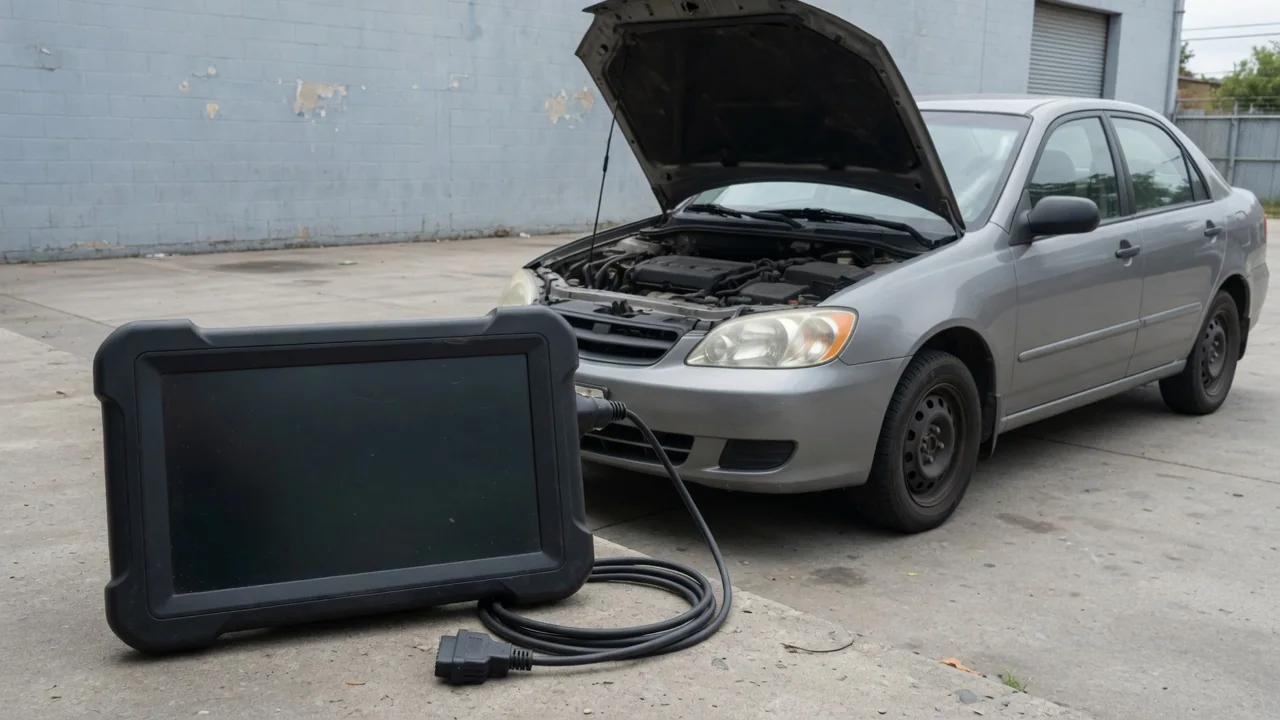
When a scan tool displays P1683, the description on the screen may seem specific, but the actual meaning can vary from one manufacturer to another. This code is not a universal engine or transmission fault; it is a manufacturer-specific trouble code that requires the vehicle’s year, model, engine, and configuration to interpret correctly. Without that context, any quick internet answer may point toward the wrong system or component. The following sections explain how to verify the code’s meaning, record observed symptoms, preserve diagnostic data, and determine when professional testing is the safest and most efficient next step.
Verify What P1683 Means for Your Vehicle
P1683 belongs to a range of codes that automakers reserve for their own monitoring strategies, so its definition can change across platforms and model years. For example, one application may use it for an immobilizer key programming fault, another for a throttle control issue, and a third for a transmission control module communication error. The only reliable check is to enter the complete vehicle identification and calibration details in vehicle-specific service information, which tells you exactly which control module reported the code and what condition it was designed to detect.
When reading the code, note which module stored it and the exact scanner description. A generic handheld tool may display only a short label such as “Control Module Performance” without the detailed definition that a factory or enhanced scan tool provides. That mismatch can lead a diagnosis down the wrong path. Also remember that a trouble code is not a parts list. P1683 indicates that a monitored condition fell outside an expected range; it does not identify which sensor, wiring run, or control unit actually failed.
Record Symptoms and Decide Whether to Keep Driving
Before deciding how to handle the vehicle, record exactly what the driver experiences. Note any warning lamps, messages, changes in starting behavior, rough idle, hesitation, or unusual transmission operation, along with whether the code appeared after a specific event such as fueling, a cold start, or a long highway run. These observations are not universal symptoms of P1683, but they give a technician context for the specific vehicle. The code may set without any drivability change, and an absent symptom does not mean the fault is unimportant.
Driving decisions should be based on what the vehicle is doing, not on the code number alone. A car that starts, runs, and shifts normally may be driven cautiously to a repair facility, but if the engine stalls, loses power, overheats, or produces smoke, the safest action is to stop as soon as practical and arrange for towing. Follow any warning in the owner’s manual, and treat a code that disables a critical function—such as throttle response or transmission shifting—as a sign that continued operation could be unsafe.
Consider Causes Only After Confirming the Code Definition
Potential causes cannot be listed until the verified definition is in hand. Once the factory service information explains what P1683 monitors for that exact vehicle, the diagnostic path becomes clearer. For example, if the code relates to a powertrain control module internal performance check, the focus might shift to supply voltage, ground integrity, or communication lines. If the definition ties it to an anti-theft or key verification routine, the likely electrical path and data parameters are entirely different.
Recent service work, a weak or replaced battery, jump-starting, or the installation of aftermarket electronics can be useful history, but timing alone does not prove causation. A code that appears shortly after an accessory installation may still be unrelated, or it may indicate that a wiring connector was disturbed. Avoid the temptation to rank causes by frequency or to replace a control module, sensor, or actuator simply because P1683 is present. The code is a starting point for testing, not a verdict.
Preserve Scan Data and Make Safe Initial Observations
Before any repairs or even clearing the code, save the complete scan report. Include the exact P1683 status—whether it is current, pending, or history—and any companion fault codes. Freeze-frame data, when available, captures engine speed, temperature, voltage, and other values at the moment the code set. That snapshot can reveal whether the detected condition occurred during warm-up, under electrical load, or at a particular throttle position. Never clear this information to see if the code returns; doing so erases the only evidence you have.
With the engine off and the vehicle parked, a careful visual inspection can be useful. Look for obvious damage, corrosion, or loose accessible connectors without unplugging, probing, or taking anything apart. Pay attention only to components related to the verified code definition; randomly checking every electrical connector can create new problems. Similarly, do not disconnect the battery to clear codes before diagnosis. Many modules store learned values, code status, and freeze-frame data that are lost when power is removed, making the real fault harder to find.
Know When P1683 Needs Professional Testing
Professional diagnosis becomes the right choice when the code definition cannot be confirmed, when symptoms make driving unsafe, or when the code returns after a previous repair attempt. A technician begins with the same step you should take at home: identifying the exact vehicle calibration and pulling the factory diagnostic procedure for P1683. The difference is that the shop has access to module-level scan data, wiring diagrams, and the ability to monitor communication networks and sensor inputs while the fault is duplicated.
Relevant testing depends on the confirmed definition. For example, if P1683 points to a control module performance issue, the technician may check powers and grounds at the module connector, verify serial data communication, and compare live data with expected values. These tests must establish a fault before any part is authorized. When you bring the vehicle in, provide the saved scan report or a photo of the code, a list of symptoms and when they occur, any recent work or battery trouble, and whether the condition is intermittent. That information saves diagnostic time and helps reproduce the failure.
Confirm the Repair Addressed the Detected Fault
Because P1683 has no single universal fix, the repair must be the logical result of a verified diagnosis. For example, if testing proved a faulty ground for a module and that matched the code’s fault criteria, repairing the ground is the repair. If the code definition pointed to a communication error and an open wire was found, the wire repair is the repair. The key is that the chosen action addresses the detected condition, not just the code number.
After the repair, confirm that the reported symptoms are gone and that the applicable vehicle-specific check passes. A proper follow-up scan should clear the code, and the vehicle should be driven or operated under the conditions that originally set it, when safe to do so. A warning light that stays off for a day or two is encouraging, but only a completed drive cycle and a scan showing no pending or permanent code can provide stronger confidence—especially for an intermittent fault.