P1402 to P1449 Codes Explained: Manufacturer-Specific EGR, Air and Emissions Faults
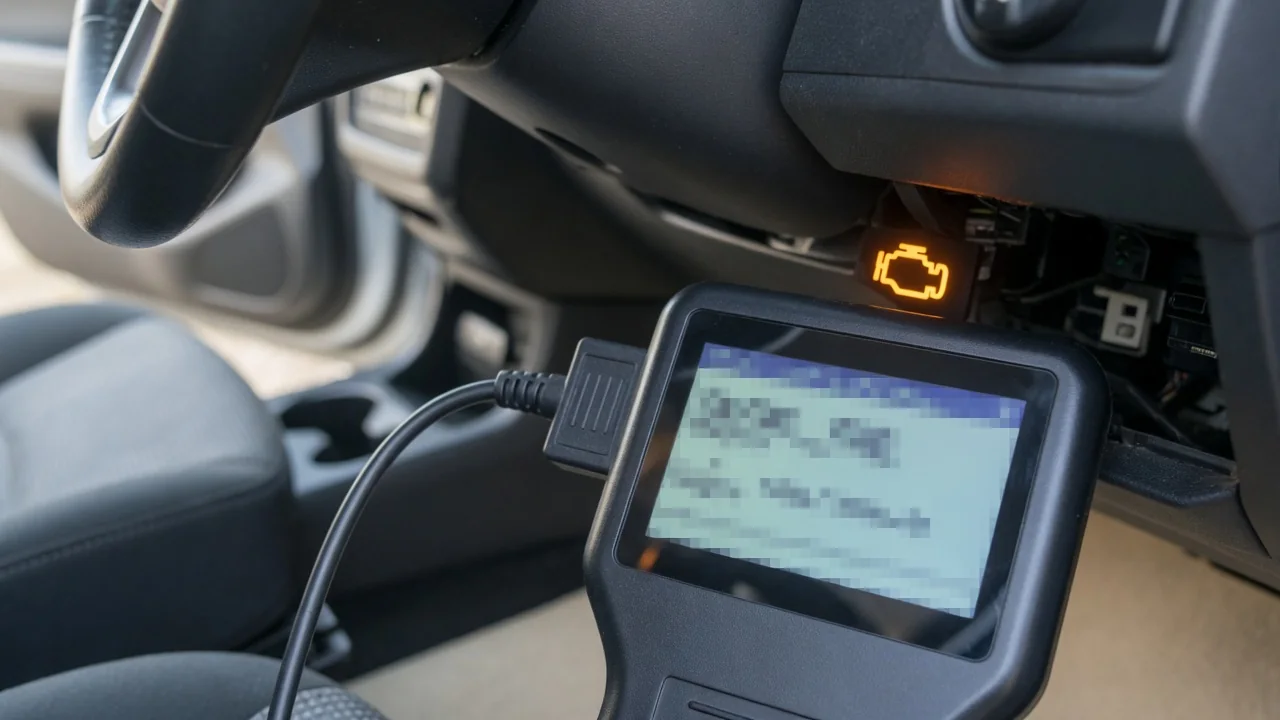
Seeing a P1405 code or another number in the P1402 to P1449 range can be confusing because these trouble codes are manufacturer-specific. The same code may point to an EGR valve position sensor on one vehicle and a secondary air injection system fault on another. This guide explains why meanings vary, what systems are commonly involved, and how to approach diagnosis safely.
Why P1402 to P1449 Codes Mean Different Things on Different Vehicles
The P1xxx code range is controlled by each automaker, so a single number like P1402, P1405, or P1448 often describes completely different faults depending on the make, engine, and model year. Without confirming the enhanced OBD-II data for your exact vehicle, acting on a generic lookup can send you down the wrong repair path and waste money on parts that were never causing the check engine light.
Experienced technicians rely on the VIN, a scan tool with manufacturer data, or factory service information to get the correct definition. Many codes in this group are tied to exhaust gas recirculation flow, secondary air injection, or evaporative emissions systems, but that is only a pattern, not a rule. Any P14xx reading must be checked against vehicle specific documentation before a part is replaced.
P1402, P1403, P1405, P1407, P1408 and P1409: Codes Often Tied to EGR Flow and Sensing
Codes like P1402, P1403, P1405, P1407, P1408, and P1409 are frequently linked to EGR system operation, but the exact meaning is not universal. On some vehicles, P1405 may indicate an EGR valve position sensor concern, while on others the same number points to a vacuum control or pressure sensing issue. Always verify the manufacturer-specific description before assuming which component is involved.
Live data from a scan tool can be extremely useful here. Comparing commanded EGR position with actual values may reveal sluggish valve movement, a blocked passage, or a failing feedback sensor. However, a code naming a sensor or circuit does not prove that the part has failed. Damaged wiring, loose connectors, low vacuum supply, or heavy carbon buildup can all set the same fault, so inspection must cover more than the sensor itself.
P1410, P1412, P1413, P1414 and P1417: Air Injection, EGR and Sensor Circuit Codes
P1410, P1412, P1413, P1414, and P1417 also vary by manufacturer. On some vehicles these relate to secondary air injection, while on others they involve EGR or specific sensor circuits. The wording in a generic code reader may say, on some vehicles this relates to the air pump, but that claim needs confirmation. Treat each code as a starting point for checking the service information, never as a final diagnosis.
A secondary air injection system pumps fresh air into the exhaust during cold starts to help the catalytic converter warm up quickly and reduce cold-start emissions. Because the system runs only under certain temperature conditions, some codes set only on a cold morning. Circuit-related terms such as low input, high input, or malfunction mean the computer saw an electrical value outside the expected range, but the exact monitoring logic depends on the manufacturer.
Before clearing a code, write down the freeze frame data. Engine temperature, load, and speed at the moment the fault was recorded help a technician match the problem to the conditions that triggered it. A code that sets at idle with a cold engine has different likely causes than one that appears at highway speed, and the freeze frame captures that vital context.
P1420 to P1428: Codes Tied to Catalyst, Air Pump and Temperature Monitoring
Codes from P1420 through P1428—including P1421, P1422, P1423, P1424, P1425, P1427, and P1428—may involve catalyst warm-up, air pump operation, or temperature monitoring, but the definitions differ between makes. Jumping to replace an oxygen sensor or an air pump based only on a generic code description can be costly and ineffective. Check your vehicle's own service data to see what the number means in your case.
When one of these codes appears alongside a misfire or fuel mixture fault, deal with those primary running problems first. A rough running engine affects the emissions monitors and can set secondary codes that disappear once the root cause is fixed. The check engine light may go off after a repair and come back when the monitor runs again; that does not mean the original fix failed, but it does mean the computer is still seeing a problem under specific conditions.
P1432 to P1449: Codes Associated With Evaporative Emissions and Purge Control
P1432, P1433, P1434, P1435, P1442, P1444, P1446, P1447, P1448, and P1449 are often associated with the evaporative emissions system. On some makes these point to the purge solenoid, vent valve, leak detection pump, or related heater and pump circuits. Meanings differ between manufacturers, so the same number can indicate a small leak on one vehicle and a circuit malfunction on another.
An EVAP system stores fuel vapor in a charcoal canister and later purges it into the intake manifold to be burned. A loose or damaged fuel cap is one of the simplest causes of an EVAP code, so that visual check is worth doing first. Owners might notice a fuel smell, difficulty refueling, or a failed emissions inspection, but many EVAP faults cause no drivability symptoms at all. Because the system is sealed and involves fuel vapor, leak testing needs proper smoke or pressure equipment and should be left to a qualified shop.
Symptoms and Common Causes Across the P14xx Range
Not every P14xx code produces noticeable symptoms. A check engine light may be the only sign, but some vehicles also show rough idle, hesitation under load, pinging, or a fuel odor. Failures in EGR, secondary air, or EVAP systems often pass silently until an emissions inspection catches the problem. If the engine runs badly or the check engine light flashes, stop driving and have the vehicle towed to avoid potential catalyst damage.
The underlying causes in this range can be grouped broadly: vacuum leaks, cracked hoses, damaged wiring or connectors, carbon buildup in EGR passages, stuck purge or vent valves, failed sensors, and in rarer cases a control module problem. No single cause is more likely than another without testing. Unresolved emissions faults can lead to a failed inspection and may allow other problems to develop, such as contaminated oil or reduced fuel economy, if the root cause is a rich mixture or misfire.
Safe First Checks and When to Get Professional Diagnosis
Start by recording all stored codes and the freeze frame data for each. Confirm the manufacturer-specific definition using a scan tool with enhanced data or factory service information. Look for technical service bulletins through official channels; not every code will have one, but when a bulletin exists it can save hours of diagnosis by pointing directly to a known fix.
Safe do-it-yourself checks are limited to visual inspection with the engine off and cool. Look for disconnected or cracked vacuum hoses, damaged connectors, and the condition of the fuel cap. Clearing codes without a repair hides the problem, resets readiness monitors, and can delay passing an emissions inspection because the vehicle will not be ready for testing. Professional testing is needed for circuit checks, EGR or air pump function tests, EVAP leak tests, or suspected module faults. Bring a note listing the codes, the freeze frame data, and any recent work or symptoms. The final repair cost depends on the verified cause and the vehicle, so no single estimate applies across the P14xx range.