P1300 Through P1307: Vehicle-Specific Meanings and Diagnosis
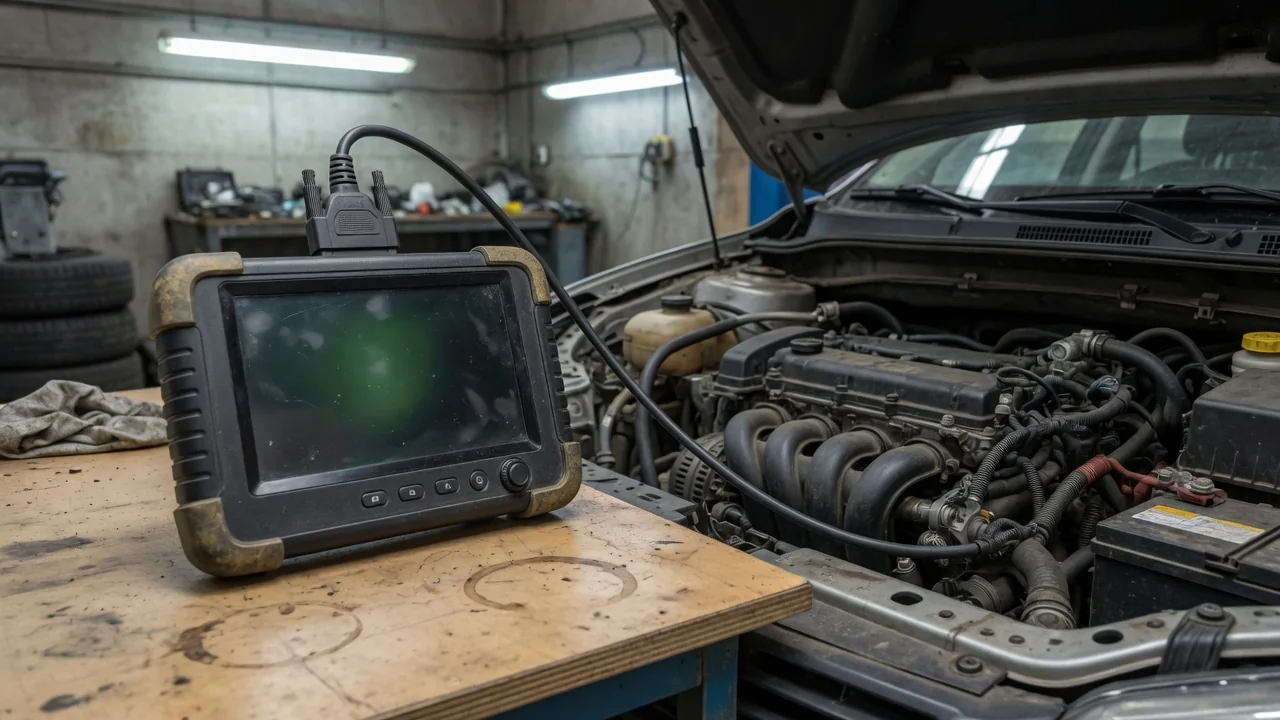
P1300 through P1307 are manufacturer-specific trouble codes, not a single SAE-defined family. A scan tool may display P1300, P1301, P1302, P1303, P1304, P1305, P1306, or P1307, yet each number can mean something different by make, model year, engine, and reporting module. Confirm the vehicle and the factory definition before treating any of these as an ignition or misfire diagnosis.
Verify the Vehicle-Specific Meaning Before Interpreting the Code
P1300 through P1307 belong to the manufacturer-specific trouble code range, so a generic OBD description is not enough. Record the make, model, model year, engine, the exact code number, and which control module reported it, because an engine control module definition can differ from another module on the same vehicle. Ford, Toyota, and other manufacturers assign this range independently. Until that identification is complete, the code is only a stored identifier, not a confirmed ignition, misfire, or cylinder diagnosis.
Manufacturer service information is the source that maps each code to a monitored circuit or condition and to the matching diagnostic testing path. Ford procedures do not automatically apply to Toyota, and another make may use P1304 or P1306 for an unrelated function. Consecutive numbers here do not prove a cylinder sequence, a shared root cause, or an ignition-related meaning for every vehicle. Treating P1301 as cylinder one, or assuming P1307 continues the same fault type as P1300, is an error unless that vehicle's service information says so.
P1300, P1301, P1302, and P1303: Definitions by Application
On many Toyota and Lexus vehicles that monitor igniter confirmation, P1300 is defined as an igniter circuit malfunction on the number-one igniter path. That wording means the engine control module commanded spark and did not receive the expected ignition signal, not that a coil or igniter has failed. A Ford P1300 must be taken from Ford service information for that engine and year, because Ford does not share Toyota's wording. P1301 is not automatically cylinder one; confirm its meaning for the vehicle that stored it.
P1302 reports a monitored condition defined by the manufacturer, not a confirmed failed part. Even when the factory text mentions an ignition circuit, ignition wiring, or an ignition signal, the code only indicates that the expected result was missing or implausible during the monitor. P1303 likewise has no universal meaning across makes, and published coverage is incomplete for some engines and years. If the exact model, year, and reporting module are unknown, P1302 and P1303 should remain unlabeled rather than be forced into a cylinder or coil sequence.
P1304, P1305, P1306, and P1307: What Each Code Can Indicate
P1304 must be interpreted from the service information for the vehicle that set it, not inferred from P1303 or P1305. Adjacent numbers do not establish that P1304 is the next cylinder, the next coil, or the same ignition fault. On many Toyota applications, P1305 is the igniter circuit malfunction for the number-two igniter path, using the same ignition-signal confirmation logic as P1300, still without proving a defective component. Ford or other-make P1305 definitions are separate and must be read in that manufacturer's procedure, including engine and year scope.
P1306 identifies a monitored condition only. The code alone cannot establish a particular coil, circuit, cylinder, or engine control module fault, even if misfire symptoms are present. P1307 is equally application-specific; some vehicles will have a factory definition, and others will not list it at all. When vehicle identification is incomplete or the service information does not define P1306 or P1307 for that engine, the code cannot be interpreted beyond the fact that a manufacturer-specific monitor failed. Further meaning then depends on obtaining the correct factory description.
Symptoms and Warning Signs That Affect Whether to Drive
Where the verified definition is ignition or misfire related, possible misfire symptoms include rough idle, hesitation, reduced power, stalling, or hard starting. Those signs are not universal for P1300 through P1307, because other applications use this range for different monitors. A stored code can also remain after an intermittent ignition-signal drop, even when the engine currently idles and drives normally. Pending codes may appear first, then mature, so a quiet engine does not prove the event never happened or that the condition has been repaired.
Useful observations are warning-light behavior and whether any problem occurs during starting, idling, or acceleration, plus whether the lamp is steady or flashing. Note if more than one of P1300, P1304, P1305, or P1307 is stored, because multiple manufacturer-specific trouble codes can change the diagnostic path. A flashing malfunction indicator lamp, severe shaking, repeated stalling, or substantial power loss is a reason to stop safely and arrange assistance rather than continue driving. Those conditions can worsen catalytic converter damage or leave the vehicle without reliable power in traffic.
Diagnostic Evidence That Helps Locate the Fault
Before clearing anything, record stored and pending codes, available freeze-frame data, and the exact scanner description. Freeze-frame data captures operating conditions when the monitor failed and helps show whether the event occurred at idle, under load, or during a start. The printed description is a clue, not a parts list; compare it with manufacturer service information for that engine. Clearing P1301 or P1303 to see if they return erases context that diagnostic testing later needs, including companion codes that may point to power, ground, or signal issues.
Connect possible causes only to the verified definition. Ignition components, ignition wiring, power supply, grounds, or ignition-signal faults belong in the suspect list when that application monitors those items. Fuel delivery or mechanical problems can still produce misfire symptoms, and symptoms alone cannot isolate the cause. Owner checks should stay at accessible observations with the engine off and cool, such as obvious connector damage or disconnected plugs. Circuit, waveform, fuel-system, or mechanical testing belongs with professional equipment when the definition involves live ignition or fuel control.
Choose Repairs From Test Results and Confirm the Outcome
Confirmed test results, not the code text alone, decide the repair. Findings may support repairing ignition wiring, correcting a supply or ground fault, or replacing a component that failed testing. A description that mentions an igniter, coil, or engine control module does not justify replacing those parts. P1300 and P1305 on Toyota igniter applications can result from connectors, wiring, or confirmation-signal problems rather than a failed module, and Ford or other-make cases follow the same rule: replace only what testing has shown is defective.
Clearing a code or disconnecting the battery does not establish that the underlying fault has been repaired; it only removes the stored evidence. After a justified repair, confirmation is a professional recheck of relevant data, returning codes, and symptoms under safe conditions appropriate to the vehicle. Watch for P1302, P1306, or related pending codes during a complete drive cycle, because an intermittent ignition signal may not fail until the same operating conditions return. If the code comes back, return to the factory diagnostic path rather than repeating parts replacement.