P1300 Code: Vehicle-Specific Meaning, Diagnosis, and Repairs
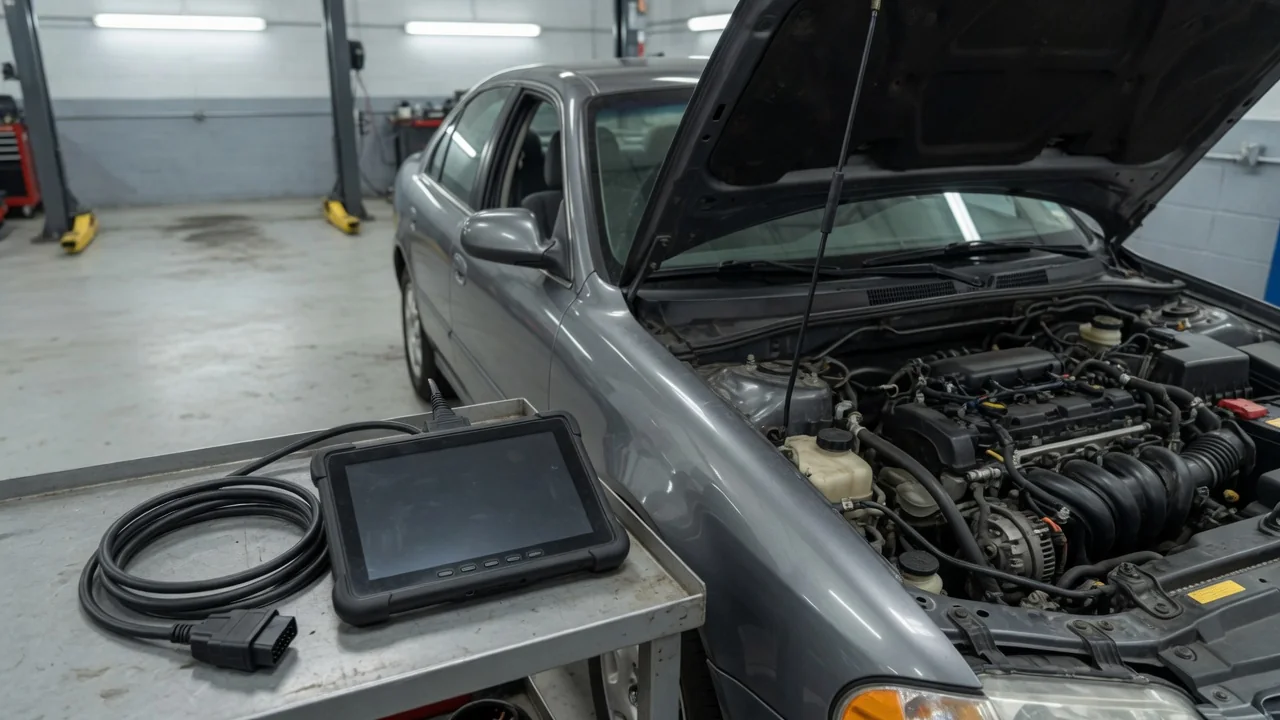
A P1300 code is a manufacturer-specific diagnostic trouble code, meaning its definition shifts depending on the year, make, model, engine, and market. Some automakers use it for ignition feedback or misfire monitoring, while others assign different meanings entirely. The powertrain control module sets it when a monitored circuit or system behaves outside expected limits, but the code alone does not identify a failed part. Vehicle-specific service information is essential before interpreting P1300.
What P1300 Means for Your Vehicle
Because P1300 is a manufacturer-specific code, the first step is confirming its exact definition for your vehicle. The powertrain control module may store this code for ignition-related concerns in one application and for an unrelated circuit in another. Relying on a generic scanner description without verifying the vehicle application can lead to misdiagnosis. Service information for the specific year, make, model, engine, and market determines what diagnostic path applies.
At its core, P1300 indicates that the control module detected a condition outside expected operating parameters in a monitored system. In some vehicles, that system involves ignition feedback, while others use the code for factory-defined diagnostics. The code does not prove which component has failed; it is a starting point. Wiring, connectors, sensors, or the control module itself may be involved, and only systematic testing can narrow the cause.
Symptoms to Record and When to Stop Driving
Symptoms associated with a P1300 code vary widely depending on the vehicle application. Some drivers notice an illuminated check-engine light, rough running, hesitation, stalling, or even a no-start condition. Others may experience no drivability change at all. The absence of symptoms does not mean the code is unimportant, because the underlying fault could affect emissions, performance, or long-term reliability.
If the vehicle exhibits severe shaking, repeated stalling, substantial power loss, or a flashing check-engine light, stop driving as soon as it is safe and arrange assistance. A flashing light often signals a condition that can damage the catalytic converter or create a safety hazard. A steady warning light alone cannot establish whether continued driving is safe; consider the vehicle's behavior and consult vehicle-specific guidance before proceeding.
Possible Causes Depend on the Verified Code Definition
Potential causes for P1300 depend entirely on the verified code definition. For ignition-related applications, common possibilities include damaged wiring, corroded connectors, poor power supply, or compromised grounds affecting the monitored ignition components. Testing must confirm which circuit or component is at fault. Recent repairs or disturbed connections provide useful context but do not prove causation on their own.
A faulty powertrain control module is a possibility only after supporting evidence rules out external circuit issues. There are no reliable failure rates to assume, and replacing the module should never be the default response. Intermittent wiring faults, loose terminals, or internal coil failures can mimic module problems. Professional diagnosis isolates the fault by following the vehicle-specific diagnostic procedure rather than guessing.
Safe Information to Gather Before Diagnosis
Before diagnosis, record the exact code, the scanner's description, the code status, and any companion codes. Preserve available freeze-frame data before clearing codes or disconnecting the battery; this snapshot of operating conditions can reveal whether the fault occurred at idle, under load, or during warm-up. Note whether the concern appears during starting, at idle, after warm-up, or under acceleration, using observations already made during ordinary driving.
With the engine off and cool, a limited visual inspection may reveal obvious damage such as cracked insulation, chafed wiring, or loose-looking connectors. Do not touch ignition components, unplug circuits, or probe wiring, because high-voltage ignition systems can retain dangerous energy. Leave hands-on testing to a professional with the proper equipment and service information.
How Professional Testing Identifies the Fault
A professional technician must first confirm the applicable P1300 definition for the specific vehicle, because manufacturer-specific codes require matching diagnostics. Companion codes and stored freeze-frame data help determine the testing sequence. For example, a misfire code alongside P1300 may point toward an ignition circuit, while an absent companion code broadens the search. Symptom history from the driver refines which conditions to replicate.
Professional testing typically includes checking relevant wiring for continuity, inspecting connector terminals for tension or corrosion, verifying power and ground feeds, and observing monitored signals with a scan tool. Intermittent conditions may require wiggling harnesses, monitoring data during a road test, or using a lab scope to catch a dropout. An inconclusive test does not justify replacing parts; further observation or data capture is often needed.
Repair Options and Confirming the Result
Repair options should be tied directly to confirmed findings. A loose terminal may need repinning, a damaged wire may need a proper splice, or a component that fails the applicable tests may require replacement. Before selecting any part, verify vehicle-specific fitment to avoid incorrect components. Clearing the P1300 code removes stored diagnostic information but does not correct the underlying fault; the root cause must be addressed first.
After repair, confirm the result by checking that symptoms are gone, rescanning for codes, and following the applicable manufacturer verification procedure, such as a specific drive cycle. Diagnostic time, fault location, repair access, and required parts all affect cost, but precise prices vary by region and shop. A successful repair should leave no pending codes and restore normal operation.