P1222 Code: Meaning by Manufacturer, Symptoms and Diagnosis
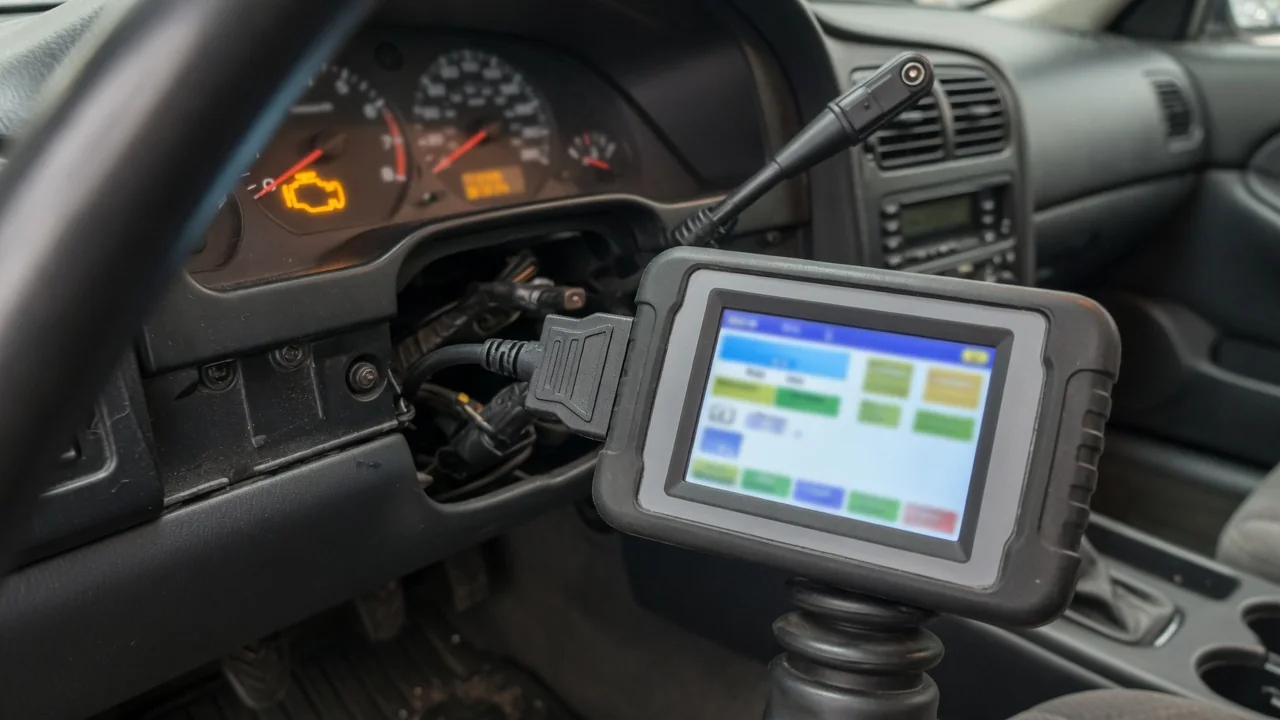
A P1222 code can appear with a check engine light and leave you uncertain, because unlike generic P0xxx and P2xxx codes, P1xxx definitions are controlled by vehicle manufacturers. This means P1222 does not have one universal meaning. To identify the correct diagnostic trouble code definition, you must confirm the code against your specific make, model, year, engine, and often VIN through factory service information or a capable OBD-II scanner. Understanding this first step prevents misdiagnosis and directs you to the proper system to inspect.
What the P1222 Code Is and Why Its Meaning Depends on the Manufacturer
All OBD-II codes beginning with P1 are reserved for manufacturer-specific powertrain faults, so the same P1222 code can point to different components or circuits depending on the automaker. For example, one brand may use P1222 for a throttle position sensor circuit issue, while another uses it for an injector control pressure sensor. This factory-controlled split exists because each manufacturer can assign codes in the P1000–P1999 range to systems that do not fit standardized SAE definitions. Without knowing the exact application, reading a generic definition can direct you to the wrong subsystem entirely.
The most reliable way to confirm the meaning is through factory service information, an enhanced scan tool with manufacturer code definitions, or a dealer service department that can look up the code using the VIN. Some aftermarket scanners include expanded definitions for common makes, but these still require selecting the correct vehicle profile. Generic online code libraries often compile multiple definitions without clarifying the vehicle application, which can confuse diagnosis. Treat any definition found on a generic site as a starting point only; confirm it against a vehicle-specific source before replacing parts or performing circuit tests.
How to Read and Record a P1222 Code Correctly
Before clearing P1222, record whether the code is stored, pending, or in history. A stored code has set the check engine light because the fault was detected in at least two drive cycles, while a pending code was seen once and may become stored if it recurs. History codes are retained after a repair or after the condition has not repeated for a set number of cycles. Knowing the status helps you determine if the fault is active and how recently it occurred. A scanner that only shows the code number without status leaves out important diagnostic timing clues.
Freeze frame data is automatically saved when the code is stored and usually includes engine speed, coolant temperature, load, and vehicle speed at the moment of detection. Copy this information, along with any other codes present, before clearing anything. Companion codes often share a sensor reference or power supply, so they can narrow the diagnostic path more than P1222 alone. Clearing the code erases freeze frame information and pending data, forcing you to wait for the fault to recur before you can analyze the conditions that triggered it.
Symptoms Drivers May Notice Alongside P1222
The symptoms that accompany P1222 depend entirely on the system the manufacturer defines, so one vehicle may run normally while another enters a reduced power mode. Common complaints include an illuminated check engine light, rough or uneven idle, hesitation under acceleration, poor fuel economy, or a transmission that shifts abnormally if the code relates to a powertrain input. Some drivers may notice no drivability change at all, especially if the code points to a monitoring circuit rather than an active control component. Symptom observation is still valuable because it links the fault to real-world operating conditions.
Pay attention to when the symptom occurs: during a cold start, after warm-up, only at idle, under hard acceleration, or when driving through rain or puddles. For example, a code set only in wet weather may suggest moisture intrusion in a connector, while one that occurs only when the engine is hot could point to a temperature-sensitive electronic component. If the vehicle suffers sudden loss of power, stalling in traffic, overheating, or a flashing check engine light, do not continue driving. These symptoms can indicate a safety-critical failure that requires immediate professional attention.
Possible Cause Categories to Discuss Once the Definition Is Confirmed
Once the manufacturer-specific definition is confirmed, the possible causes can be grouped into broad categories rather than a guess at a single faulty part. Sensor and actuator faults include components that provide feedback or carry out commands, such as position sensors, solenoids, or motors. Wiring and connector issues cover damaged insulation, corrosion, loose pins, or chafing that changes resistance or opens a circuit. Circuit problems involve shorts to power or ground, high resistance, or open circuits that the module detects through unexpected voltage or current readings. Control module concerns are possible but typically require extensive testing before being declared faulty.
A diagnostic trouble code usually identifies an electrical condition the powertrain control module observed, not a confirmed failed component. For example, a code may set because a signal was outside the expected range, but that condition could be caused by a failed sensor, damaged wiring, a bad ground, or even a software calibration issue. Avoid assuming a specific part is the usual cause based on the code number alone. Some vehicles may have technical service bulletins or software updates that address false P1222 codes, so ask a dealer or consult a reliable service information source to see if any apply to your vehicle.
Safe Checks an Owner Can Do Before a Shop Visit
With the engine off and cool, you can make non-invasive observations that may reveal an obvious problem. Look for visibly damaged, chafed, or disconnected wiring and connectors near the component the definition points to, such as a sensor or actuator on the intake, throttle body, or transmission. Move a connector gently to see if it is fully seated, but do not force or pry terminals. Check for signs of corrosion, moisture, or melted insulation, which can cause intermittent signals. Finding a loose connector or obvious wire damage gives a technician a head start and may explain an intermittent code.
Keeping the battery healthy is important because low system voltage can cause unrelated codes to set. Inspect the battery terminals for corrosion and confirm the connections are tight; a failing battery or alternator can produce voltage dips that create false sensor readings. After the visual check, you can clear the code only after recording all freeze frame and companion codes, then drive the vehicle normally to see if the code returns as pending or stored. Never probe live circuits, bypass sensors, work near hot or moving parts, or disable safety systems. A visual inspection cannot confirm circuit integrity or internal component condition; it only rules out obvious physical damage.
When P1222 Needs Professional Testing
Confirming the actual fault usually requires manufacturer-specific test procedures, wiring diagrams, and a scan tool capable of reading live data and performing bidirectional controls. A technician will often connect an enhanced scan tool to monitor the relevant sensor or actuator data while the fault occurs, then follow the factory diagnostic flow chart. They may check circuit voltage and resistance, inspect terminal tension, load-test wires, and confirm module communication. These tests require understanding the system’s expected values and safe measurement points, which is why professional testing is the logical next step when basic checks do not reveal the cause.
Avoid replacing parts just because the code number appears in a search result. Changing a sensor or actuator without testing the circuit often wastes money and may leave the original fault untouched. Provide the shop with all the information you recorded: the exact P1222 code, freeze frame data, any other codes, and a clear description of symptoms and when they happen. Include details like outside temperature, recent work done on the vehicle, or whether the problem started after a battery replacement. This saves diagnostic time and helps the technician focus on the most likely circuit or component based on the vehicle’s specific definition.
Driving With P1222 and Preventing Repeat Codes
Whether it is safe to continue driving with P1222 depends on the confirmed manufacturer definition and the symptoms present, not on the code number alone. If the vehicle runs normally and the definition points to a non-critical monitoring circuit, short-term local driving may be acceptable while you arrange diagnosis. However, if the vehicle enters a reduced-power or limp mode, shifts harshly, stalls, or behaves unpredictably, stop driving and have it towed to a repair facility. A vehicle that cannot maintain speed in traffic creates a safety risk for you and others.
To help prevent repeat electrical codes, keep connectors dry and securely fastened, repair any wiring damage promptly, and maintain a healthy battery and charging system. After a correct repair, the code should not return. If P1222 reappears, the original fault was not fully resolved, or there is a separate but related circuit issue. Return to the same shop with the new freeze frame data and any changed symptoms, because a recurring code often means the diagnostic path must go deeper into circuit testing or control module evaluation rather than repeating the previous repair.