P1001 Code: What It Means on Your Vehicle, Symptoms and Next Steps
When a diagnostic scan reports a p1001 code, the immediate question—what failed—does not have a single answer. P1xxx series codes are reserved by the OBD-II standard for manufacturer-specific powertrain definitions, so this diagnostic trouble code can point to different systems, test conditions, or routines depending on the vehicle make, model, year, and engine. A check engine light with P1001 can range from an incomplete emissions readiness monitor to a detected circuit fault. This article explains how to read the code in context, what symptoms to watch, and why vehicle-specific confirmation matters before any repair.
What a P1001 Code Is and Why Its Meaning Depends on the Manufacturer
The P1001 code belongs to the manufacturer-controlled range of OBD-II powertrain codes that begins with P1. Unlike generic P0xxx codes defined by the Society of Automotive Engineers, each automaker assigns its own meaning to P1xxx numbers. Therefore, P1001 on one make may indicate an immobilizer key programming issue, on another an intake manifold runner control fault, and on a third a fuel system readiness monitor that has not completed. The same four characters simply label a condition that the powertrain control module was programmed to detect, not a universal component failure.
Because the code definition varies, a generic code reader or a smartphone app may display a misleading description or only show “Manufacturer Control.” Even a professional scan tool without the vehicle-specific enhanced data may offer a label that does not match the actual test performed by the ECM. This is why exact confirmation for the make, model, year, and engine is the first step. The reader must treat P1001 as a pointer to a diagnostic routine, not as a part name or a repair instruction.
How to Confirm the Vehicle-Specific Definition of P1001
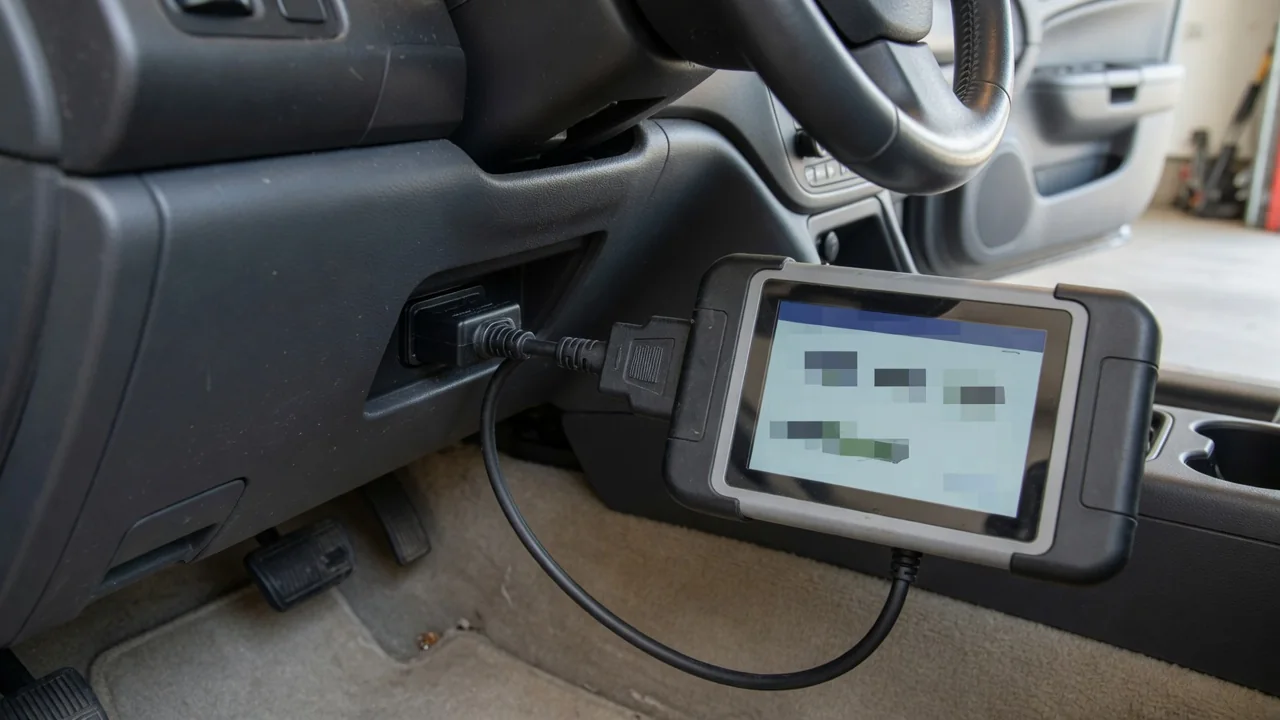
To confirm the vehicle-specific definition, the most reliable approach is to connect a scan tool that includes manufacturer-enhanced coverage or dealer-level software for the exact vehicle. These tools read the code description stored in the control module’s software and often display the test conditions or the subsystem the code refers to. For older vehicles, factory service information may be needed because the ECM may not store a full text description. A dealer service department can usually provide the definition tied to the VIN, especially when the code has a Technical Service Bulletin or a known software update associated with it.
Before clearing anything, record the freeze frame data, code status (pending, confirmed, or permanent), and all other stored codes. The freeze frame captures the operating conditions when the fault was first detected: engine speed, coolant temperature, load, and fuel trims. This snapshot often explains why the self-test failed. A pending code means the condition was observed once but has not yet been confirmed, while a permanent code remains after a clear until all emissions monitors run. Ignoring these details can erase the only evidence that points to the root cause. Online code lists and forum posts that do not match the exact application are not reliable references.
Symptoms Drivers May Notice With P1001
Symptoms with P1001 depend entirely on what the code means for that vehicle. Some cars will show only an illuminated check engine light with no noticeable change in operation, because the code may be related to an emissions monitor that has not completed after a battery disconnect or a recent repair. Other vehicles may exhibit rough or unstable idle, hesitation on acceleration, occasional stalling, or a mild change in fuel economy. These observations do not prove P1001 is the cause; they may be linked to the same underlying condition that set the code, or they may be unrelated. The driver’s job is to note them accurately.
The circumstances when a symptom appears are often more diagnostic than the symptom itself. A stumble that occurs only after a cold start suggests a different mechanism than one that appears during warm idle or under wide-open throttle. Events like refueling, driving through deep water, or a recent jump start can also trigger a manufacturer-specific diagnostic routine. If the check engine light is flashing, or if the vehicle stalls in traffic, loses power, or produces strong exhaust odor, the condition is severe enough to stop driving immediately. A flashing light generally indicates a misfire that can damage the catalytic converter.
Possible Causes and Why a Code Alone Cannot Pinpoint Them
A diagnostic trouble code identifies a condition the computer detected, not a confirmed failed part. The powertrain control module compares sensor inputs, actuator commands, and internal test results against programmed thresholds. If a value falls outside an expected range, or a monitor did not complete within a certain number of drive cycles, the module stores a code. P1001 may therefore point to a sensor signal out of range, a wiring or connector fault, a vacuum or air leak after the mass airflow sensor, an incomplete onboard test, or a calibration issue. These are categories to verify with testing, not components to replace blindly.
Other stored codes often explain P1001, either as the primary fault or as a companion symptom. A circuit code for an oxygen sensor or an EVAP leak code may be the root cause, with P1001 appearing because a related monitor could not run. Diagnosing these codes first, or together as a group, is more effective than treating P1001 in isolation. Buying a part based only on the code number—such as a sensor, a valve, or a control module—often does not fix the problem and may introduce new variables, especially if an aftermarket part does not meet the factory specification.
Safe Checks You Can Do Before Visiting a Shop
Before visiting a shop, a careful visual inspection can sometimes reveal an obvious cause. With the engine off and cool, look for disconnected vacuum hoses, damaged or unplugged electrical connectors, a loose gas cap, or signs of rodent damage to wiring harnesses. Listen for a hissing sound near the intake manifold that could indicate an air leak. Check whether the battery terminals are clean and tight, because a recent battery disconnection can set an incomplete monitor code. Do not touch hot surfaces or remove any components; this is a look-and-record task, not a repair attempt.
Noting recent repairs, aftermarket parts, or software changes is also valuable. A new oxygen sensor with an incorrect connector, an intake modification, or a PCM reflash can create a condition that the factory calibration expects to see only in specific test modes. If the code is cleared after recording data, drive the vehicle through a normal warm-up and varied speeds to see whether it returns under the same conditions. A code that returns only after a full fuel tank fill points toward the EVAP system, while one that recurs at highway speed suggests a different subsystem. Electrical probing, fuel system work, and raised-vehicle testing should be left to trained technicians.
When Professional Diagnosis Is Needed and What to Expect
Professional diagnosis typically requires the manufacturer’s test procedures, live data review, and circuit checks. A technician with dealer-level information will look up the exact definition and the conditions needed to run the relevant monitor. They may use an enhanced scan tool to command actuators, observe sensor response, or perform a bidirectional test that confirms whether a circuit is intact. Information to bring includes the recorded code readout, freeze frame data, symptom notes, and any recent repair history. This reduces diagnostic time and prevents repeating checks that have already been done.
The repair depends entirely on the verified cause, so cost and time cannot be estimated from the code number alone. A loose connector might be fixed in minutes, while an internal control module fault or a wiring harness repair could take much longer. After the diagnosis, ask the technician to explain which test results support the recommended repair. A clear causal chain—such as measured resistance, live data deviation, or a failed active test—is the difference between a targeted fix and a parts-changing guess.
Is It Safe to Drive With a P1001 Code?
Whether it is safe to drive with P1001 depends on the vehicle-specific meaning and on any symptoms present. If the code is related to an incomplete emissions monitor and the car runs normally, driving is usually acceptable for the short term while a service appointment is scheduled. However, the vehicle may fail an emissions inspection readiness check in many areas, because the monitors have not all run to completion. Some jurisdictions also reject vehicles with any permanent diagnostic trouble code, even if the check engine light is off.
Certain warning signs mean the vehicle should not be driven at all. These include stalling in traffic, a flashing check engine light, noticeable loss of power, overheating, or burning smells. Continuing to drive under these conditions risks a breakdown, further damage to the catalytic converter, or an unsafe situation. Even if the car seems to drive normally, an unresolved P1001 should be diagnosed soon. The underlying condition may worsen, or an emissions-related fault may prevent the vehicle from being registered or sold.