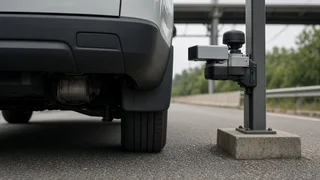
Operate motor vehicle on toll road when prohibited

Drivers sometimes encounter toll facilities where their vehicle, payment method, or route status is not permitted, yet the path ahead seems to require continuing through the toll point. Understanding why a motor vehicle may be prohibited from operating on a toll road helps avoid citations, billing errors, and administrative problems. The restriction usually arises from the road operator’s rules about vehicle class, toll account status, route section access, or the payment method on file, rather than from the act of driving alone.
Essential answer
The essential issue is not a blanket ban on all driving, but a prohibition tied to the specific vehicle, toll account, or route section under the authority of the road operator. When a driver is told they may not operate a motor vehicle on a toll road when prohibited, the restriction generally means the vehicle class is excluded, the toll account is not valid for that facility, or the billing record shows a condition that blocks passage. The driver should treat the notice as a directive to avoid that route section until the underlying status is corrected.
In practice, the vehicle and the toll account are evaluated together. A commercial vehicle may be barred from a passenger-only express lane, or a passenger car may lack an active payment method that the road operator accepts. Since toll facilities record entries by license plate or transponder, the billing record becomes the mechanism that flags a prohibited operation. Resolving the restriction usually requires confirming the vehicle class, the route section, and the payment method recognized by the toll account before entering the facility again.