Onewheel Tire Pressure Gauge
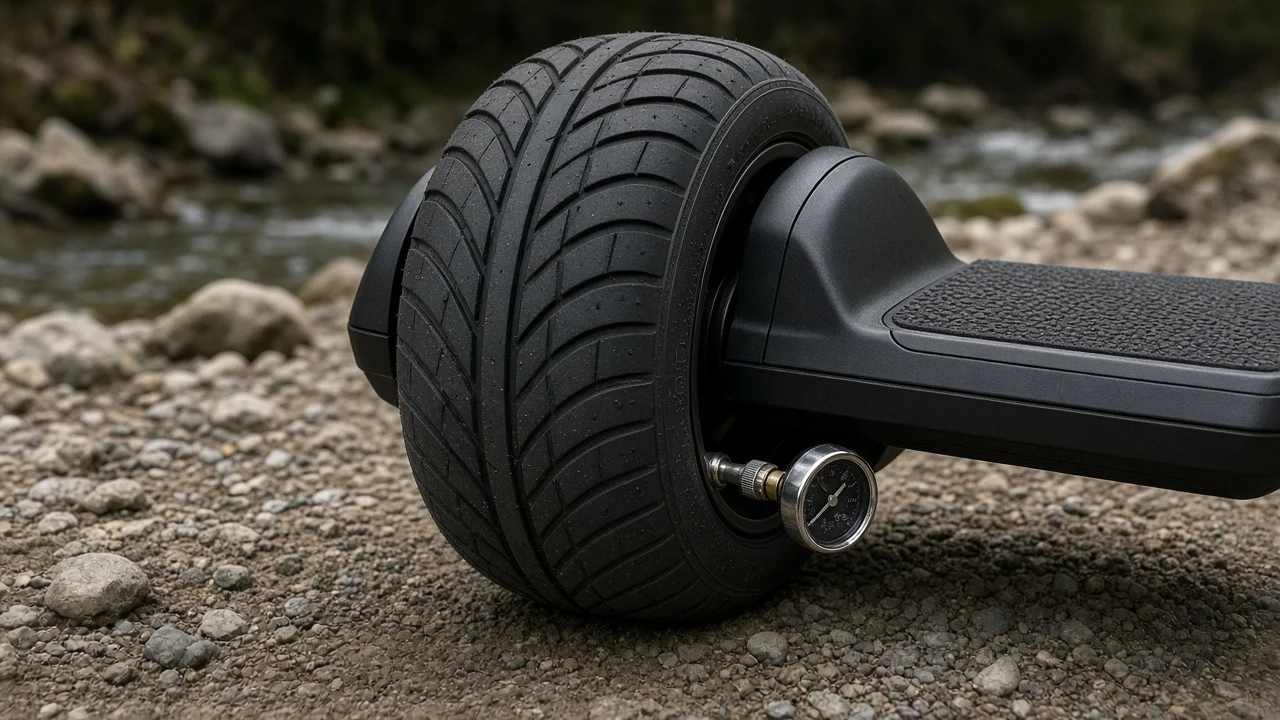
Choosing a Onewheel tire pressure gauge comes down to matching the tool to the board's small, low-pressure tire and the valve access around the hub. Riders often overlook how much tire pressure changes ride feel, range, and stability. A gauge built for typical automotive tires may not read the narrow measurement range clearly or fit the valve connection without scraping the rim. The useful purchase is one that gives repeatable accuracy in the correct units, survives being carried in a pack, and connects cleanly every time.
The direct answer
The immediate answer is that you need a low-pressure gauge with a readable scale in the range used by a Onewheel tire. Many board tires run well below pressures common on cars, so a standard tire gauge may have most of its dial compressed into an unhelpful portion of the scale. A gauge with a short, wide range or fine resolution near the expected operating pressure gives more trustworthy readings and reduces the chance of overinflation.
The condition that changes this answer is the style of valve stem and hub opening on the specific board. An angled or compact head can make the connection more secure when access is tight. Digital and dial gauges can both work, but the key is consistent contact that does not leak during the measurement. Accuracy matters less than repeatability if you test at the same point after adjusting pressure, because the goal is matching a feel and vehicle specification rather than hitting an arbitrary exact number.