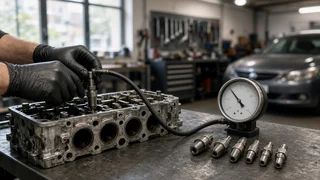
Oil Pressure Tester Kit and Gauge
An engine oil pressure test kit and gauge helps a buyer move past warning-light guesswork and evaluate the actual lubricant circuit before spending on repairs. A low reading may point to a worn pump, bearing clearance, a restricted pickup, or simply an incorrect fill quantity. Choosing a tester involves matching the adapter threads, hose length, gauge range, and case contents to the engines you service. For a commercial purchase, the goal is a dependable set that produces repeatable readings without unnecessary complexity or fragile fittings.
The direct answer
For most shoppers, an engine oil pressure tester kit is the right purchase when the complaint is an oil warning light, a new noise, or an inconsistent gauge reading. The kit provides a mechanical reference that can confirm whether pressure is present, rising with rpm, or dropping when the lubricant warms up. A single gauge without adapters may work on one vehicle, but a kit with common fittings and a flexible hose reaches sender ports that are tight against exhaust or intake parts.
The immediate purchase decision should consider the engine families you plan to test. A set with a range that covers typical hot and cold readings and a hose long enough to route away from hot or moving parts is more useful than a bare gauge. Because sender threads vary, look for a case with adapters suited to common domestic, Asian, and European applications rather than assuming one fitting will thread into every port. Confirm that the gauge face is easy to read while the engine is running.