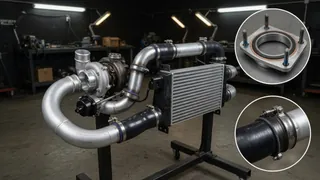
Oil in turbo pipes
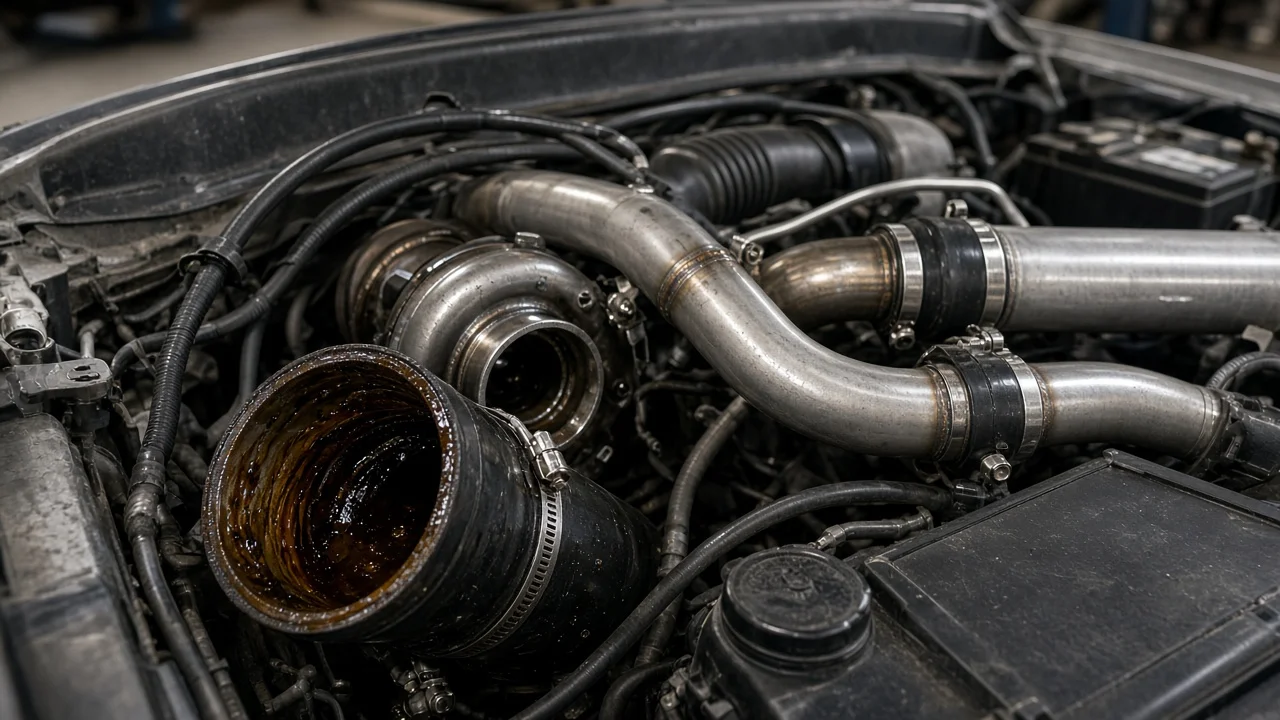
Finding engine oil inside a turbocharger pipe can look alarming, but it does not always mean the turbo has failed. A thin oil film or light mist in the intake tract is often part of normal crankcase ventilation behavior on many gasoline and diesel engines. The concern becomes serious when visible liquid accumulates, smoke appears, or oil consumption rises. Understanding the path oil takes into the turbo pipe and the difference between acceptable residue and a developing seal or breather problem helps you avoid unnecessary parts replacement while still catching real trouble early.
Essential answer
Oil in a turbo pipe is frequently a mixture of crankcase vapor and oil droplets carried into the intake system through the positive crankcase ventilation circuit. Under boost and high load, blow-by gases enter the intake tract before the compressor, and oily residue can settle in the plumbing. A light coating on the inside of the pipe is therefore not automatically a defect. The amount, location, and accompanying symptoms determine whether the film is routine or suggests a restricted breather, excessive blow-by, or a turbocharger seal concern.
When liquid oil pools in the pipe, drips from a loose hose coupling, or reaches the intercooler, the situation deserves closer inspection. Worn turbocharger seals can allow pressurized oil from the bearing housing to migrate into the compressor outlet or turbine side, while a blocked crankcase ventilation path can force more vapor through the intake. Because a residue layer may also contain dust and fuel dilution byproducts, the observation is best judged together with oil level checks, smoke behavior, and pressure-side leaks rather than as an isolated failure proof.